AI Got Booed at Graduation. This Is What Happens When TTS Ships Without Validation.
AI Got Booed at Graduation. This Is What Happens When TTS Ships Without Validation.
On May 15, 2026, Glendale Community College in Arizona deployed an AI system to read graduates' names aloud at their commencement ceremony. The AI mispronounced names. Skipped others entirely. Displayed wrong names on screen. The crowd booed. The college president took the microphone to apologize mid-ceremony. Then humans had to walk every affected graduate back across the stage so their names could be read correctly, by a person.
The incident went viral. People covered it. NBC News covered it. Graduate Grace Reimer told reporters it didn't feel sincere, and that it felt like the school didn't care about one of the most important moments of their lives.
That's the reputational cost of shipping TTS without a validation layer. And it is entirely preventable.
What Actually Went Wrong
The failure at Glendale wasn't about the AI being bad at names in general. It was about deploying TTS output live, in public, with no human check and no fallback, to an audience for whom those names were the most important words in the room.
Proper nouns are a known hard problem for TTS models. Names in particular (especially names with non-English phonetic roots) require either explicit pronunciation data, phoneme-level overrides, or post-generation validation before audio ships. None of that appears to have been in place at Glendale.
Three failure modes hit simultaneously:
- Mispronunciation: The model produced phonetically plausible but incorrect readings of names.
- Generation failure: Some names produced no audio at all, a complete failure with no automatic retry.
- Display mismatch: The wrong name appeared on screen while a different name was read, indicating the display and audio pipelines were out of sync.
Any single one of these is a production bug. All three, live, at a ceremony with no fallback, is a deployment failure.
The Validation Gap Most TTS Deployments Miss
Most teams treat TTS generation as a one-step process: send text, receive audio, use audio. That works when the output is low-stakes: a prototype, a product demo, an internal draft. It stops being acceptable the moment audio ships to a live audience where errors have real consequences.
Production-grade voice deployment requires at minimum:
- Output validation: Confirm the generated audio matches the input text, phonetically and structurally. If the model produces a mismatch, catch it before it ships.
- Retry logic: If a generation fails or produces low-confidence output, retry automatically rather than passing silence or garbage downstream.
- Pronunciation overrides: For known-hard proper nouns (names, brand terms, technical vocabulary), supply the correct phoneme sequence rather than relying on the model to infer it.
- Fallback handling: If validation fails after retries, route to a human or hold the output rather than shipping bad audio.
None of this is novel engineering. It's standard practice in production software: input validation, retry on failure, graceful degradation. TTS deployments that skip it aren't cutting corners. They're removing the quality layer entirely.
Why This Happens More Than You Think
The Glendale incident made national news because of its setting. But the underlying problem, TTS output shipped without validation, is commonplace across industries.
Video producers pushing narration through a single TTS API discover mispronounced brand names in client deliverables after they've shipped. E-learning teams find pronunciation errors in modules already deployed to thousands of learners. Developers shipping voice features learn about generation failures from user complaints rather than automated monitoring.
In every case, the error was catchable before it shipped. The validation layer just wasn't there.
The difference between Glendale and every other TTS deployment failure is that Glendale happened in front of a live crowd. Most failures are quieter. The cost is still real: eroded trust, re-work, and the very specific embarrassment of an AI failing at something humans find trivial.
What a Production Voice Pipeline Actually Looks Like
A production-grade AI voice pipeline separates generation from delivery. The steps:
- Submit text with pronunciation metadata for known hard terms: names, brand words, acronyms.
- Route to the optimal TTS model for the content type and target language.
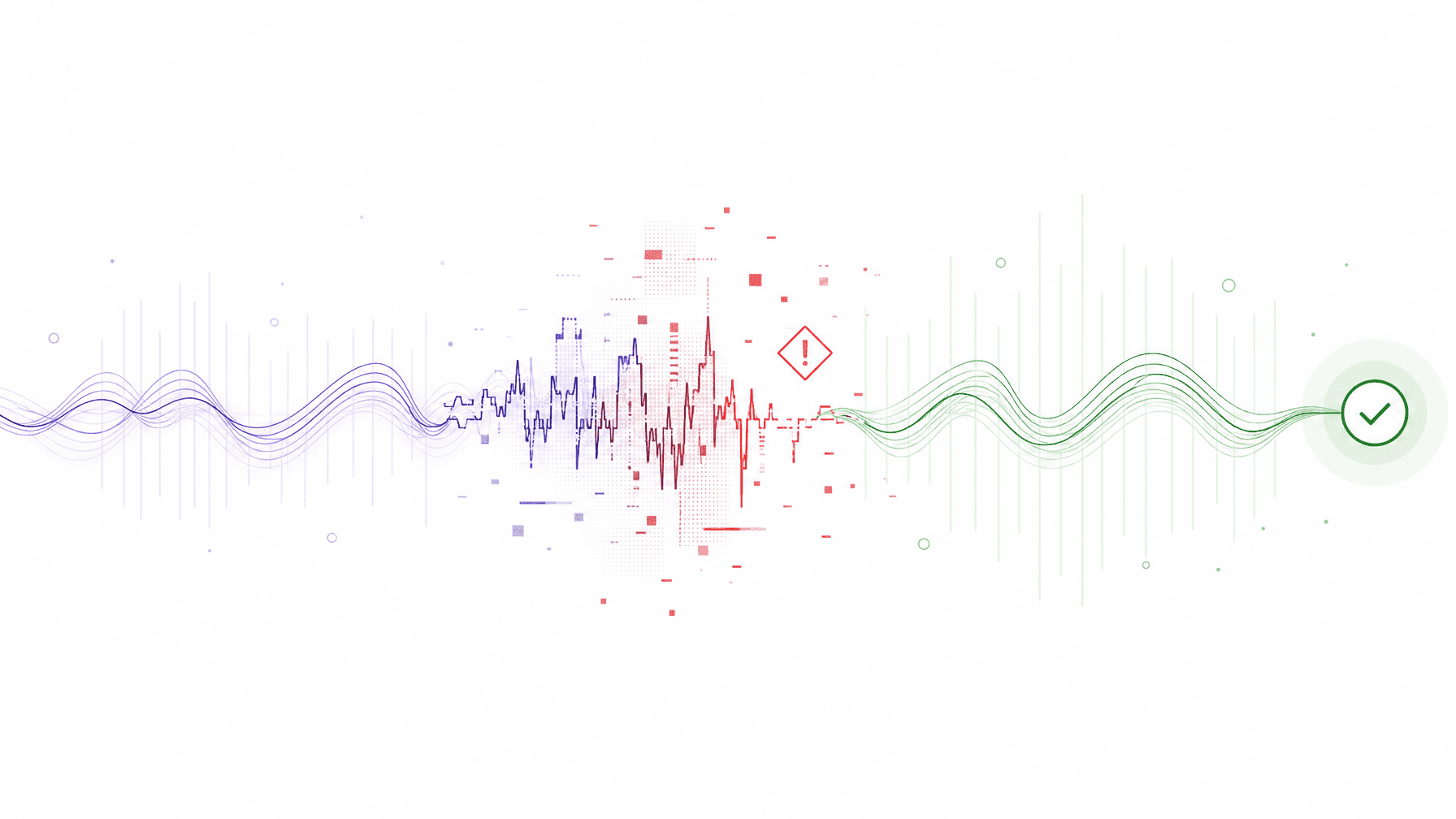
- Validate output: does the audio duration match expected speech rate? Does phoneme analysis confirm the target words were produced? Are there artifacts, clipping, or silence gaps?
- If validation fails, retry with adjusted parameters or a different model.
- Ship only validated audio.
This pipeline eliminates the class of failure that hit Glendale. It also eliminates the re-record cycles that cost video teams hours, the client escalations over mispronounced product names, and the user reports that surface voice failures after they've already reached an audience.
This Is Exactly What Onepin Is Built For
Onepin is an AI voice production agent: a meta-orchestration and validation layer on top of 100+ TTS models. It doesn't just generate audio; it runs the full pipeline: plans the job, routes to the right model, validates output, retries on failure, and ships only audio that passes quality checks.
The Glendale ceremony required humans to re-read every affected name because the pipeline had no automatic fallback. With a proper validation layer, the problem surfaces before the audio reaches the audience, not after the crowd has already started booing.
For any use case where a mispronounced name, a skipped word, or a silent output has real consequences (live events, client deliverables, published content, customer-facing apps), the validation step is not optional. It's the entire point.
Build Voice Pipelines That Don't Fail in Public
If you're deploying TTS in any context where errors have consequences, generation is not the hard part. Validation, retry, and fallback handling are.
See how Onepin handles the full validation pipeline, so your audio ships right the first time.
Frequently asked questions
- What three failure modes hit the Glendale graduation at once?
- Three failures happened simultaneously: mispronunciation, where the model produced phonetically plausible but incorrect readings; generation failure, where some names produced no audio at all with no automatic retry; and display mismatch, where the wrong name appeared on screen while a different name was read, indicating the display and audio pipelines were out of sync.
- Why are proper nouns hard for TTS models?
- Proper nouns, and names in particular (especially names with non-English phonetic roots), are a known hard problem. They require either explicit pronunciation data, phoneme-level overrides, or post-generation validation before audio ships. None of that appears to have been in place at Glendale.
- What does production-grade TTS deployment require at minimum?
- It requires output validation to confirm the audio matches the input text, retry logic that regenerates failed or low-confidence output instead of passing silence downstream, pronunciation overrides that supply correct phoneme sequences for known-hard terms, and fallback handling that routes to a human or holds output when validation fails after retries.
- How does Onepin address the validation gap?
- Onepin is an AI voice production agent that acts as a meta-orchestration and validation layer on top of 100+ TTS models. It plans the job, routes to the right model, validates output, retries on failure, and ships only audio that passes quality checks, so a mispronounced name or skipped word surfaces before the audio reaches the audience rather than after.