The FBI's $893M AI Voice Fraud Report Is Also an Enterprise Warning
TLDR
The FBI's 2025 Internet Crime Report documented $893 million in AI-linked fraud losses, the first time the bureau tracked artificial intelligence as a discrete fraud category. Voice cloning sat at the center of grandparent scams, vishing, and job-interview impersonation. The structural problem the report reveals is not unique to fraud: AI voice output ships without provenance. That gap belongs to every enterprise team running AI voice in production today.
The FBI Put a Number on It
The FBI's Internet Crime Complaint Center published its 2025 annual report this week, marking its 25th year of operation with a first: artificial intelligence tracked as a standalone fraud descriptor. The numbers are specific. Across 22,364 complaints referencing AI tools, victims reported $893,346,472 in losses. Total fraud losses across all categories crossed $20.877 billion for the year, a 26 percent jump from 2024, and the bureau acknowledges that its AI tally almost certainly undercounts reality. Many victims, the report notes, do not realize AI was involved at all.
Voice cloning ran through multiple fraud categories. In grandparent scams, where a fraudster mimics a family member's voice to claim an emergency, victims reported over $5 million in losses. Vishing operations, documented by security researchers at Agentry News, deployed fully automated AI voice agents that conduct multi-step social-engineering sequences mimicking legitimate account-recovery flows from Google and other services. In employment fraud, candidates used voice spoofing during video job interviews to misrepresent themselves. The FBI describes lip sync failures and physical cues that do not match, edge-case detection signals that most hiring managers miss.
The report frames the underlying dynamic plainly: the barrier to producing convincing AI audio has collapsed. What used to require a studio and professional equipment now requires a cloud API and a few lines of code.
What the Report Actually Reveals About AI Voice Infrastructure
The FBI's $893 million figure quantifies the damage. What it does not quantify, but what the report makes clear, is the structural condition that makes the damage possible: AI voice output has no identity.
Every TTS provider today generates audio and returns a file. That file contains waveform data. It does not contain: the model name that generated it, the model version, the consent scope that authorized the voice profile, the input text hash, the generation timestamp, or the delivery context. The audio ships without any of that.
Fraudsters exploit this because the same condition applies to everyone. A vishing call generated by a criminal operation using a voice-cloned bank representative sounds, at the audio level, exactly like a legitimate outbound call from an actual bank. Both are MP3 or WAV files. Neither has metadata establishing its origin. Neither carries a record of which model version generated it or who authorized the generation.
The FBI report's own accounting illustrates the downstream effect. Analysts could only apply the AI descriptor when a victim explicitly referenced artificial intelligence in their complaint. In investment fraud, the largest AI-tagged category at $632 million, those AI-tagged losses represent roughly 7 percent of total investment fraud losses. The bureau's explanation: victims do not recognize AI-generated audio when they encounter it. You cannot recognize what has no identity attached to it.
Enterprise Voice AI Teams Have the Same Blind Spot
This is not just a fraud problem. It is a production infrastructure problem that legitimate enterprise voice AI teams share.
Consider a company running AI voice across customer service IVR, outbound appointment reminders, and multilingual support calls. Each day, thousands of audio files ship through Deepgram, Cartesia, or ElevenLabs. When a compliance audit asks which model version generated a specific customer call from 90 days ago, the answer in most pipelines is: we do not know. When a regulator asks whether the voice profile used in a customer-facing interaction was authorized under the current consent scope, the answer is the same.
When a fraud investigator asks whether an outbound call that a customer received actually came from the company's pipeline, the company has no mechanism to prove it, because the audio file carries no provenance.
This is the same structural condition the FBI describes in the vishing context. The difference is that fraudsters weaponize it deliberately. Enterprise teams discover it reactively, when something goes wrong.
The Fix Is Not a Better Model
ElevenLabs, Cartesia, Deepgram, and Rime are not going to ship native audit logging, consent scope tracking, and model version locking in their generation APIs. That is not what those tools are designed to do. They generate audio. The production layer above them is where provenance lives.
A proper AI voice production infrastructure wraps every generation event with structured metadata: which model, which version, which voice profile, which consent authorization, input hash, output hash, delivery timestamp, and downstream destination. Every file that ships carries a retrievable record of its origin. When a compliance question arrives, or a fraud investigator does, the answer exists.
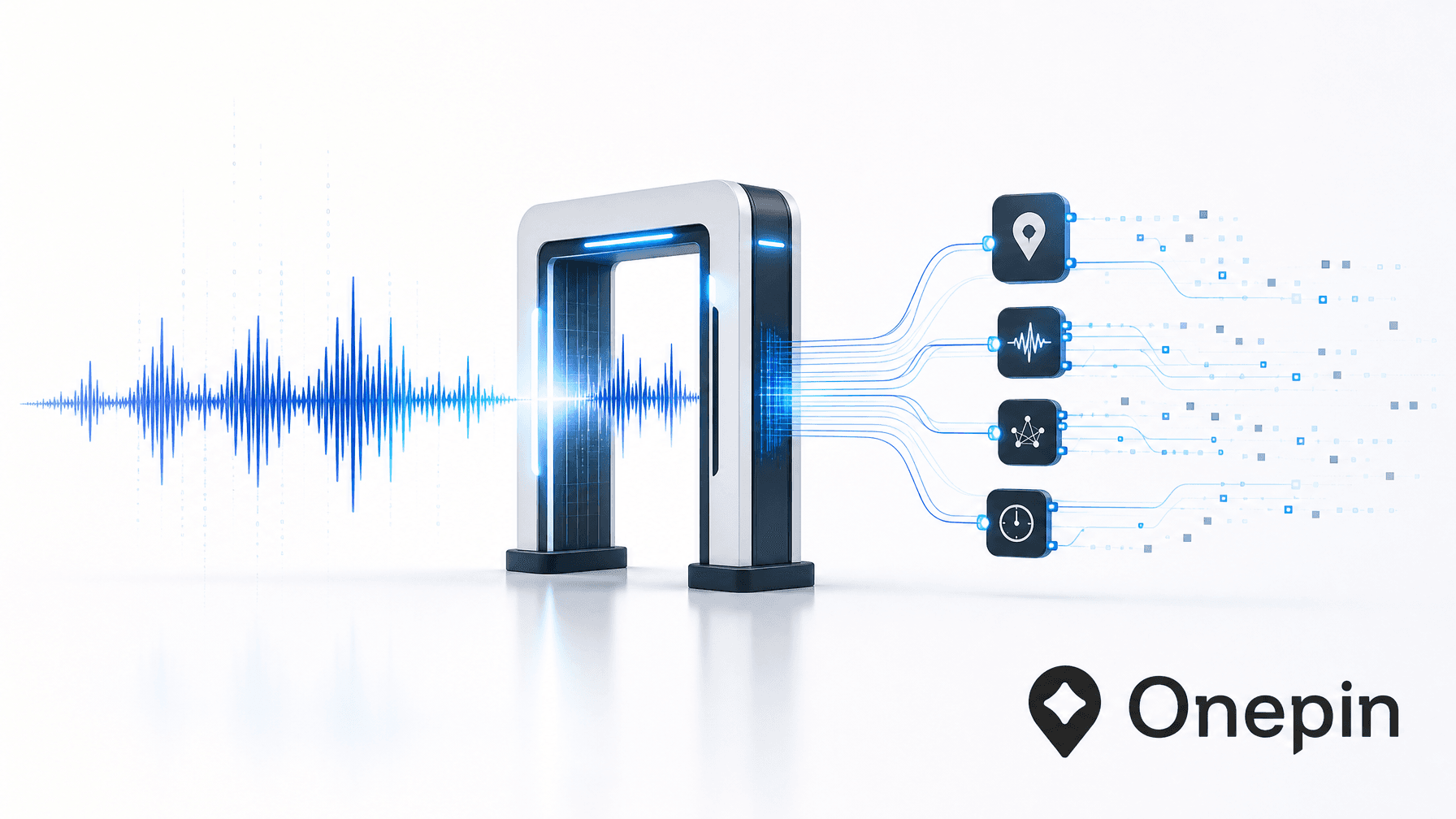
Onepin is that production layer. It sits above 100+ TTS providers and runs every output through validation, version locking, format compliance, and a structured audit trail before delivery. Because it is model-agnostic, teams are not locked into a single provider. Because the audit trail is native to every job, there is no manual logging step to forget.
The FBI's report documents what happens when AI voice ships without a provenance layer at the population level: $893 million in one year, undercounted. The enterprise question is what happens at the organization level when the audit trail is missing and something goes wrong.
Start with Provenance
The argument for a production layer above your TTS provider is not new. The FBI's 2025 IC3 report gives it a dollar figure.
Every AI voice output your team ships without a provenance record is a file that cannot be authenticated, cannot be audited, and cannot be distinguished, structurally, from a fraudulent clone. That is a production gap, not a model problem.
Explore Onepin at onepin.ai and run your first voice workflow with model version locking, consent tracking, and a full audit trail in place before your next production deployment.