Ford's AI Quality Lesson Has a Direct Voice AI Parallel
Ford just made the clearest argument for voice AI validation you'll find anywhere in the tech press this week.
TechCrunch reported that Ford rehired 350 veteran engineers because AI automated quality systems failed to deliver the desired quality level. The company's chief operating officer Kumar Galhotra told journalists that Ford had been "relying more and more on automated quality systems" with disappointing results. Charles Poon, Ford's VP of vehicle hardware engineering, put it plainly: "Mistakenly we thought that by just introducing artificial intelligence and ingesting the design requirements that we had, that that would produce a high-quality product."
Those veteran engineers, referred to inside Ford as "gray beards," now hunt for failure points before a part ever reaches the plant floor. The result: lower warranty and recall costs, contributing to what Ford CEO Jim Farley called "literally hundreds and hundreds of millions of dollars of a tailwind."
The voice AI industry is making the exact same mistake Ford made.
The Assumption That AI Generation Equals Production Quality
Every week, another TTS model drops. ElevenLabs, Deepgram, Cartesia, and dozens of others release models with impressive benchmarks, beautiful demo clips, and detailed API documentation. Teams integrate the API, run a few test clips, confirm the output sounds good, and ship.
That sequence skips the entire validation layer.
Generating an audio file is not the same as producing validated, publish-ready audio. A clip can complete successfully and still contain a brand name mispronunciation, an acoustic inconsistency between clip 1 and clip 200, a format that breaks the telephony system it targets, or output from a silently updated model version that invalidates a previously approved quality baseline.
None of these failures trigger an error. The pipeline reports success. The audio ships.
Ford's COO used the phrase "relying more and more on automated quality systems." That phrase could have been lifted directly from a voice AI team post-mortem. Teams assume the model handles quality. It handles generation. Those are two different things.
Why the Pattern Repeats at Every TTS Launch
TTS benchmarks measure lab performance: a curated test set, controlled conditions, a defined scoring metric. Production is different. Production means arbitrary inputs, not curated ones. It means 50,000 clips, not 50. It means silent model updates that change output characteristics without a changelog entry. It means multi-provider routing where one provider's failure silently degrades the fleet.
The gap between benchmark quality and production consistency is not a model problem. It is a pipeline problem. The model is doing exactly what it was trained to do. The problem is that nothing above the model checks whether what the model did was good enough to ship.
Ford's veteran engineers exist to close that gap in manufacturing. They hunt for failure points that automated systems miss. Voice AI production has no equivalent layer in most deployments. Teams discover quality failures when users complain, not before clips ship.
What a Validation Layer Actually Does
Ford's rehired engineers do not replace the AI tools. They work alongside them, catching what the tools miss. That is the correct architecture.
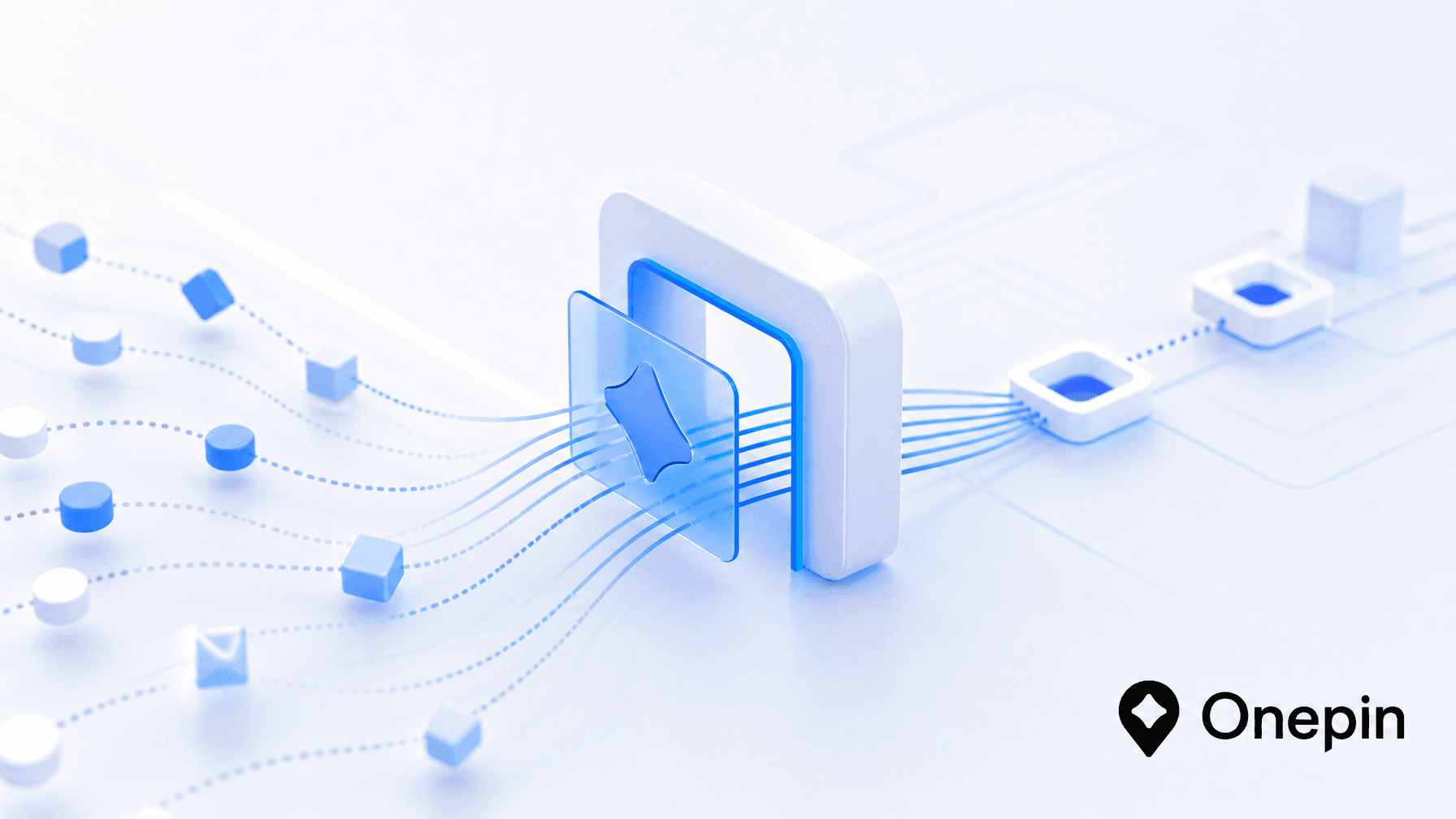
A voice AI validation layer works the same way. It sits above the TTS model and runs every clip through a defined quality baseline before the clip reaches any downstream system. It checks:
- Pronunciation accuracy against a reference library, flagging clips where brand names, product terms, or proper nouns land wrong
- Acoustic consistency across a batch, catching drift between early and late clips in a long generation run
- Format compliance for the delivery target, whether that is telephony at 8kHz G.711, a streaming endpoint with latency constraints, or a video platform with specific loudness normalization requirements
- Model version lock, confirming that clips generated today match the version approved during QA, not a silently updated variant
When a clip fails, the pipeline retries with adjusted parameters or routes to a backup provider. The team sees a quality score, not a guess. The audio that ships has passed a gate.
This is not about distrusting the TTS model. It is about acknowledging that generation and validation are separate jobs, and conflating them creates the same situation Ford was in before the rehires.
The Cost of Skipping the Gate
Ford quantified its quality gap in a way most voice AI teams cannot: hundreds of millions of dollars in warranty and recall costs that improved once validation specialists rejoined the process. Voice AI teams rarely have an equivalent metric because they rarely track per-clip quality scores.
Without a quality score attached to every output, you cannot measure drift. You cannot prove compliance. You cannot debug a production complaint without re-running the entire batch to find which clip broke. You cannot switch TTS providers without starting the QA process over from scratch.
Ford's COO described the lesson as a mistaken belief that AI plus requirements would produce a high-quality product. The requirements in voice AI are the use case: pronunciation standards, acoustic targets, format specs, delivery constraints. Feeding those requirements to a TTS model does not produce a validated output. It produces a generated one.
The validation step is the job of the pipeline above the model.
Ship Audio That Passes the Gate
Onepin is the orchestration and validation layer that sits above 100+ TTS models. Every clip runs through quality checks before it ships. Model versions lock to prevent silent drift. Failed outputs retry automatically. Teams get publish-ready audio without building or maintaining that validation infrastructure themselves.
The model is not the hard part. The gate before shipping is.
Start with Onepin and ship audio that has passed a real quality check.
Frequently asked questions
- Why did Ford rehire veteran engineers if they already had AI quality systems?
- Ford's COO said the company had been relying more and more on automated AI quality systems, but those systems failed to catch production failures at the required level. The rehired 'gray beard' engineers hunt for failure points before a part reaches the plant floor, a task that AI alone couldn't complete reliably.
- What does Ford's AI quality problem have to do with voice AI production?
- Voice AI teams make the same assumption Ford did: that generating output with an AI model is equivalent to producing a validated, production-ready result. TTS generation creates an audio file, but it does not validate pronunciation accuracy, format compliance, or model version consistency, just as Ford's automated systems created parts without catching the failures those parts contained.
- What is a voice AI validation layer and why does production need one?
- A voice AI validation layer sits above TTS models and checks every clip against a quality baseline before it ships. It catches mispronunciations, acoustic inconsistencies, format compliance issues, and model version drift. Without one, teams discover quality failures only after audio reaches end users, the same position Ford was in before rehiring its veteran engineers.
- Do TTS model benchmarks guarantee production quality?
- Benchmarks measure quality under lab conditions with curated test sets. Production involves thousands of clips with arbitrary inputs, silent model updates, multi-provider routing, and format requirements for specific delivery systems. A model that scores well on a benchmark can still produce unacceptable output at scale without a dedicated validation pipeline above it.
- How does Onepin prevent voice AI quality failures from reaching production?
- Onepin acts as an orchestration and validation layer above 100+ TTS models. It runs every clip through quality checks, locks model versions to prevent silent drift, retries failed outputs automatically, and ships only audio that passes a defined quality baseline. Teams get publish-ready audio without building and maintaining that validation infrastructure themselves.