Microsoft Ships MAI-Voice-2-Flash: Two Voice Tiers, One Routing Decision You Now Own
TLDR
Microsoft just previewed MAI-Voice-2-Flash in Foundry, a faster and cheaper speech tier that sits beside the existing MAI-Voice-2 on the quality-speed-cost curve. The interesting part is not the price. It is that Microsoft now ships two voice tiers for the same job and tells you to pick per workload. That turns voice into a routing decision, and routing without validation is where production quality quietly breaks.
Microsoft's MAI-Voice-2-Flash is a new low-latency, lower-cost text-to-speech tier, reportedly 2x faster and 32% cheaper than MAI-Voice-2 and priced at $15 per 1M characters. The core takeaway for anyone building voice products is that a faster, cheaper model does not raise output quality, it only changes where a workload runs. The moment you can route the same script to more than one model, correctness on every output becomes a decision you have to own, not a default the vendor guarantees.
What did Microsoft actually launch?
Microsoft launched MAI-Voice-2-Flash in Azure Foundry public preview, a speech tier tuned for latency and scale rather than maximum fidelity. Per Microsoft's own numbers, it runs about 2x faster and 32% cheaper than MAI-Voice-2, costs $15 per 1M characters, and covers 15 languages across 18 locales with SSML emotion controls and gated voice cloning from a 5 to 60 second consented clip. It already powers Dynamics 365 Contact Center and Azure Voice Live, and Microsoft reports it cuts GPU costs in the contact center by up to 89%.
Read the positioning carefully. Microsoft is explicit that Flash is a latency-and-scale option, while MAI-Voice-2 stays the choice for long narration and speaker consistency. This is the same hill-climbing pattern Microsoft uses across its MAI family: specialize a model for a job, measure it in production, and route workloads instead of crowning one winner.
Why does two tiers turn voice into a routing problem?
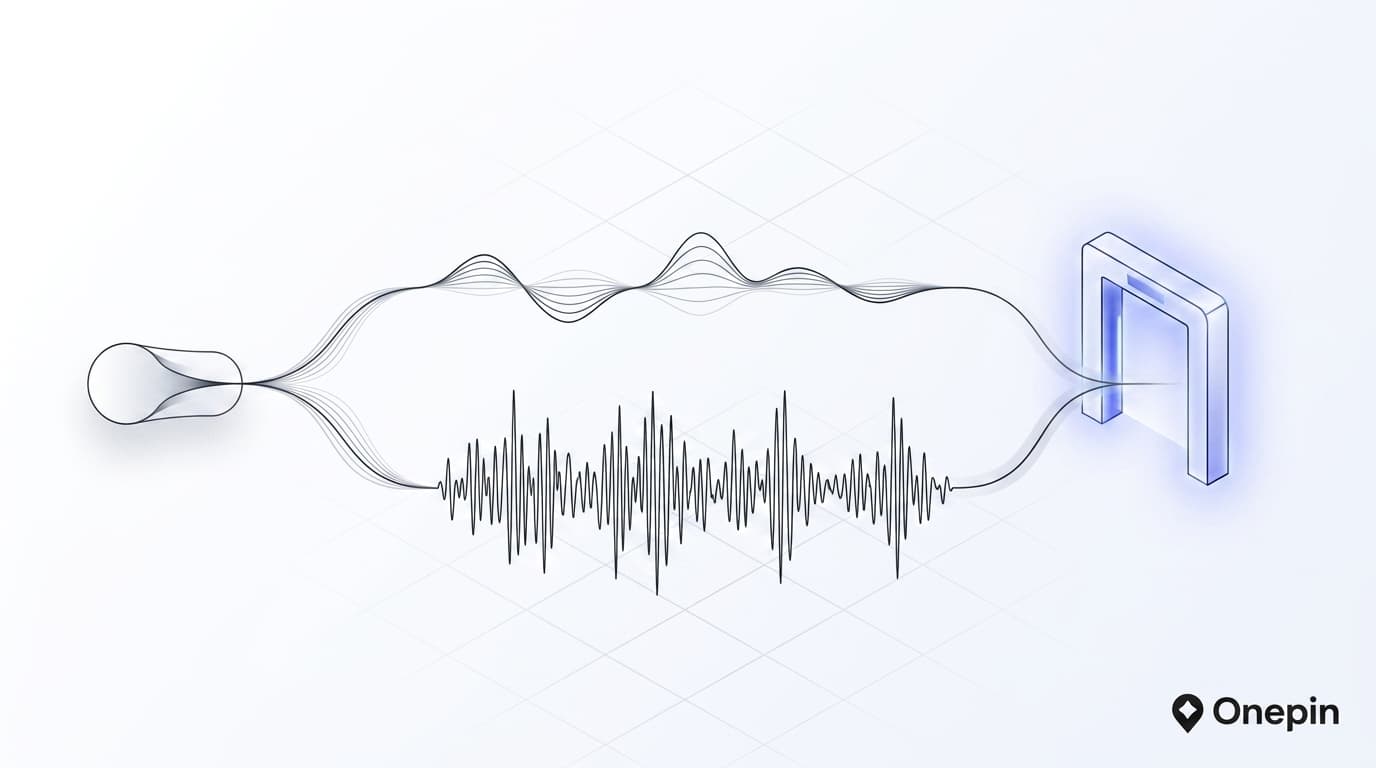
Two tiers for the same job means the buyer now decides which model handles which output, and that decision repeats on every workload. Do you send a 40-minute onboarding narration to the high-fidelity tier and the live support call to Flash? What about a support flow that includes a scripted policy disclosure the caller has to hear correctly? The answer changes by use case, by language, and sometimes by individual clip.
That is a real advantage when you have a way to route well. It is a liability when you do not. Most teams pick one model, wire it in, and move on. The moment a cheaper tier exists, finance asks why the expensive one is still running, and someone reroutes traffic without re-checking what the new tier does to pronunciation, pacing, and consistency. The model ID changes, the audio changes, and nothing is watching the output.
Does cheaper and faster mean better?
Speed and price describe how a model runs, not whether a specific output is correct. This is the trap in every launch that leads with a benchmark or a cost cut. Microsoft's own release is refreshingly honest about it: the product metrics are vendor-reported, the preview changes quickly, and voice latency is end-to-end, so the model can be fast while retrieval, an LLM tool call, or telephony routing makes the caller wait.
Correctness lives in the tail, not the average. A tier that sounds great on a demo script still mispronounces a brand name, a street, an account number, or a clinical term in the 2% of outputs that carry the money. Across 15 languages and 18 locales, that is 15 separate failure surfaces, and the weakest ones belong to languages no one on the team speaks. A 32% cost cut does nothing for any of that. Neither does a leaderboard rank. The only thing that catches it is checking the output that comes back.
What is the difference between a TTS model and a voice production layer?
A TTS model generates audio. A voice production layer decides which model to use, validates what it returns, and ships only what passes. Microsoft, ElevenLabs, and Google Cloud Text-to-Speech all build excellent models, and none of them answer the operational question a routing world creates: when the same workload can run on two tiers, who guarantees the one you picked got this specific name, in this specific language, right?
That is the layer that has no owner in most stacks. It handles four things a model launch never does:
- Lock the model version. A silent preview update or a quiet reroute to a cheaper tier should never change your audio without a re-check. You upgrade on your terms, after validation.
- Route per workload. Send long narration to the consistency tier and live calls to the fast tier, by policy, not by whoever last edited the config.
- Score every output against a reference. Validate pronunciation, pacing, and format before a clip ships, so drift and mispronunciations get caught before a listener hears them.
- Regenerate only the failures. When one clip or one language drifts, fix that output, not the entire batch.
How does Onepin close the gap MAI-Voice-2-Flash opens?
Onepin is a voice workflow platform that orchestrates, validates, and ships production-ready audio across 100+ TTS models. When Microsoft adds a second tier, or ElevenLabs ships a new voice, or a provider changes pricing, the routing decision lands on your desk. Onepin is where that decision gets made and enforced: lock a pronunciation dictionary for your names and terms, pin the version you validated, route each workload to the tier that fits, and score every clip against a reference before it goes out.
The payoff is that a cheaper, faster model becomes an upgrade you can actually take instead of a silent risk you inherit. You move the high-volume support flow to Flash to capture the 89% cost cut, keep long-form narration on the consistency tier, and know that both are validated the same way before anyone hears them. New model launches stop being fire drills and become routing config.
MAI-Voice-2-Flash is a genuinely good option for the job it is built for. It also proves the point: the models keep multiplying, and the production layer that picks and checks between them is the part you own. See how orchestration and validation work at onepin.ai.
Frequently asked questions
- What is Microsoft MAI-Voice-2-Flash?
- MAI-Voice-2-Flash is Microsoft's faster, lower-cost text-to-speech tier launched in Foundry public preview, aimed at real-time voice agents, IVR, and high-volume support flows. Microsoft says it is about 2x faster and 32% cheaper than MAI-Voice-2, priced at $15 per 1M characters and supporting 15 languages across 18 locales. It powers Dynamics 365 Contact Center and Azure Voice Live.
- How is MAI-Voice-2-Flash different from MAI-Voice-2?
- The two models sit at different points on the quality-speed-cost curve. Flash is built for low latency and high throughput in conversational agents, while MAI-Voice-2 is documented for long-form narration and speaker consistency. Choosing between them for each workload is a routing decision the buyer now has to make and validate.
- Does a faster, cheaper voice model mean better production quality?
- No. Speed and price describe how the model runs, not whether a given output is correct. A cheaper tier can still mispronounce a name, drift across a long call, or degrade in a language no one on the team checks, so every output still needs validation against a reference before it ships.
- What is a voice production layer and why does routing between tiers need one?
- A voice production layer sits above the TTS models and orchestrates, validates, and ships audio rather than just generating it. When you route between tiers or providers, it locks the model version, scores each output against a reference, and regenerates only the failures. This is what keeps quality consistent when the same workload can run on more than one model.