Multi-Model TTS Routing: Architecture, Fallbacks, and Provider Optimization
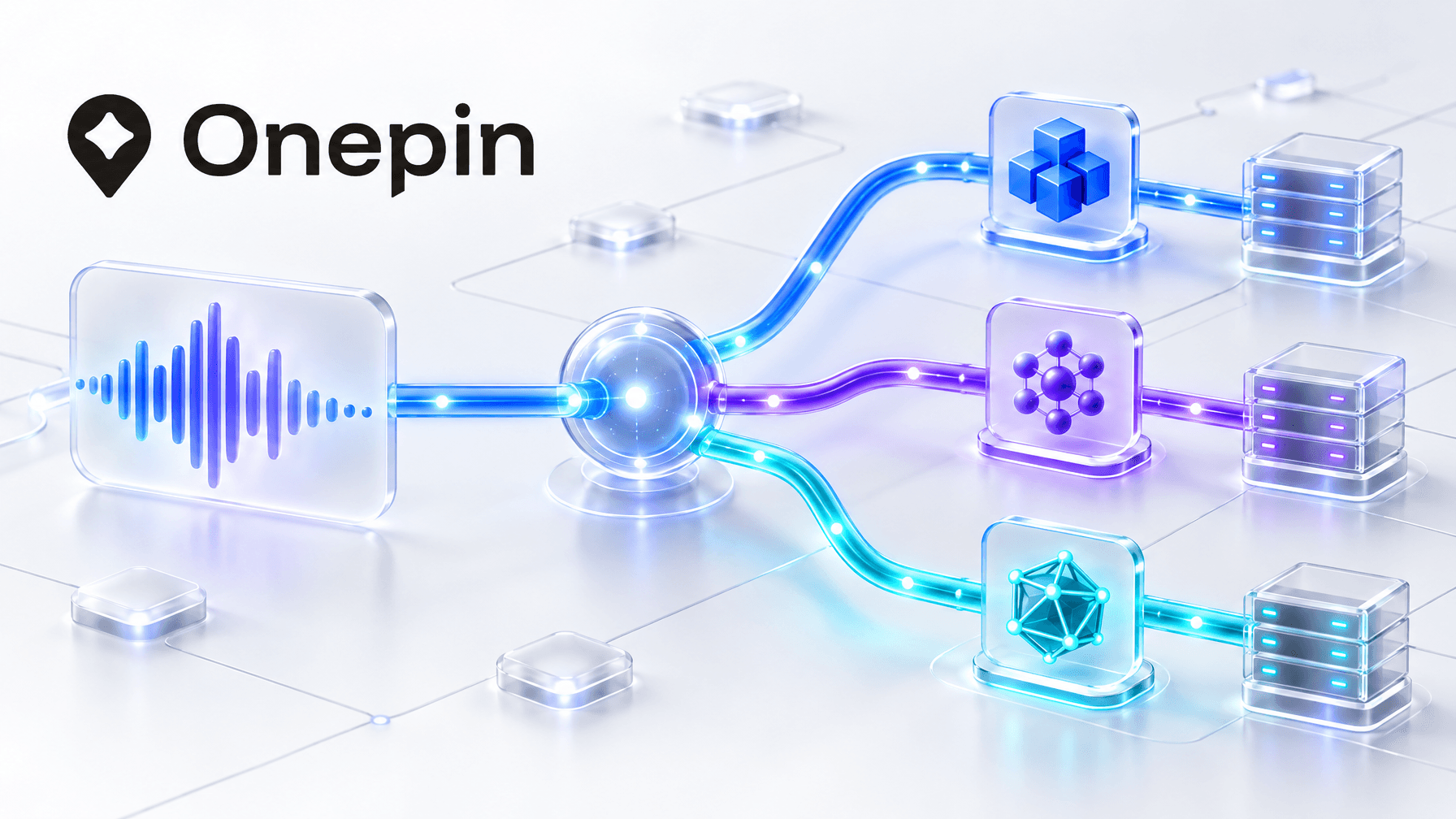
Multi-model TTS routing is an infrastructure architecture that dynamically directs text-to-speech requests across multiple AI voice providers based on latency, cost, language, and voice quality requirements. Rather than tying an application to a single text-to-speech API, a routing layer evaluates incoming audio payloads and selects the optimal model in real time. This multi-provider approach eliminates single-vendor lock-in, prevents API outage downtime, and lowers voice production costs across enterprise workloads.
Engineers building conversational AI agents, video localization pipelines, and automated support systems quickly learn that no single text-to-speech engine excels in every dimension. One provider delivers ultra-low time-to-first-audio (TTFA) for real-time voice bots, while another excels in expressive storytelling or regional accent fidelity. Implementing a routing layer above underlying models decouples application logic from vendor infrastructure.
Why is single-provider text-to-speech a risk for production voice apps?
Single-provider voice architectures create critical operational vulnerabilities by binding applications to the uptime, pricing, and latency characteristics of a single vendor. Over 250 foundation models exist across AI providers in 2026 according to research by MindStudio AI, yet relying on any single vendor exposes software systems to unexpected API outages, rate limits, and model deprecations.
When an API provider experiences server outages, voice agents stall, IVR systems drop calls, and automated video pipelines freeze. Furthermore, text-to-speech pricing varies dramatically between models. High-end neural models cost up to $30 to $160 per million characters, whereas low-latency streaming models cost significantly less. Hardcoding one provider forces engineering teams to pay premium rates even for background notifications or simple internal audio.
Single-provider lock-in also restricts voice variety. A provider with exceptional English voices may suffer from poor pronunciation or limited accent coverage in Spanish, Japanese, or German. Teams that commit to one API compromise product quality across global regions.
How does dynamic multi-model TTS routing work in practice?
Dynamic multi-model TTS routing operates as an intelligent gateway positioned between user applications and external text-to-speech APIs. The gateway inspects each audio generation request, evaluates context variables, and executes a selection algorithm before forwarding the payload to the chosen provider.
+-------------------------------------------------------------------+
|                        Client Application                         |
|             (Voice Agent / Video Generator / IVR / App)           |
+-------------------------------------------------------------------+
                                  |
                                  v
+-------------------------------------------------------------------+
|                   Multi-Model Routing Gateway                     |
|  - Language & Accent Parser     - Real-Time Latency Monitor       |
|  - Cost Optimization Rules      - Automated Pronunciation QA      |
+-------------------------------------------------------------------+
             /                    |                    \
            v                     v                     v
+-------------------+   +-------------------+   +-------------------+
|   ElevenLabs API  |   |   Cartesia API    |   | Deepgram Aura API |
| (High Fidelity)   |   | (Ultra-Low TTFA)  |   | (Voice Agents)    |
+-------------------+   +-------------------+   +-------------------+
The request evaluation pipeline follows four sequential phases:
- Payload Analysis: The routing engine parses incoming text length, language locale, SSML tags, and target delivery format.
- Constraint Matching: The system evaluates constraints such as maximum acceptable latency (<200ms TTFA), target budget, and required voice profile.
- Provider Scoring: Active voice engines are scored against health telemetry, recent success rates, and real-time response times.
- Execution and Validation: The payload routes to the highest-scoring provider. An automated validation pass inspects response headers and audio buffers before delivery.
What are the core routing strategies for enterprise AI voice pipelines?
Enterprise multi-model strategies use specialized routing rules tailored to specific business goals. An analysis of AI gateway patterns published by Future AGI highlights core routing primitives used in production systems:
- Least Latency Routing: Routes real-time voice bot conversations to ultra-fast models like Cartesia or Deepgram Aura to keep time-to-first-audio under 100 milliseconds.
- Cost-Optimized Routing: Directs bulk audio jobs to economical engines like Google Cloud TTS standard voices or OpenAI batch APIs to minimize character charges.
- Locale and Accent Routing: Selects specialized regional providers based on language tags, such as routing Japanese text to local voice models while sending English marketing copy to ElevenLabs.
- Adaptive Fallback Routing: Attempts primary high-fidelity engines first and instantly reroutes to backup models if latency exceeds SLA thresholds or HTTP errors occur.
- Race Routing: Sends duplicate requests to two parallel providers simultaneously, accepting the first audio chunk received and canceling the slower stream.
- Weighted Load Balancing: Distributes character volume across multiple API keys and vendors to avoid hitting rate limits.
Research on enterprise multi-model strategy by Kai Wähner confirms that combining these routing primitives protects systems against vendor disruptions while maintaining strict cost control.
How do you handle automated fallbacks and quality validation during provider outages?
Automated fallbacks require continuous health monitoring, synthetic checks, and audio format normalization. When a primary text-to-speech API returns a 503 error, 429 rate limit, or fails to emit audio frames within a designated time window, the routing gateway executes a circuit breaker pattern.
The circuit breaker temporarily trips the primary vendor off the active pool, preventing cascading timeouts. The gateway then seamlessly retries the synthesis request against a fallback vendor mapped to an acoustically similar voice profile.
To maintain seamless user experiences during a failover event, the routing layer normalizes output sample rates and volume levels. If Provider A returns 44.1kHz WAV audio and Fallback Provider B returns 24kHz raw PCM, the routing engine converts and matches audio frames before streaming to the end user.
Streamlining voice infrastructure with Onepin
Building and maintaining a custom multi-model routing engine requires engineering teams to manage dozens of SDKs, handle inconsistent SSML implementations, write custom audio converters, and build proprietary health checks.
Onepin is a voice workflow platform that orchestrates, validates, and ships production-ready audio across 100+ TTS models.
Instead of hardcoding individual text-to-speech APIs or writing complex failover scripts, developers integrate Onepin once. Onepin dynamically routes audio requests, monitors model quality in real time, validates pronunciation accuracy, and manages automated failovers across top AI voice engines worldwide.
Summary
Multi-model TTS routing transforms text-to-speech from a brittle single-vendor dependency into a resilient, cost-efficient infrastructure stack. Implementing dynamic routing, automated fallbacks, and real-time provider scoring guarantees high availability, lowers operational costs, and delivers superior voice experiences across every market.