Patronus AI Just Raised $50M to Solve AI Agent Validation. Voice AI Still Has No Equivalent.
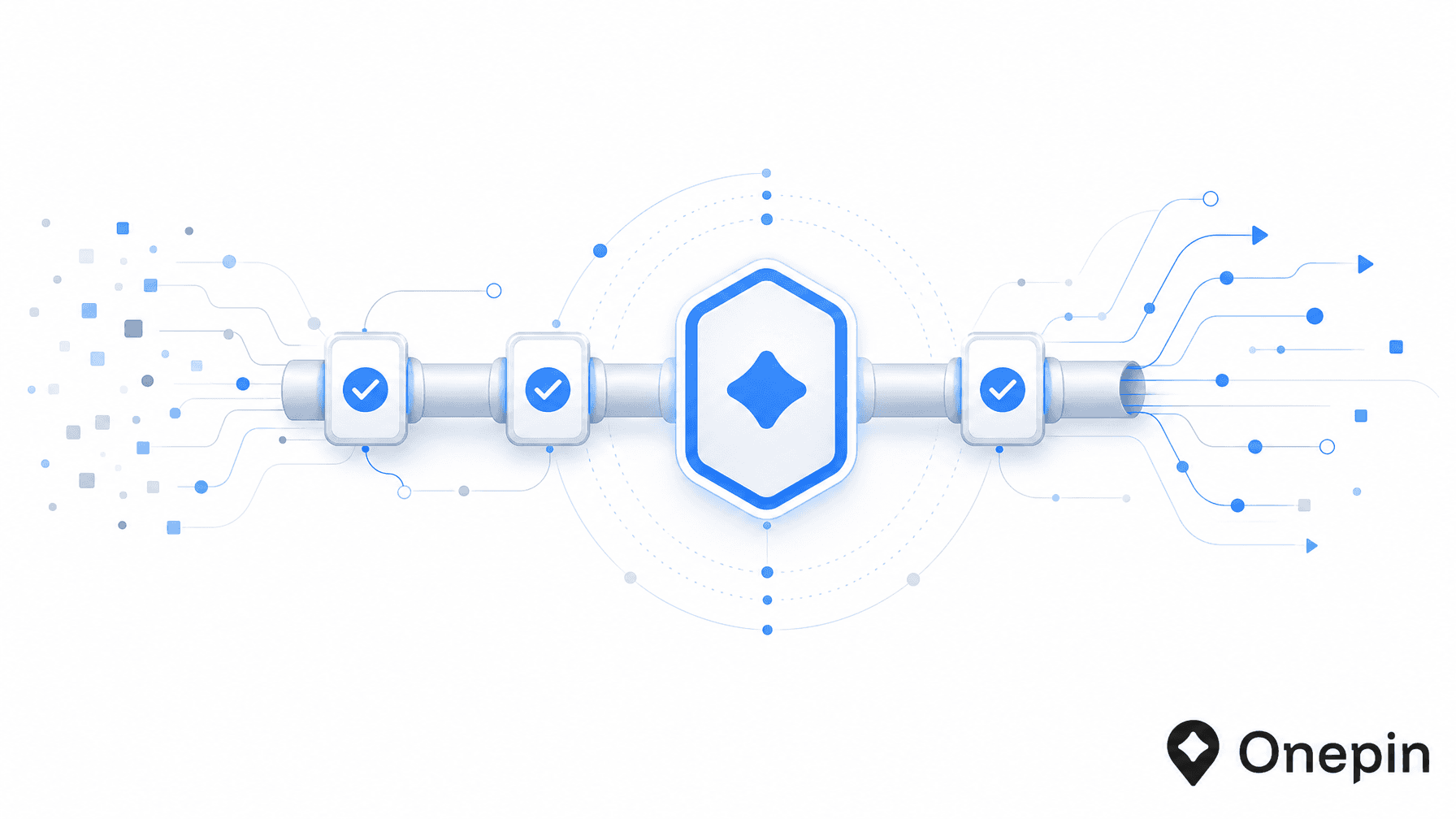
On June 25, 2026, Patronus AI closed a $50M Series B led by Greenfield Partners and unveiled a product called Digital World Models, large-scale simulated environments that let AI agents practice on realistic digital workflows, surface edge-case failures, and self-evaluate before going anywhere near production.
The announcement landed on the same week that Gartner projected AI agent software spend will hit $206.5 billion in 2026, up 139% year over year. Fifty million dollars for pre-deployment agent testing is not a curiosity. It is the industry acknowledging, in capital terms, that shipping AI agents without systematic validation is a production problem.
Voice AI has had that same production problem for years. No one wrote the check.
The Validation Gap the Voice Industry Keeps Ignoring
Every AI voice agent is a pipeline. It takes text, routes it to a TTS model, generates audio, and delivers that audio to a customer, a user, or a downstream system. That pipeline runs at scale: thousands of calls per day, hundreds of thousands of clips per month. And in most deployments, the validation step between "audio generated" and "audio shipped" does not exist.
The parallel to what Patronus AI is solving is exact. Patronus builds simulation environments so general AI agents can fail safely before production. Voice pipelines skip that step entirely. The audio is generated and pushed. If it mispronounces a brand name, if the model version silently shifted and the voice character drifted, if the output fails a 8kHz telephony codec requirement, none of that surfaces until a customer complaint, a support ticket, or a compliance audit.
The gap is not a secret. Teams building voice pipelines know that manual quality review at scale is impossible. Reviewing 2% of calls is the industry norm, a number Krisp cited in their own contact center research. But the response has been to build better monitoring tools after delivery, not validation infrastructure before it.
Why the Industry Built Around the Problem Instead of Solving It
The reason voice teams never built systematic pre-ship validation is straightforward: TTS models were marketed as solved. The demo worked. The voice sounded human. What else is there to validate?
The answer is: everything that happens at production volume.
A TTS model that performs perfectly on a curated 20-script test set will encounter failure modes invisible at that scale: pronoun drift across long documents, hot-word mispronunciation in domain-specific vocabulary, format non-compliance for telephony codecs, acoustic inconsistency between clip 1 and clip 8,000. None of these show up in a vendor demo. All of them show up when you ship 50,000 clips.
ElevenLabs, Cartesia, Deepgram, and MiniMax are all building excellent models. The leaderboard scores improve quarterly. But model quality and production reliability are two separate properties of a system, and the industry has only been measuring the first one.
Patronus AI built its $50M thesis on exactly this distinction, for general agents. Their Digital World Models let agents rehearse failure scenarios in simulation before those failures reach a real user. That is not a model problem. It is an infrastructure problem. And it is exactly the infrastructure voice pipelines have been skipping.
What Pre-Ship Validation Looks Like in Voice
For voice AI production, systematic pre-deployment validation covers four things that demo environments never test:
Pronunciation accuracy at domain scale. Brand names, product identifiers, medical terminology, proper nouns: these fail at a measurable rate when you move from a demo script to a real content library. A quality baseline requires testing the actual content, not a proxy.
Acoustic consistency across volume. The same voice prompt should produce acoustically consistent output at clip 1 and clip 10,000. Version updates to the underlying model, temperature variance, and context length all introduce drift that only surfaces in aggregate analysis.
Format compliance for the delivery target. An audio file that sounds correct to a human ear can still fail a telephony system that requires 8kHz mono G.711, or an accessibility tool that requires a specific loudness normalization standard. Validation needs to check the output against the delivery spec, not just against subjective quality.
Model version lock and audit trail. When a voice model provider updates their model, previously validated output profiles may no longer hold. A production pipeline needs to know which model version produced each clip, and have a path to revalidation when that version changes.
None of these are problems a TTS provider solves. They are pipeline problems, and they require infrastructure above the model layer.
The Broader Pattern: Infrastructure Follows Capital
Patronus AI's raise is part of a broader recognition that AI infrastructure is not just about the models. The Gartner $206.5B projection reflects spend on orchestration, governance, observability, and evaluation: the systems that sit above the raw model and make it reliable in production.
That recognition reached the general agent market. It has not yet reached voice AI at the same funding magnitude. But the failure modes are identical. An agent that takes an action without validation is the same problem as a voice pipeline that ships audio without validation. The user is on the receiving end of an unverified output either way.
The difference is that voice failures are audible. A customer hears the mispronounced brand name. A patient hears the wrong medication name. A listener hears the voice that sounds nothing like last week's episode. There is no silent failure mode in audio.
What This Means for Voice AI Teams
If you are building or operating a voice pipeline today, the Patronus AI raise is a useful signal. The market is validating that pre-deployment testing infrastructure has standalone value, enough to warrant a $50M Series B. The same logic applies to your voice layer.
The question to ask is not whether your TTS model is good. It almost certainly is. The question is whether you have a systematic process for validating output before it reaches a user, and whether that process covers your actual production content, not a demo script.
Onepin is the validation and orchestration layer built for voice production at scale. It runs automated quality checks across pronunciation accuracy, acoustic consistency, format compliance, and model version tracking, before audio ships, not after complaints arrive. The model generates. Onepin validates, retries, routes, and ships.
The broader AI agent industry just wrote $50M to prove that pre-deployment validation is infrastructure, not overhead. Voice AI has needed that same infrastructure for years. The check has arrived.
Frequently asked questions
- What did Patronus AI raise $50M to build?
- Patronus AI closed a $50M Series B led by Greenfield Partners in June 2026 to build Digital World Models, large-scale simulated environments that let AI agents practice on realistic digital workflows and surface failures before going into production. The goal is to give AI agents a pre-deployment testing layer that catches edge-case failures before they reach real users.
- Why do voice AI pipelines need pre-ship validation?
- TTS models perform well in demo conditions but encounter failure modes at production volume that curated test sets never reveal: brand name mispronunciation, acoustic drift across thousands of clips, format non-compliance for telephony or accessibility specs, and silent model version updates. Validation before shipping catches these failures before they reach customers.
- What is the difference between TTS model quality and production reliability?
- Model quality measures how well a TTS system performs on benchmark datasets and controlled demos. Production reliability measures whether that output holds across real content at real volume, with domain-specific vocabulary, varying input lengths, codec requirements, and ongoing model updates. The two are measured separately, but most teams only track the first.
- What does Onepin do that a TTS provider does not?
- Onepin sits above the TTS model as an orchestration and validation layer. It runs automated quality checks on pronunciation accuracy, acoustic consistency, format compliance, and model version tracking before audio ships. TTS providers generate audio; Onepin validates it, retries failures, routes across providers, and produces a complete audit trail per clip.
- How does the Patronus AI raise relate to voice AI production?
- Patronus AI built a $50M company on the premise that AI agents need pre-deployment testing infrastructure, not just better models. Voice AI faces the identical problem: audio ships without systematic validation and failures surface only after customer complaints or compliance audits. The Patronus raise confirms that pre-deployment validation is standalone infrastructure, and voice production needs the same layer.