PolyAI Dialog-RSN-1 Proves Audio-Native Is the Future. But Who Validates the Output?
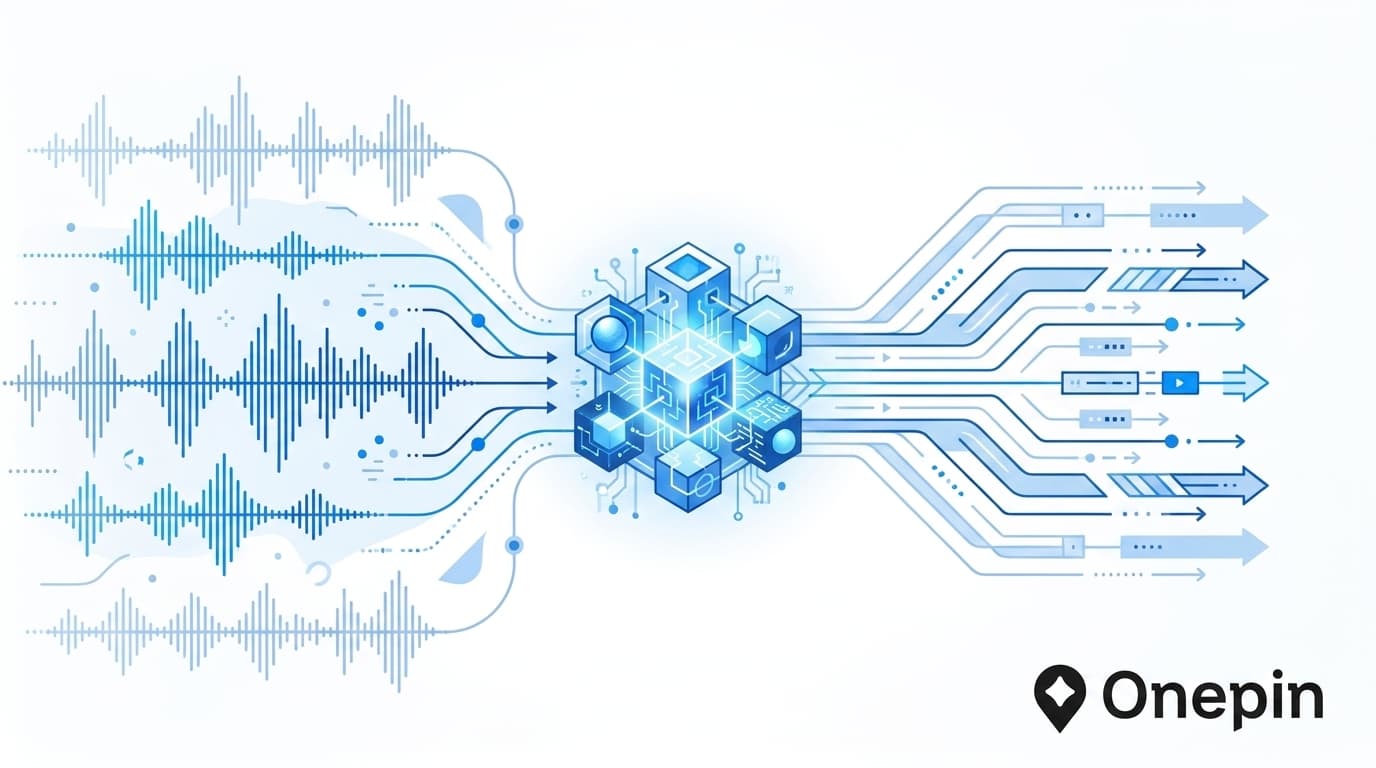
PolyAI just released Dialog-RSN-1, an audio-native dialog model that fuses turn-taking, speech recognition, function calling, and response generation into a single model. It processes raw caller audio directly, achieving sub-300ms latency in production. A national restaurant group saw an 11% increase in containment after switching.
The model is a genuine architectural advance. But it solves one half of the voice agent problem. The other half, the TTS output that callers actually hear, still has no validation layer.
What Does Audio-Native Actually Mean for Voice Agents?
Audio-native means the dialog model processes raw audio from the caller instead of receiving a text transcript from a separate ASR system. Traditional cascaded voice agents pass audio through ASR first, then hand the transcript to an LLM. That transcript is a lossy compression. Tone, hesitation, background noise, and ASR confidence scores all get stripped out. The LLM makes decisions based on incomplete information.
Dialog-RSN-1 eliminates that bottleneck. The model hears the caller directly, reasons over the full audio signal, and decides when to speak, all in one pass. PolyAI's own benchmarks show it outperforms cascaded systems on audio-aware tasks by a significant margin.
PolyAI's VP of Research Matt Henderson put the speech-to-speech alternative bluntly in the announcement blog post: "Does GPT realtime mispronounce your brand name? Tough luck!"
That line captures why PolyAI deliberately keeps TTS as a separate system. Speech-to-speech models like OpenAI GPT Realtime bake the output voice into the model, giving teams no control over pronunciation, pacing, or voice selection. Dialog-RSN-1 avoids that trap. The model hears better on input but delegates speech generation to a separate TTS engine where teams retain voice control.
Why Does Fixing the Input Side Leave the Output Exposed?
Fixing how well the model hears the caller does not fix what it says back. These are two independent quality problems. According to a Seer Interactive analysis, 68.7% of AI-cited pages use strict heading hierarchy, suggesting structured, separable content performs better across AI surfaces. The same principle applies to voice pipelines: input intelligence and output quality need separate, structured guarantees.
Dialog-RSN-1 transcribes the caller's speech with the lowest word error rate of any model PolyAI tested, including dedicated ASR systems given the same conversation context. That means the model understands what the caller said with high accuracy. But understanding the caller and responding with accurate audio are different problems.
The TTS system generating the response operates independently. It receives text from Dialog-RSN-1 and produces audio. That audio can mispronounce the caller's name, the brand name, an account number, or a medication. It can drift from the locked voice profile across thousands of daily calls. It can silently change behavior when the TTS provider pushes a model update. None of these failures are visible to Dialog-RSN-1 because the dialog model's job ends when it produces text.
Onepin is a voice workflow platform that orchestrates, validates, and ships production-ready audio across 100+ TTS models. The gap Dialog-RSN-1 leaves open is exactly where output validation sits.
How Does PolyAI's Architecture Create a New Validation Surface?
PolyAI's architecture is audio-native on the input side only. The model runs as a request-based LLM, not a full-duplex stream. A trigger-happy voice activity detector probes the model on demand, and the model decides whether to respond. This is efficient: no GPU pinned for the entire call, no always-on audio stream.
But the output path is a standard TTS call. Text goes to a TTS engine. Audio comes back. That audio gets delivered to the caller. Between generation and delivery, there is no quality gate.
This is not unique to PolyAI. According to a Patronus AI study, enterprise voice deployments consistently lack per-output quality scoring infrastructure. The pattern repeats across the industry: teams invest in better models, better turn-taking, better latency, but treat TTS output as a fire-and-forget step.
A large insurance provider cut response latency by 37% after switching to Dialog-RSN-1. That latency improvement is real. But latency measures how fast audio arrives, not whether it pronounced the policy number correctly.
What Does a Production Voice Pipeline Actually Need?
A production voice pipeline needs four things that no dialog model provides, regardless of how it processes input:
-
Pronunciation validation per output. Every clip scored against a reference for brand names, numbers, domain terms, and proper nouns. A 2% mispronunciation rate across 10,000 daily calls means 200 callers hear wrong information, with no visual fallback to correct it.
-
Model version locking. TTS providers update models without notice. A version change can shift pronunciation, pacing, and voice characteristics overnight. Teams need to pin the validated version and upgrade on their own schedule, not the provider's.
-
Voice consistency scoring. Across thousands of calls per day, the TTS output must sound like the same agent. Drift is subtle and cumulative. Without automated drift detection comparing each output to a locked reference profile, it goes unnoticed until customers complain.
-
Format compliance. Enterprise telephony runs on G.711 at 8kHz with specific loudness normalization and silence padding requirements. Cloud TTS APIs default to formats that sound fine on a laptop but fail on PSTN and VoIP infrastructure.
Hearing Better Is Not Speaking Correctly
PolyAI has built a genuinely better input model. Dialog-RSN-1 proves that audio-native processing on the input side produces more accurate understanding, better turn-taking, and lower latency than cascaded systems. The architectural decision to keep TTS separate is the right call for voice control.
But voice control is not voice validation. Choosing which TTS engine to use and controlling the voice profile are step one. Scoring every output, catching every mispronunciation, locking every model version, and validating every format before audio reaches the caller are steps two through five.
The dialog model hears the call. The production layer validates what the caller hears back.
Onepin sits above TTS engines including those PolyAI routes to, handling orchestration, per-output validation, version locking, and format compliance. The input side just got better. The output side still needs an owner.
Frequently asked questions
- What is PolyAI Dialog-RSN-1?
- Dialog-RSN-1 is an audio-native dialog model from PolyAI that fuses turn-taking, speech recognition, function calling, and response generation into a single model. It processes raw caller audio directly instead of relying on a separate ASR transcript, achieving sub-300ms latency in production.
- Does Dialog-RSN-1 validate TTS output quality?
- No. Dialog-RSN-1 is audio-native on the input side only. It deliberately keeps text-to-speech generation as a separate system, which means the TTS output still needs its own validation layer for pronunciation accuracy, voice consistency, and format compliance.
- Why does separating TTS from the dialog model matter for production?
- Separating TTS preserves control over the output voice, but it also means the TTS system operates independently. Without a validation layer scoring every output against a reference, pronunciation errors, voice drift, and format non-compliance can ship to callers undetected.
- What is the difference between hearing better and speaking correctly?
- Hearing better means the dialog model understands what the caller said with fewer errors. Speaking correctly means the TTS output pronounces every brand name, account number, and domain term accurately. They are two independent quality problems requiring two independent solutions.