Smallest.ai Raises $13M to Break the Turing Test. Sounding Human Is Not the Same as Being Correct.
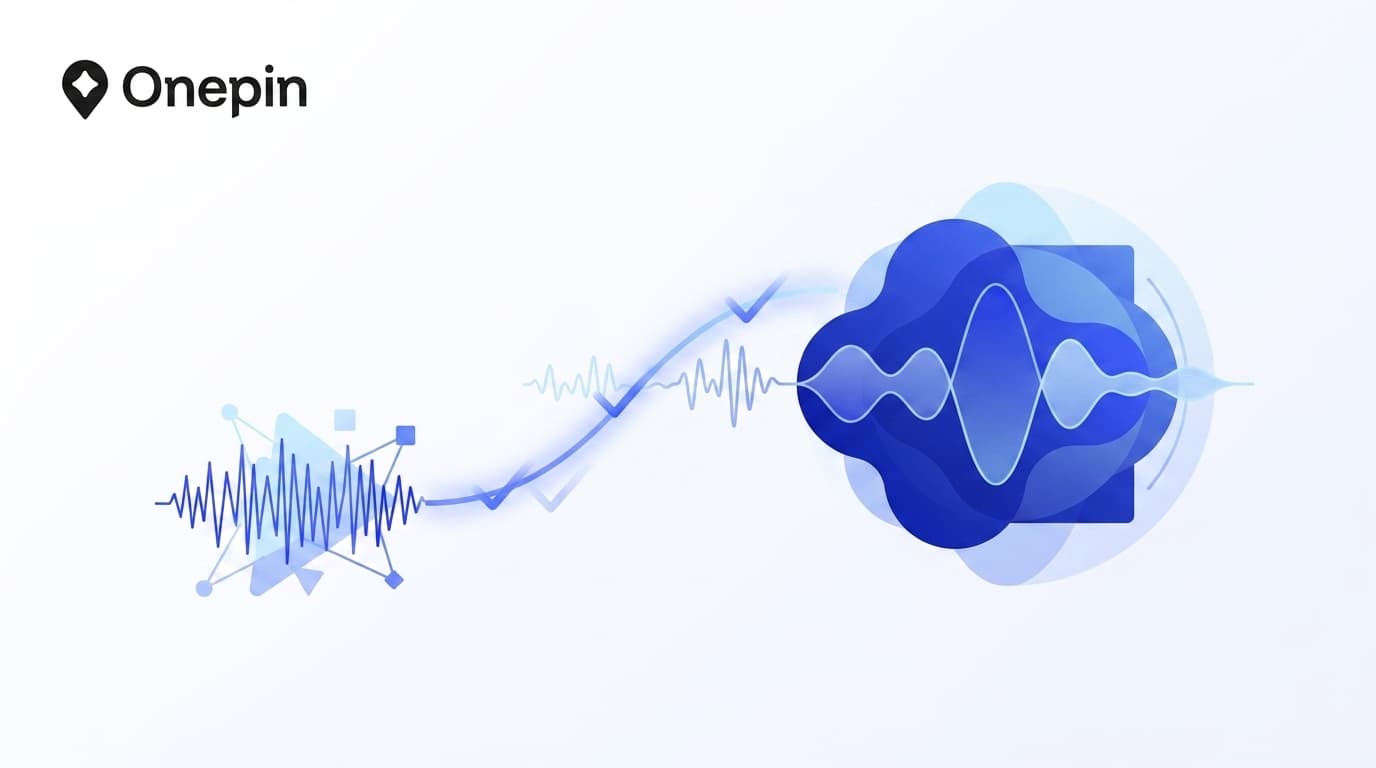
TLDR: Smallest.ai just raised $13M to make voice agents indistinguishable from humans, using a small real-time voice model that hands off to an offline LLM when it hits the edge of its knowledge. The naturalness goal is real. But sounding human and being correct are two separate guarantees, and the two-model handoff is a new failure surface that no Turing test measures.
Passing the Turing test tells you a listener cannot tell your voice agent is a machine. It does not tell you the agent pronounced the customer's name right, read back the correct account number, or quoted the right price. A voice that sounds perfectly human can still ship a wrong detail, and that detail is where the cost lives. That gap is the difference between a great model and a production-ready pipeline.
What did Smallest.ai actually announce?
Smallest.ai raised a $13M Series A led by Seligman Ventures, with Sierra Ventures and 3one4 Capital participating, pushing total funding past $21M. Founder and CEO Sudarshan Kamath told TechCrunch the next leap in voice agents will not come from making large language models faster, but from small, specialized models built for conversation.
The architecture is the interesting part. Smallest.ai runs a small voice model that listens, thinks, and speaks at once for near-zero response lag. When a query lands outside its knowledge base, it hands off to an offline foundational LLM and briefly puts the caller on hold to "research" the answer, the way a human would. Kamath's bet is that every voice agent will soon rely on two models: a small real-time one and a large offline one called in as needed.
His stated goal is blunt: "We want our models to break the Turing test. You should speak to our model and not know it's AI or human." That is a naturalness target. It is worth chasing. It is also not the same target as production correctness.
Why is sounding human not the same as being correct?
Sounding human is a perceptual average over a whole conversation, while correctness is a per-output fact about one specific detail. The Turing test rewards cadence, breath, hesitation, and rapport. None of those catch a mispronounced surname, a misread dollar amount, or a transposed callback number.
This matters most on exactly the content that carries money and trust: proper nouns, account numbers, prices, dates, and medical or legal terms. A model can score brilliantly on human-likeness and still fail on 2% of those tokens, and in a customer-support context that 2% is where refunds, complaints, and compliance incidents come from. Competitors like ElevenLabs and Cartesia chase the same naturalness curve, and the same tail problem applies to all of them. Reach and realism go up. Per-output correctness does not come along for free.
What is the risk of a two-model voice architecture?
A two-model architecture turns one voice pipeline into two failure surfaces plus a handoff seam between them. The small real-time model and the offline LLM each generate language independently, and the moment control passes between them, pronunciation, number formatting, and phrasing can shift mid-call.
That seam is invisible until you validate the audio that comes out of it. Worse, each model can update on its own cadence. A silent version bump to either one can change how a name is spoken or how a figure is read aloud while your own code and prompts stay exactly the same. Teams discover this the way they always do: from a customer complaint, not from a pipeline alert. Two models do not just double the quality ceiling. They double the number of places output can quietly go wrong.
How do you validate AI voice output at scale?
You validate at scale by scoring every output against a locked reference before it ships, not by trusting an average benchmark or a Turing-style impression. The four moves are the same regardless of how good the underlying model is.
- Lock the model version. Pin the exact real-time model and the exact offline model you validated against, so a provider update cannot silently change your spoken output.
- Keep a reference baseline. Store a pronunciation and delivery reference for names, numbers, and domain terms that matter, per language.
- Score every output. Compare each generated clip against the reference and flag the ones that drift, rather than sampling a handful and assuming the rest are fine.
- Regenerate only the failures. Retry the flagged clips instead of re-running the whole batch, so validation is cheap enough to run on everything.
This is the layer a funding round does not buy you. A bigger round funds a better model. It does not attach a quality score to a clip, catch a mispronounced customer name, or route around a bad output.
Where Onepin fits
Onepin is a voice workflow platform that orchestrates, validates, and ships production-ready audio across 100+ TTS models. It sits above whatever model or model combination you use, including a small-plus-offline architecture like Smallest.ai's, and owns the part the model does not: version locking across every model in the chain, per-output validation against your reference, and provenance so every clip carries the parameters that made it.
Breaking the Turing test is a real milestone for how voice agents feel. Shipping correct audio on every call is a different milestone, and it belongs to the production layer, not the model. Build that layer at onepin.ai.
Frequently asked questions
- What did Smallest.ai announce?
- Smallest.ai raised a $13M Series A led by Seligman Ventures with Sierra Ventures and 3one4 Capital, bringing total funding over $21M. The company builds a small, specialized real-time voice model that listens, thinks, and speaks at once, and hands off harder queries to an offline foundational LLM.
- Why is sounding human not the same as being correct?
- Passing the Turing test measures whether a listener perceives the voice as human, which is a perceptual average over a conversation. Correctness is whether the specific name, account number, price, or callback number in a given output is right, and a perfectly human-sounding clip can still get that detail wrong.
- What is the risk of a two-model voice architecture?
- A small real-time model plus an offline LLM handoff creates two failure surfaces and a seam between them. Each model can update independently, changing pronunciation, number formatting, or phrasing, so the spoken output can drift even when nothing in your own code changed.
- How do you validate voice agent output at scale?
- Lock the model version, keep a reference baseline for pronunciation and delivery, score every output against that reference before it ships, and regenerate only the failures. This catches the tail cases that averaged benchmark and Turing-style scores hide.
- What is Onepin?
- Onepin is a voice workflow platform that orchestrates, validates, and ships production-ready audio across 100+ TTS models. It sits above any single model to handle version locking, per-output validation, and provenance, which model quality alone does not solve.