Speechify Built for Listeners. But Who Validates the Outputs?
TLDR: Speechify launched Simba Voice Agents on July 13, 2026: an all-in-one developer platform bundling LLM, STT, TTS, and telephony at a single price. Simba 3.2 is the top-ranked TTS model on Artificial Analysis and Voice Arena. The platform still has no output validation layer. Bundled pricing solves a billing problem. Production validation is a different problem entirely.
A bundled voice agent platform is a product that routes a prompt through LLM reasoning, STT transcription, and TTS synthesis at one billing line item per conversation minute. The production gap is that bundling the components that generate audio does not validate the audio those components produce. Teams who discover this after scaling to tens of thousands of clips discover it in user complaints, not in a dashboard.
Speechify launched Simba Voice Agents this week, positioning the platform as the cheapest path to the world's best-ranked TTS model for production voice agent development. Their developer relations lead put it plainly: "Most AI labs built models for benchmarks and priced them for enterprise. We built for listeners and priced for production deployment." That is a direct, credible claim. Speechify has 60 million daily users who tested this model in real conditions. And Simba 3.2 earned its #1 rank on the Artificial Analysis TTS leaderboard. It did not buy it.
But "built for listeners" and "built for production" are different claims. One is about audio quality during model development. The other is about what happens after generation, at scale, on your content.
What Does the Speechify Simba Voice Agents Platform Include?
Simba Voice Agents is an all-in-one voice agent platform that bundles LLM inference, speech-to-text, text-to-speech, and telephony orchestration at a single rate starting at $0.068 per conversation minute. The platform includes 1,500+ voices in 30+ languages, streaming-native architecture with sub-100ms latency, 13 preset emotion profiles, SSML support, and dedicated phone numbers from the Starter plan onward.
What it does not include: pronunciation validation on your vocabulary, per-output quality scoring, model version locking, or an audit trail linking each clip to the model version that generated it.
That is not a criticism specific to Speechify. ElevenLabs, Deepgram, Cartesia, and every other voice agent platform on the market today ships the same gap. The generation layer and the validation layer are different layers. Bundling the generation components at one price does not close the validation gap.
What Happens When the Top-Ranked Model Goes Multilingual?
Here is the detail in Speechify's launch that reveals the gap most clearly: Simba 3.2, the model that tops both Artificial Analysis and Voice Arena, supports English only. Multilingual deployment requires Simba Multilingual, an older model with a distinct quality profile and a lower leaderboard rank.
A team building a voice agent for English markets gets the world's top-ranked model. A team building in German, Portuguese, or Korean gets a different model. Both teams pay the same per-minute rate. Neither team receives any built-in mechanism to validate that the multilingual model meets their quality threshold on their actual production vocabulary.
That matters because TTS models do not fail uniformly. A model that produces clean output on general conversational scripts may mispronounce brand names, product identifiers, or technical terms at a rate that would not surface on a benchmark but does surface in your first production week. The leaderboard rank reflects performance on a curated test set. It does not reflect performance on your content.
Why Do All Voice Agent Platforms Skip the Validation Layer?
The validation layer does not ship with any TTS model or bundled voice agent platform because it is not a model problem. It is an infrastructure problem.
Validation requires knowing what good looks like for your content before you can flag when a clip falls short. That means a pronunciation reference library built on your vocabulary, per-output quality checks that score every generated clip rather than sampling, model version locking so a provider update does not silently alter the audio your users hear, and an audit trail that connects every complaint to the model version and quality score behind it.
None of this is a model capability. It is a workflow layer that runs above any model, regardless of whether that model ranks first or last.
How Should Production Teams Build on a Bundled Platform?
Production teams building on Speechify Simba Voice Agents, or any bundled voice agent platform, need to address four questions before they scale:
Pronunciation validation: Does every output meet an accuracy threshold on your specific vocabulary, or do errors surface when users report them?
Model version locking: When Speechify updates Simba Multilingual, does your production voice change without notice?
Per-output quality scoring: Can you identify which clips in a 10,000-clip batch need a retake, or do you re-run the entire batch?
Audit trail: Can you trace a user complaint to the model version and quality score behind the clip?
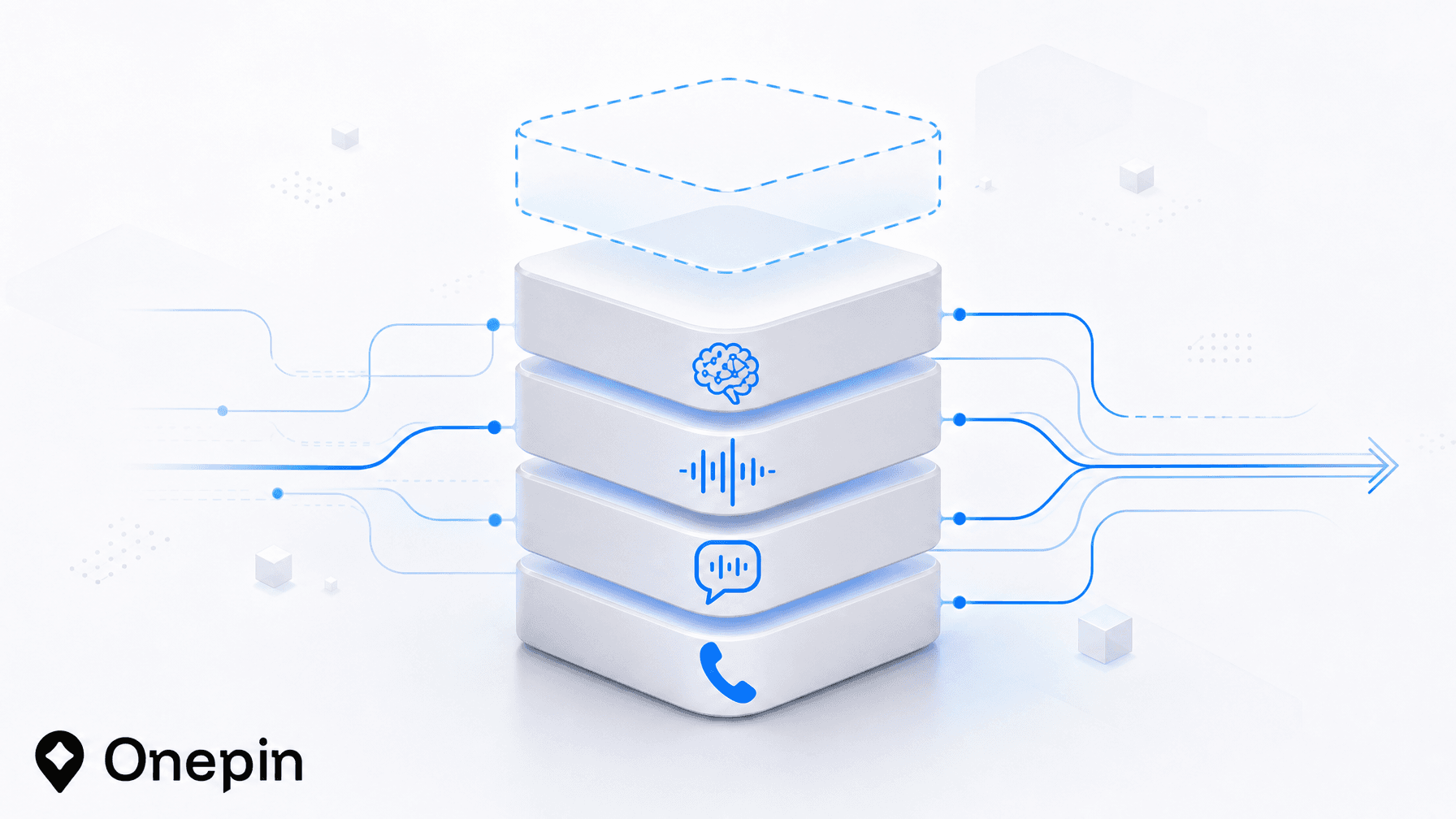
Onepin is a voice workflow platform that orchestrates, validates, and ships production-ready audio across 100+ TTS models. It runs above platforms like Speechify Simba, adding the validation layer that bundled platforms leave out. Teams use Onepin to lock model versions per deployment, score every output before it ships, and route to a fallback model when quality drops below threshold, without switching platforms or rebuilding pipelines.
Bundled Pricing Solves Billing. Validation Solves Production.
Speechify's entry into the developer market is credible. A company that tuned TTS quality for 60 million daily users has real production credibility that most API-first labs lack. Simba 3.2 earned its leaderboard position. And all-in-one pricing at $0.068 per conversation minute forces competitors to rethink their component-by-component billing.
But the production problem for teams deploying voice at scale is not billing complexity. It is the gap between what the model generates and what is safe to ship. Every bundled platform, regardless of the model's leaderboard rank, leaves that gap open.
The validation layer is what closes it. And it runs above all of them.
Start building with production validation at onepin.ai.
Frequently asked questions
- What is Speechify Simba Voice Agents?
- Speechify Simba Voice Agents is an all-in-one developer platform that bundles LLM inference, speech-to-text, text-to-speech synthesis, and telephony orchestration at a single per-minute price. It is powered by Simba 3.2, which currently holds the top rank on the Artificial Analysis TTS leaderboard and Voice Arena. The platform is designed for developers building voice agents without managing separate billing for each component.
- Does Speechify Simba 3.2 support multiple languages?
- Simba 3.2, the top-ranked model on the Artificial Analysis leaderboard, is currently English-only. Multilingual deployment requires Simba Multilingual, an older model with a different quality profile and a different leaderboard position. Teams deploying in non-English languages are using a different model than the one marketed as the world's best, with no built-in mechanism to validate quality on their specific content.
- What does a voice AI output validation layer do?
- A voice AI output validation layer checks every generated audio clip against a quality baseline before it ships. This includes pronunciation accuracy on your specific vocabulary, acoustic consistency across clips, format compliance for your delivery channel, and model version locking so provider updates do not silently change your production audio. No TTS model or bundled voice agent platform includes this layer. It runs above the model.
- How is Onepin different from a bundled voice agent platform like Speechify Simba?
- Speechify Simba Voice Agents handles audio generation and conversation routing. Onepin handles validation, version locking, pronunciation QA, and audit trail above any TTS model or agent platform, including Speechify. Teams use Onepin on top of their chosen provider to score every output, lock model versions per deployment, and route to a fallback model when quality drops below threshold.