Vattara Launches a Voice Agent Evals Module. Pre-Launch Testing Is Not Production Validation
TLDR
Vattara Labs just launched a Voice Agents Evals Module to stress-test conversational voice systems before they hit production. It is a genuinely useful step, and it signals that the industry is finally treating voice quality as an engineering problem. But pre-launch simulation and production validation are two different jobs. Testing a pipeline before launch does not validate the real audio it ships after launch. This post breaks down the gap and how to close it.
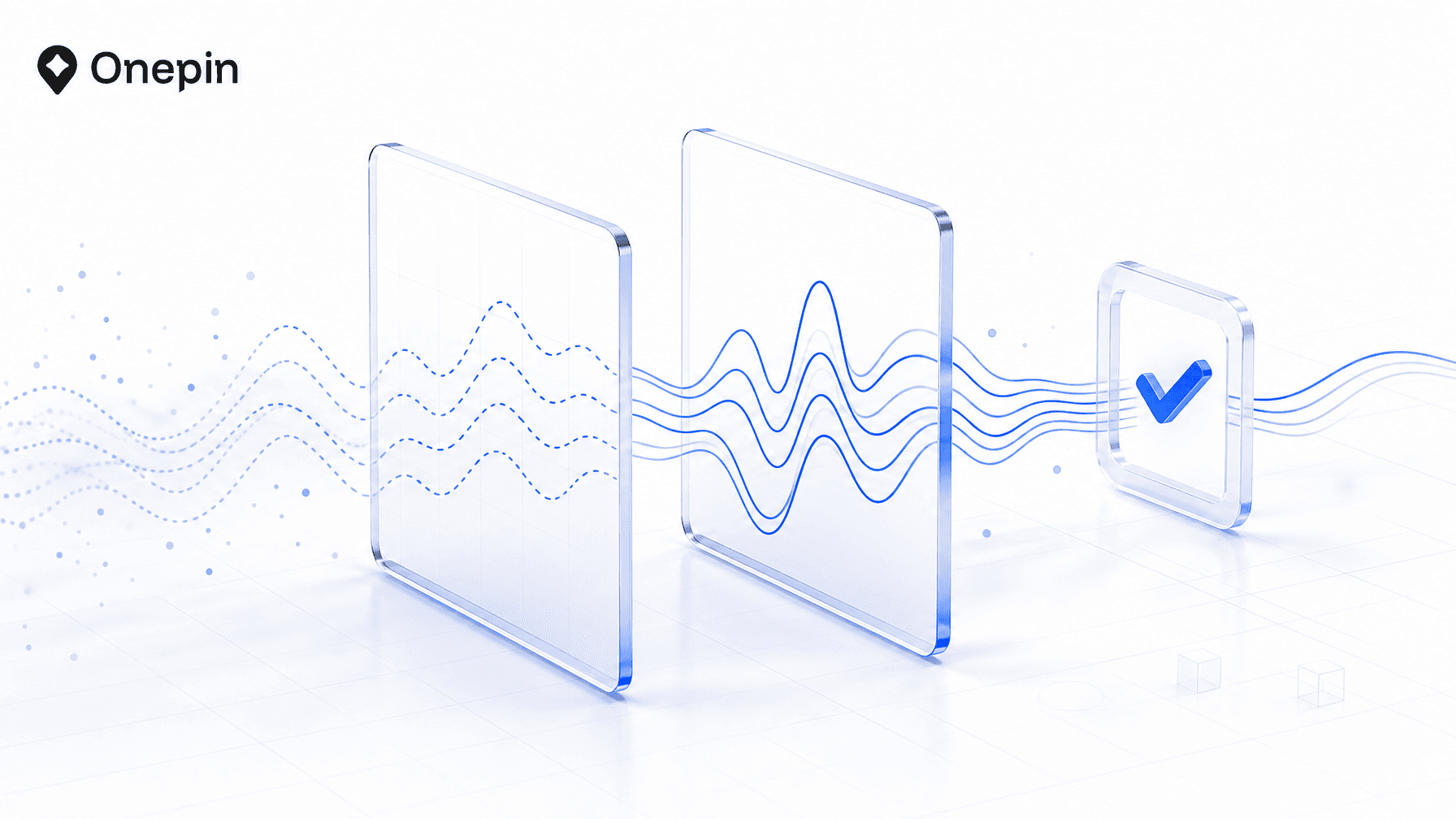
Pre-launch evals and production validation are two separate problems. Evals simulate calls to prove a voice pipeline can hold up under load and edge cases before you ship it. Production validation checks the real audio your system actually generates, on every output, after you ship it. Teams that run one and skip the other still ship broken audio, because the failures that matter most appear on real inputs the test set never contained.
What did Vattara launch?
Vattara Labs announced its Voice Agents Evals Module on LinkedIn, positioning it as a way for enterprise teams to stress-test conversational voice systems before they reach production. The module simulates thousands of live calls with complex personas, accents, and edge cases, runs concurrent load testing to find scaling bottlenecks, ships industry scenario libraries for healthcare, banking, retail, and hospitality, and traces structural failures across the full speech-to-text, LLM, and text-to-speech pipeline.
Notably, it is model-agnostic. Vattara says it works whether you build on Vapi, Retell, ElevenLabs, Deepgram, or your own stack. That is the right instinct. Voice quality is not a property of one vendor, and testing tools that lock to a single model miss the point.
This is a good launch. The industry needs more of exactly this. But the framing, test before you ship, quietly draws the wrong boundary around the problem.
Why is pre-launch testing not the same as production validation?
Pre-launch testing proves your pipeline can work under controlled conditions. Production validation proves it did work on the output you just shipped. Those are not the same guarantee, and the gap between them is where real failures live.
A pre-launch eval runs against three things that all change the moment you go live:
- A frozen model snapshot. Your eval passes against the model as it exists on test day. TTS providers retrain and update models without notice, so the version you validated is not necessarily the version serving traffic next month. The eval cannot see a change that has not happened yet.
- A synthetic input set. Simulated personas and scenario libraries are broad, but they are still a fixed list. Real production traffic contains the specific customer names, account numbers, product SKUs, and domain terms your test set never enumerated. Mispronunciation shows up on exactly the inputs a simulation did not think to include.
- A moment in time. An eval is a snapshot. Production is a continuous stream. Quality drift across thousands of live outputs, silent provider updates, and slow degradation do not register in a test you ran once before launch.
None of this makes evals worthless. It makes them incomplete. Passing a stress test is necessary and not sufficient. The audio still needs to be checked as it ships.
What does the industry keep getting wrong about voice quality?
The industry keeps treating voice quality as a launch gate instead of a running process. Teams stress-test hard before go-live, celebrate a clean eval report, and then ship for months with no check on the audio actually leaving the pipeline.
This is the same pattern we see across every voice AI failure. A demo sounds flawless. A pilot passes. A benchmark tops the leaderboard. Then real volume arrives and a small, steady percentage of outputs fail silently, because nobody is listening to output 8,432 and no automated layer is scoring it. A 2 percent pronunciation error rate is invisible in a pre-launch test of curated scripts. Across 50,000 real calls it is 1,000 broken interactions your customers hear before you do.
Evals move the check earlier, which is good. But earlier is not the same as always. The output that damages your brand is the one that ships next Tuesday against an input no simulation predicted, on a model version that updated last week.
How does a production validation layer close the gap?
A production validation layer checks every real output against a quality baseline as it is generated, then retries what fails and locks the model version so quality does not drift. It runs continuously on live audio rather than once on simulated calls, which is exactly the coverage a pre-launch eval cannot provide.
Onepin is a voice workflow platform that orchestrates, validates, and ships production-ready audio across 100+ TTS models. Where an evals tool stress-tests the pipeline before launch, Onepin validates the pipeline's real output after launch, on every clip:
- Per-output scoring. Every generated file is scored for pronunciation, acoustic consistency, and format compliance before it ships, so the failing percentage never reaches your audience.
- Model version locking. Pin the exact model and voice so a silent provider update cannot change your output without you knowing.
- Automated retries. When an output fails its check, regenerate only that output instead of re-running the batch.
- Model-agnostic routing. Route each job to the best model for the language, cost, and quality target, and switch when a better model appears.
Run both. Use evals to de-risk the launch. Use production validation to catch what only shows up after it. The teams that ship reliable voice at scale do not choose between testing and validating. They do both, because they cover different failures.
The bottom line
Vattara's evals module is a real step forward, and model-agnostic pre-launch testing is the right instinct. But a clean eval report is a starting line, not a finish line. The audio that ships after launch, on inputs you never simulated, against models that quietly changed, still needs to be validated on every output.
If you want every real voice output validated and publish-ready before it ships, see how Onepin runs production voice validation across 100+ models.