Voice AI Platform Architecture: Cascaded vs Speech-to-Speech in 2026
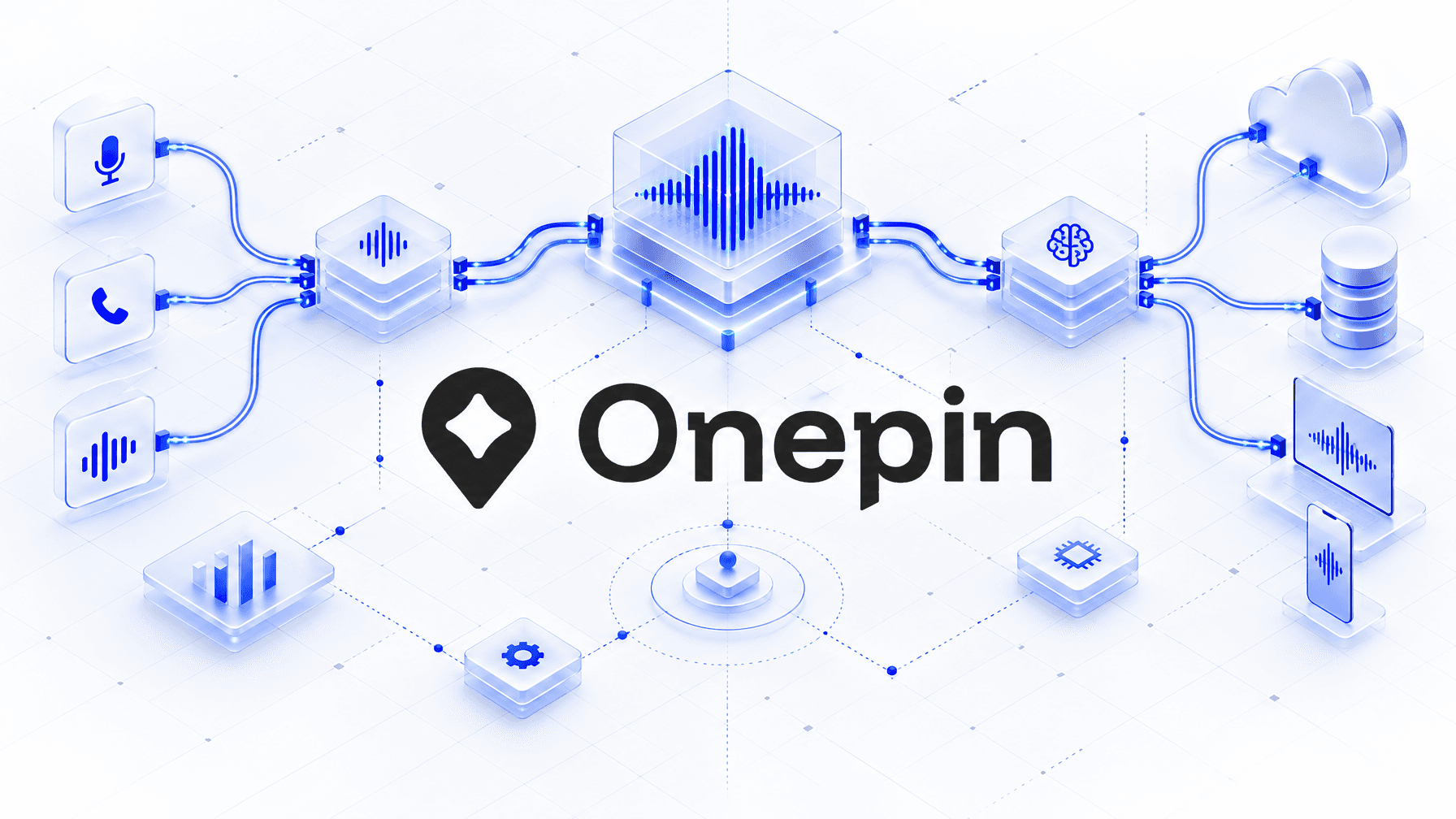
TLDR: Enterprise voice AI platform architecture in 2026 has split into two core designs: traditional cascaded pipelines (Speech-to-Text to LLM to Text-to-Speech) and native speech-to-speech models. Cascaded stacks provide precise control, custom routing, and inspection at each stage, while speech-to-speech minimizes conversational handoffs. Real-world systems run on end-to-end orchestration, resilient telephony transport, and automated audio validation layers that catch acoustic failures before callers hear them.
A voice AI platform architecture is the complete software and infrastructure design that ingests audio, interprets meaning, executes business logic, and generates validated spoken sound. The core architectural challenge is not generating synthetic speech; it is orchestrating distributed models, managing sub-second transport latency, and enforcing acoustic quality standards across millions of conversational turns. Teams that treat voice AI as an unmonitored chain of raw API calls discover that low-latency generation without automated quality validation produces audio that sounds confident while delivering mispronounced terms and jarring audio artifacts to live users.
Modern enterprise systems require a layered blueprint that balances model speed with strict operational governance.
What is a voice AI platform architecture?
A voice AI platform architecture is a modular infrastructure stack that manages the full lifecycle of synthetic speech and conversational voice interactions. Rather than relying on a monolithic service, an enterprise voice architecture separates transport protocols, model inference, business state machines, and output verification into decoupled microservices.
At production scale, this architecture coordinates five foundational components:
- Audio Transport and Ingestion Layer: Manages bi-directional audio streaming via WebSockets, WebRTC, or SIP telephony trunks connected to providers such as Twilio or native carrier gateways.
- Speech Recognition (STT/ASR): Converts incoming audio streams into timestamped text tokens using acoustic models like Deepgram Nova-3.
- Dialogue and Reasoning Engine: Evaluates conversation state, executes tool calls, retrieves enterprise knowledge via RAG pipelines, and streams responses from foundational LLMs.
- Speech Synthesis Engine (TTS): Converts generated response text into acoustic waveforms using fast neural engines such as Cartesia Sonic or ElevenLabs Flash.
- Validation and Orchestration Layer: Inspects intermediate audio frames, verifies pronunciation accuracy, enforces broadcast loudness standards, and triggers fallback routes upon failure.
How do cascaded pipelines compare to native speech-to-speech models?
Cascaded voice AI pipelines pass audio through sequential specialized models, whereas speech-to-speech (S2S) architectures process audio tokens directly inside a single multimodal neural network. Both architectural patterns exhibit distinct operational advantages and failure modes in high-volume enterprise environments.
| Architectural Dimension | Cascaded Pipeline (STT → LLM → TTS) | Native Speech-to-Speech (Audio-in / Audio-out) |
|---|---|---|
| Component Modularity | Decoupled; swap STT, LLM, or TTS providers independently | Monolithic; dependent entirely on single foundation provider |
| Inspection & Guardrails | Full visibility into transcript text, prompt filtering, and audio frames | Black-box audio token processing; limited intermediate inspection |
| Turn-Around Latency | Cumulative across network hops (typically 400ms – 800ms end-to-end) | Native acoustic processing (typically 250ms – 450ms end-to-end) |
| Acoustic Control | Granular control over pronunciation lexicons, SSML, and audio formats | Emergent prosody; variable phonetic accuracy on niche brand names |
| Vendor Redundancy | High; dynamic failover to alternative TTS or STT endpoints | Low; provider outage stalls the entire conversational interface |
Cascaded architectures remain the dominant enterprise choice because they allow organizations to choose best-of-breed providers for each task. Engineering teams route English phone calls to ultra-low-latency models while directing multilingual dubbing workflows to engines optimized for specific regional phonemes. Furthermore, cascaded systems provide text auditability, allowing compliance teams to log exact transcripts and execute safety checks between transcription and synthesis.
Native speech-to-speech models eliminate text conversion bottlenecks by translating vocal inflection, laughter, and interruptions directly across audio tokens. This reduces turn-around delay toward natural human cadences near 200 milliseconds. However, speech-to-speech architectures obscure internal reasoning. When a model mispronounces a brand name or fabricates account figures vocally, engineers cannot intercept the mistake before acoustic synthesis occurs.
How does end-to-end latency break down across the voice stack?
End-to-end voice latency measures the total elapsed time between a user completing an utterance and hearing the first playable audio chunk from the synthetic speaker. In high-performance systems, this turn-around latency must stay below 600 milliseconds to avoid conversational overlap and awkward pauses.
Total system latency is governed by cumulative network and processing stages:
Latency (total) = Transport (network) + ASR (inference) + LLM (TTFT) + TTS (TTFA) + Client (buffer)
| Pipeline Stage | Nominal Latency | Primary Optimization Strategy |
|---|---|---|
| Audio Ingestion & VAD | 80ms – 150ms | Deploy local Voice Activity Detection to minimize silence detection |
| Speech-to-Text (ASR) | 100ms – 200ms | Stream partial audio buffers over persistent WebSockets |
| Language Model (TTFT) | 120ms – 250ms | Utilize speculative decoding, prompt caching, and quantized models |
| Text-to-Speech (TTFA) | 40ms – 120ms | Stream chunked sentences into high-speed engines like Cartesia Sonic (~40ms TTFA) |
| Audio Transport & Jitter | 50ms – 100ms | Edge colocation with telephony media servers and regional edge routing |
According to independent benchmark data from Openbenchmarks, modern neural voice engines deliver time-to-first-audio (TTFA) figures between 40 milliseconds and 230 milliseconds depending on model architecture and container headers. When engineering teams fail to stream text on sentence boundaries or delay playback until full audio payloads download, overall latency rapidly escalates past 1,200 milliseconds.
Why do enterprise voice pipelines fail in production?
Enterprise voice pipelines fail in production because probabilistic generative models encounter unpredictable real-world audio environments that laboratory evaluations never test. A voice model that scores exceptionally on synthetic benchmarks frequently breaks when exposed to telephone line noise, localized dialects, or concurrent scale.
- Pronunciation Drift: General-purpose acoustic models struggle with medical terminology, ticker symbols, and brand names without explicit phonetic mappings.
- Audio Artifacts: Network packet loss and token boundary clipping produce audible pops, clicks, or abrupt pitch drops.
- Telephony Mismatches: Converting modern 24kHz audio down to telephony 8kHz G.711 specs without proper resampling filters creates robotic distortion.
- Concurrency Throttling: Single-vendor voice stacks collapse during sudden call volume spikes under HTTP 429 rate limit exceptions.
How do you build a resilient audio validation and orchestration layer?
Building a resilient voice architecture requires inserting an automated governance and validation layer between foundational speech engines and end listeners. An orchestration layer decouples business logic from proprietary APIs, transforming raw generative audio into a validated, enterprise-grade utility.
A production-grade voice orchestration engine enforces four operational mandates:
- Dynamic Multi-Model Routing: Routes requests across global engines based on requested language, dialect, and required latency targets.
- Automated Pre-Flight Acoustic Validation: Scores generated audio chunks against quality metrics before transmitting samples over active media bridges.
- Autonomous Error Interception and Failover: Catches provider timeouts and rate limit responses instantly, falling back to a warm secondary engine within 50 milliseconds.
- Standardized Format Normalization: Applies automated loudness normalization (-16 LUFS for media, -24 LUFS for telephony) and compliant downsampling.
Onepin is a voice workflow platform that orchestrates, validates, and ships production-ready audio across 100+ TTS models. Instead of hardcoding application logic to a single proprietary voice vendor, developers connect through a unified orchestration layer that automatically manages provider failovers, validates pronunciation accuracy, and enforces acoustic compliance at enterprise scale.
What are the key architectural decisions for voice engineering teams?
Voice engineering teams must make deliberate architectural choices early in development to balance delivery velocity against technical debt:
- Decouple Transport from Inference: Isolate SIP and WebRTC media servers from core business orchestration logic to prevent telephony protocol quirks from destabilizing model routing.
- Measure Time to First Audio (TTFA), Not TTFB: Log the arrival timestamp of the first playable audio frame rather than initial HTTP container headers.
- Avoid Single-Vendor Monoliths: Design modular interfaces that treat TTS and STT providers as pluggable compute layers, preventing vendor lock-in.
- Implement Automated Audio QA: Integrate automated acoustic testing into pipelines to catch pronunciation regressions before deploying new voice agents.
By establishing an architecture centered on modularity, transparent latency budgets, and rigorous audio validation, organizations deploy voice AI systems that operate with enterprise reliability across every customer conversation.
Frequently asked questions
- What is a voice AI platform architecture?
- A voice AI platform architecture is the complete system design connecting audio transport, speech recognition, business reasoning, speech synthesis, and quality validation. It governs how audio streams through a pipeline, how models process conversation, and how production systems verify acoustic outputs before delivery.
- What is the difference between cascaded and speech-to-speech voice architectures?
- Cascaded architectures separate speech recognition, language models, and text-to-speech into distinct stages, providing granular control over prompts, routing, and acoustic validation. Native speech-to-speech models process audio tokens directly to reduce processing steps, but they restrict intermediate inspection, pronunciation control, and per-stage compliance checks.
- Why do enterprise voice AI pipelines fail in production?
- Voice AI pipelines fail in production because raw model inference lacks automated audio validation. Unchecked pipelines ship mispronunciations, volume spikes, hallucinated loops, and telephony codec mismatches directly to end listeners when systems omit post-generation validation.
- How does multi-model voice orchestration prevent vendor lock-in?
- Multi-model orchestration decouples application logic from individual model APIs by routing requests dynamically across specialized engines based on language, latency targets, and cost. If a provider experiences an outage or quality regression, traffic reroutes automatically without rewriting application integrations.