Voice AI Platform Architecture: How Multi-Provider Orchestration Eliminates Single-Model Failures
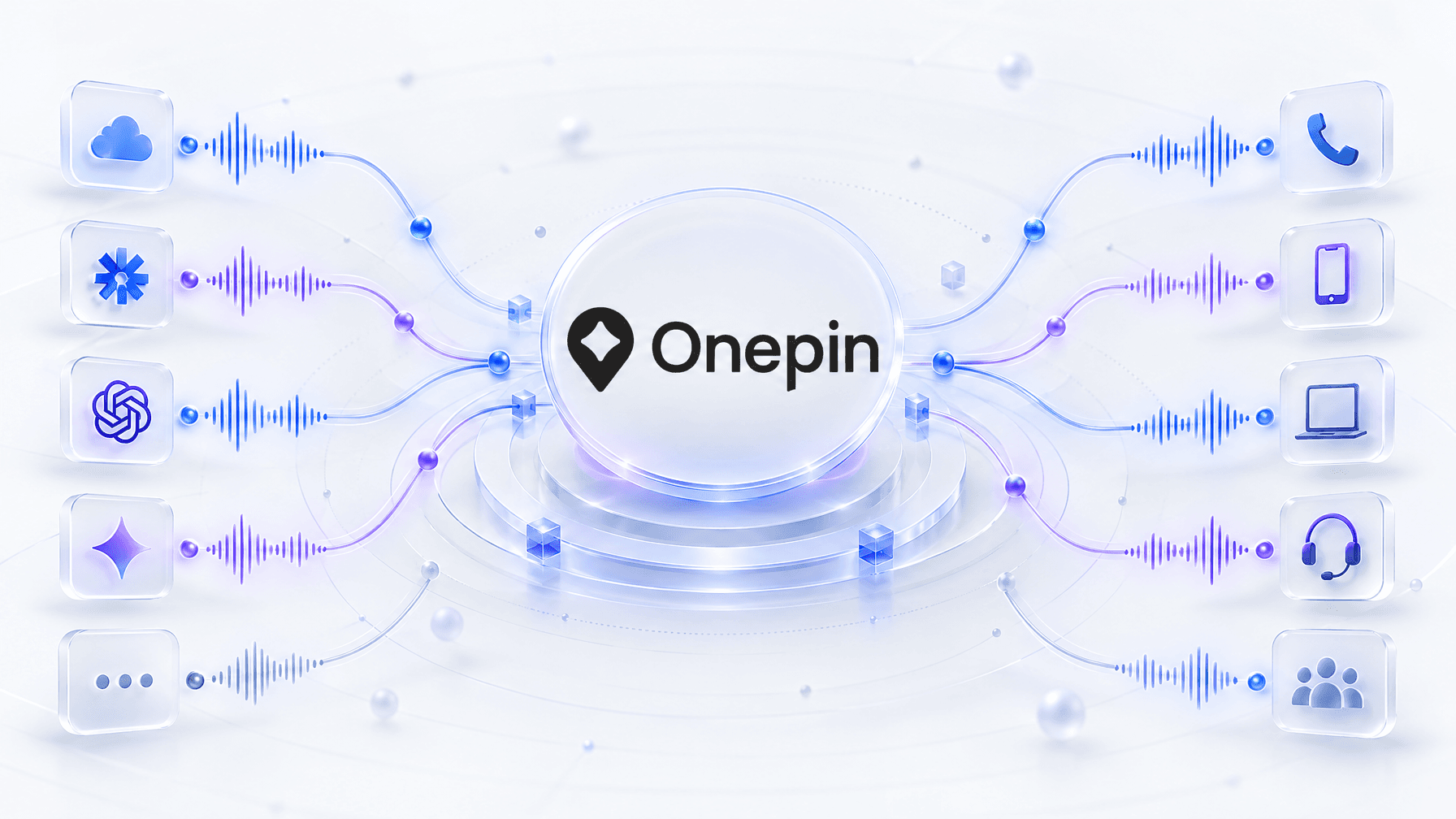
A voice AI platform is an operational orchestration and validation system that manages speech synthesis, audio delivery, and quality assurance across multiple underlying text-to-speech engines. The primary engineering bottleneck in enterprise conversational systems is no longer raw synthesis quality: it is preventing silent acoustic failures, managing vendor downtime, and enforcing brand pronunciation across global deployments. Development teams that couple application logic directly to a single provider SDK routinely ship audio that generates rather than validates.
What is a voice AI platform?
A voice AI platform is a decoupled control plane situated between application business logic and raw text-to-speech APIs. While a single TTS engine converts input text tokens into raw audio frames, a platform handles token preprocessing, dynamic latency routing, automated format validation, and hot failover. According to enterprise market analysis by Market.us, platform orchestration solutions account for 76.4% of enterprise voice deployments, driven by the operational risk of vendor concentration.
Direct API integration binds client applications to specific vendor idiosyncrasies. When an engineering team hardcodes endpoints for ElevenLabs or Cartesia, any upstream outage or breaking schema revision halts customer-facing speech. In contrast, an enterprise voice AI platform abstracts external dependencies behind unified WebSocket and REST interfaces, standardizing request payloads, voice IDs, and audio streaming formats across dozens of heterogeneous engines.
| Layer | Single-Model Integration | Enterprise Voice AI Platform |
|---|---|---|
| Routing Control | Hardcoded client endpoints | Dynamic latency, cost, and locale routing |
| High Availability | Complete outage on upstream failure | Sub-150ms automated multi-provider failover |
| Pronunciation QA | Manual SSML adjustments per engine | Global cross-provider phoneme lexicon validation |
| Format Standards | Provider-native container defaults | Automated LUFS loudness, sample-rate, and bit-depth enforcement |
| Model Governance | Unannounced vendor model updates | Version locking and automated acoustic drift regression tests |
Why do single-provider speech architectures fail at scale?
Single-provider speech architectures fail because production voice workloads encounter extreme variance across three dimensions: infrastructure availability, linguistic precision, and unannounced model drift.
Every external voice API experiences transient latency spikes, WebSocket disconnections, and rate-limit throttling. Research published by Parloa indicates that conversational latency exceeding 600 milliseconds degrades customer satisfaction and increases call abandonment by up to 28%. When an un-orchestrated application relies entirely on one vendor, a 2-second API latency hiccup freezes agent turn-taking, causing awkward conversational dead air.
Linguistic inconsistency presents an equally severe point of failure. A frontier voice model that achieves exceptional naturalness on conversational English often degrades on German technical terminology or Japanese honorifics. Furthermore, proprietary model providers routinely push model weights or inference optimizations without version deprecation schedules. A prompt that synthesizes cleanly on Friday can introduce severe pronunciation distortion or pitch drift on Monday. Without automated quality scoring across independent providers, degraded audio ships directly to users.
How does multi-provider routing optimize latency and cost?
Multi-provider routing analyzes incoming speech payloads in real time and directs generation to the engine optimized for that specific utterance. Real-time conversational voice agents prioritize time to first byte (TTFB), whereas batch video dubbing pipelines prioritize emotional cadence and high sample rates.
An orchestration layer evaluates incoming requests against four deterministic parameters:
- Target Language and Locale. The router inspects language tags and routes requests to providers with proven linguistic accuracy for that dialect. For example, low-latency streaming English routes to Cartesia Sonic, while narrative dubbing routes to ElevenLabs or Rime AI.
- Latency Budget (SLA). Real-time conversational agents require TTFB under 150ms. The platform directs interactive turns to ultra-fast streaming models over persistent WebSocket connections while reserving resource-intensive diffusion models for asynchronous processing.
- Character Billing and Economics. Simple transactional phrases (such as reading back account balances or order confirmations) run on cost-effective foundational models, preserving premium allocations for complex conversational turns.
- Hardware and Channel Constraints. Telephony pipelines over SIP and WebRTC require 8kHz or 16kHz μ-law streams, whereas studio video editors require 44.1kHz or 48kHz uncompressed PCM. The platform handles conversion and routing upstream of playback.
How do automated failover and fallback circuits work?
Automated failover detects vendor degradation within milliseconds and switches traffic to hot standby models before human listeners detect an interruption. This architecture operates via circuit breaker patterns integrated directly into the streaming audio gateway.
When a client initiates a synthesis request, the primary voice provider receives the streaming text buffer. The orchestration gateway monitors the socket connection for three failure triggers:
- Connection Refusal or HTTP 5xx Status: Immediate cutover to the secondary engine.
- TTFB SLA Breach: If the primary provider fails to deliver the initial audio chunk within 200ms, the platform dispatches a parallel speculative request to a warm fallback engine.
- Buffer Starvation: If the downstream audio buffer drains faster than the provider delivers subsequent packets, the system completes the utterance on the fallback model.
To ensure vocal consistency during failover, the platform maps voice attributes (gender, pitch, timbre, speaking rate) to equivalent voice profiles across providers. The listener experiences uninterrupted conversation rather than a broken call.
What automated quality checks must run before audio ships?
Production speech validation runs automated quality gates on every output clip rather than relying on manual spot-listening. An automated evaluation harness inspects audio files across three objective standards:
Phoneme-Level Pronunciation Verification. The system checks domain terms, pharmaceutical names, and brand assets against a central phonetic dictionary. Forced alignment algorithms compare synthesized phonemes against target IPA strings, flagging mispronunciations for immediate regeneration before deployment.
Acoustic Naturalness and Artifact Detection. Neural speech quality predictors evaluate clips for robotic distortion, abrupt frequency cutoffs, or hallucinations such as repeated phrases. Clips falling below quality thresholds trigger automated retries on alternate engines.
Format and Loudness Normalization. The platform validates that audio matches delivery specifications. It measures integrated loudness to enforce ITU-R BS.1770 standards (-16 LUFS for podcasts, -24 LUFS for broadcast and IVR), preventing jarring volume jumps across customer touchpoints.
How does Onepin deliver unified voice AI orchestration?
Onepin is a voice workflow platform that orchestrates, validates, and ships production-ready audio across 100+ TTS models. Instead of managing bespoke integrations for each individual speech API, engineering teams connect to Onepin's unified infrastructure.
Onepin unifies model routing, automated quality gates, pronunciation lexicons, and cross-provider failover into a single operational system. When an upstream provider suffers an outage or introduces silent acoustic drift, Onepin isolates the disruption, validates alternative outputs, and delivers publish-ready audio to your production applications. Explore how Onepin orchestrates enterprise voice workflows at onepin.ai.