Xiaomi MiMo-V2.5-TTS Launches Director-Level Voice Control. Production Consistency Is Still Your Problem.
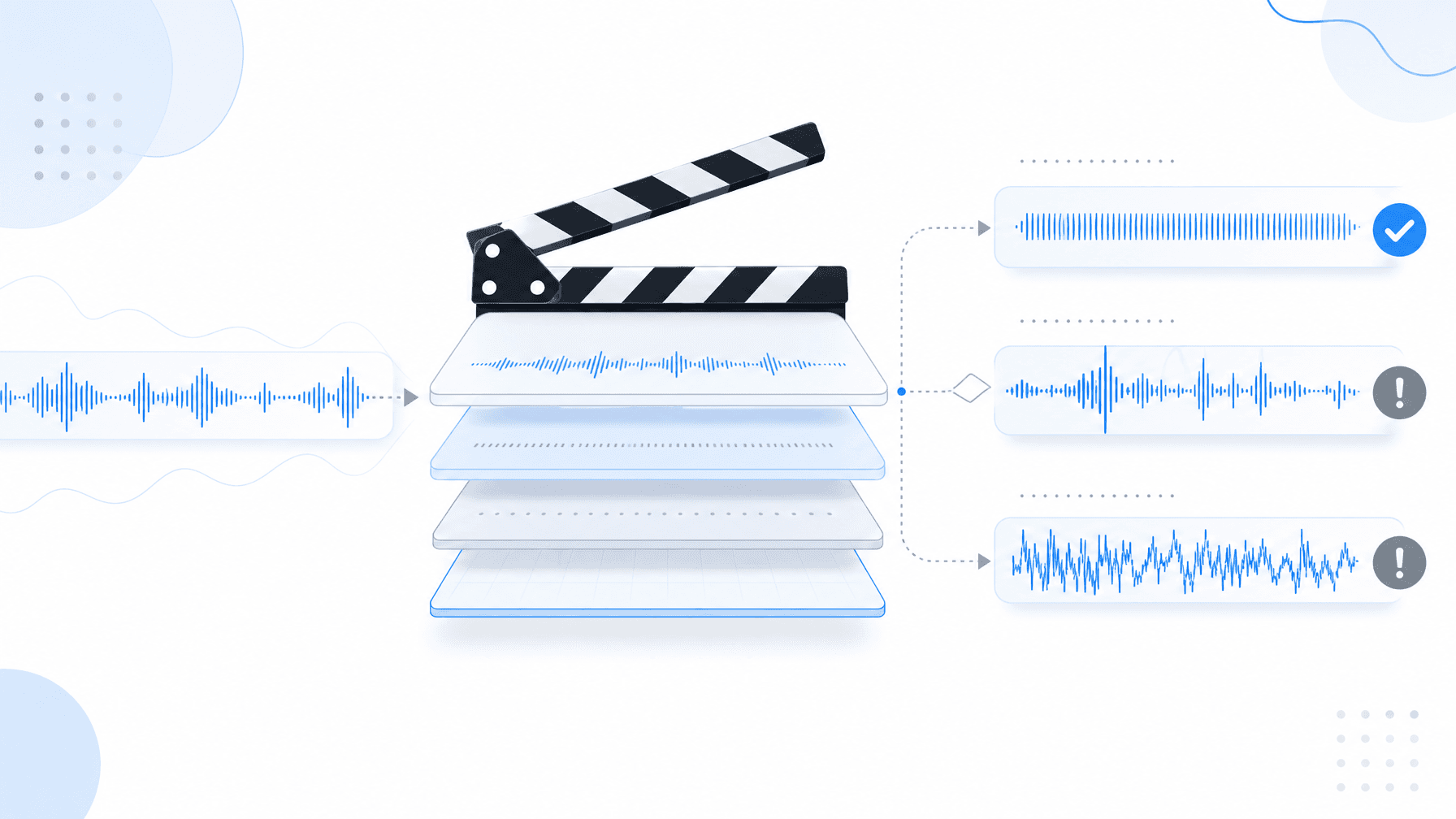
Xiaomi just launched MiMo-V2.5-TTS on June 26, 2026: a full speech model series covering synthesis, voice design, voice cloning, and speech recognition. The headline feature is natural language style control: instead of adjusting numeric parameters, you describe the performance you want, the way a director briefs an actor. "Low and angry," "like a weathered elder narrating a legend," "sacred but exhausted, with a crack in the divine authority." The model translates that description into a voice performance.
At a single clip, this is genuinely impressive. But if you ship audio at scale (audiobooks, audio dramas, NPC dialogue libraries, enterprise voice agents), the launch reveals a problem that no model announcement will fix for you.
The Director's Brief Is Non-Deterministic
Natural language is not a reproducible instruction set. When you tell an actor to sound "low and angry," you get one interpretation. When you tell a different actor the same thing the next day, you get another. The same is true for a language model interpreting a text prompt for voice generation.
MiMo-V2.5-TTS supports what Xiaomi calls "director script-level structured input": layered descriptions of character, scene, and emotional direction. It is a powerful tool for generating a single compelling performance. It is not, by design, a mechanism for reproducing that exact performance across 10,000 clips.
Run the same director script on Monday and again on Friday. The character sounds slightly different. Not broken, just different. That gap is invisible at 10 clips and audible at 1,000.
Model Updates Make It Worse
Xiaomi's announcement also notes that the V2 TTS series auto-routes to V2.5 starting June 27, with V2 fully deprecated by June 30. This is a forced migration with no rollback.
If you built validated voice profiles on MiMo-V2, every natural language description you tested against that model now maps to different output on V2.5. Your QA baseline is gone. Every reference clip you approved is no longer reproducible by the same prompt. You either re-validate the entire library against V2.5 or accept that the voices have drifted.
This is not a criticism of Xiaomi. Every TTS provider does this: ElevenLabs, Cartesia, Deepgram. Model updates are product improvements. But for production teams running a live series or a fleet of voice agents, "the model got better" is not a complete answer when episodes 1 through 60 now sound subtly different from episodes 61 onward.
What "Director-Level Control" Actually Controls
MiMo-V2.5-TTS gives you three distinct control modes:
- Style instructions: natural language describing emotion, tone, and delivery
- Inline audio tags: emotion and state markers embedded in the transcript
- Director script format: structured layers of character identity, scene context, and granular direction
Each mode is powerful for generation. None of them is a production consistency mechanism. They control what you ask for, not whether what you receive matches what you received yesterday.
Voice design, the second model in the V2.5 series, goes further: it generates a brand-new voice from a text description alone, with no reference audio. "An elderly Eastern European scholar, deep voice, slightly hoarse, slow rhythm." That voice exists nowhere as an audio file. It exists as a description. Every time you call the model, the description gets re-interpreted. There is no anchor.
The Layer Nobody Ships With the Model
The gap between "impressive demo" and "consistent production pipeline" is not a generation problem. It is a validation and orchestration problem.
A production voice pipeline needs to:
- Lock a reference audio profile for every character or persona, independent of the prompt used to generate it
- Score every new clip against that reference: acoustic similarity, pronunciation accuracy, prosody match
- Retry on failure automatically, not manually
- Record which model version and which parameters produced each accepted clip
- Alert when model drift causes acceptance rates to drop
None of those steps appear in a model launch announcement. They are not features. They are infrastructure, and they sit above the model, not inside it.
Onepin is built for this layer. It connects to the TTS model of your choice (MiMo, ElevenLabs, Cartesia, Deepgram, and 100+ others) and adds validation, retry logic, model version locking, and a per-clip audit trail. When MiMo V2.5 ships a silent update six months from now, Onepin catches the drift before it reaches your listeners.
The Pattern Repeats
Every model launch follows the same arc. Impressive generation capabilities, natural language control, expressive performance. The demos are real. The outputs are good. And then production teams discover that good output is not the same as consistent output, and consistent output is not the same as auditable output.
MiMo-V2.5-TTS is a strong model. The gap it reveals is not specific to Xiaomi. It is the gap between every TTS model and the production infrastructure that teams need to run audio at scale.
The model handles generation. Your pipeline handles everything else, or it doesn't, and your listeners notice.
If you want to close that gap, start with Onepin.
Frequently asked questions
- What is Xiaomi MiMo-V2.5-TTS?
- MiMo-V2.5-TTS is Xiaomi's latest text-to-speech model series, launched June 26, 2026. It supports natural language style instructions, voice design from text descriptions, voice cloning from short reference audio, and director-script structured input for character-level control.
- Why does natural language TTS control create a production consistency problem?
- Natural language instructions are non-deterministic: the same description produces different output on different runs. At production scale, hundreds or thousands of clips, this means there is no reliable way to guarantee that clip 500 sounds the same as clip 1 without an external validation layer comparing audio output against a locked reference profile.
- What happens to validated voice profiles when a TTS model updates?
- When a provider updates the underlying model, natural language instructions map to different outputs, even if the text is identical. There is no rollback. Every clip generated before the update becomes a consistency baseline that the model can no longer reproduce reliably, which breaks audio continuity in running series, audiobooks, or agent deployments.
- How does a production orchestration layer solve TTS consistency problems?
- A production orchestration platform like Onepin validates every generated clip against a locked reference profile, scores it on pronunciation accuracy and acoustic consistency, retries on failure, and records the model version used per clip. This separates generation quality from production quality and ensures consistency regardless of model updates.