AI Dubbing Cost: $2–$20/Min vs Studio Pricing
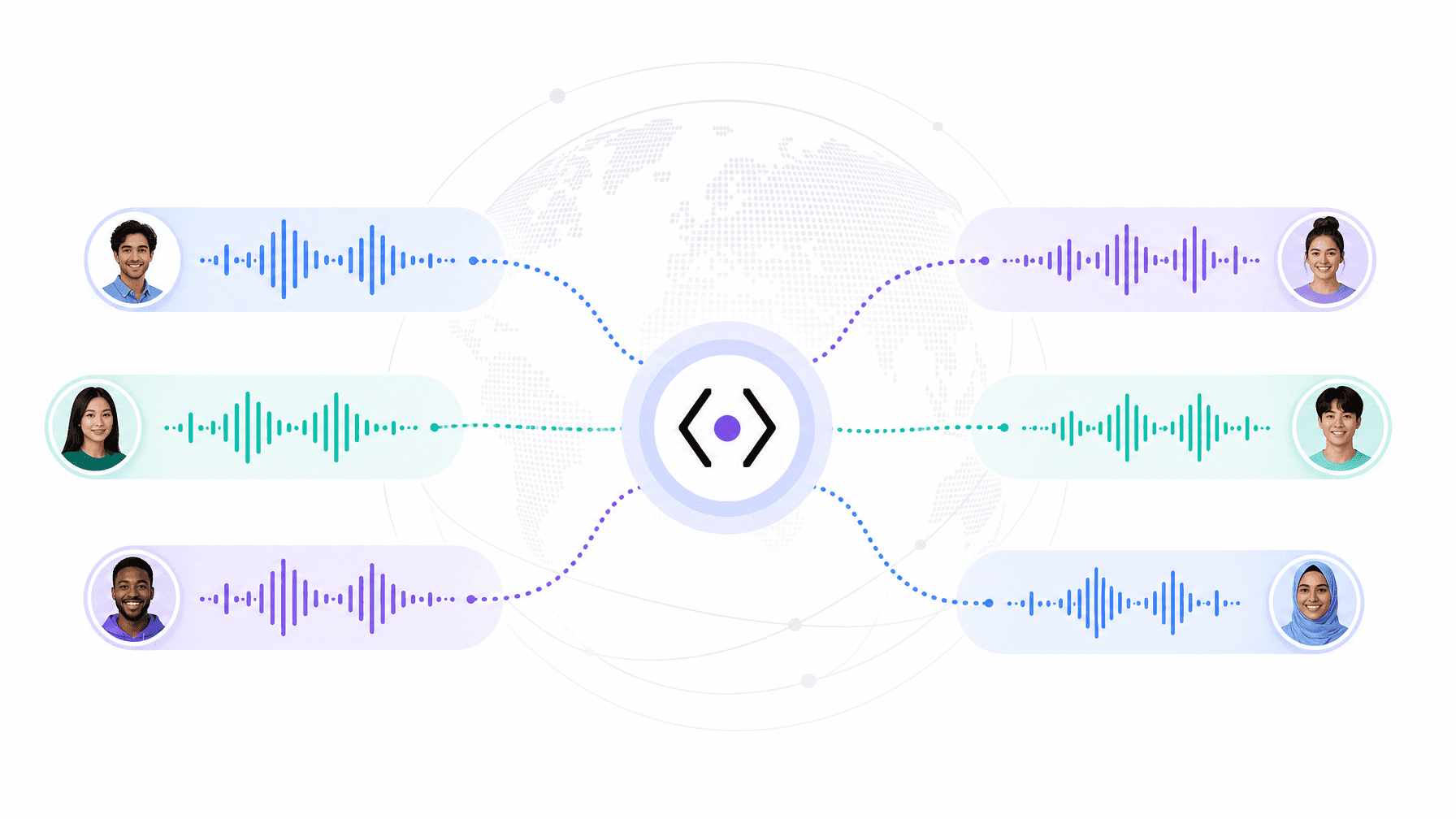
TLDR: AI dubbing replaces a video's spoken audio with AI-generated translations in multiple languages simultaneously. Traditional agencies charge $100–$500 per minute per language with 2-6 week turnarounds. AI platforms charge $2–$20 per minute with same-day output. The critical factor most teams ignore: the TTS model doing the voice generation determines whether the dubbed audio is publish-ready or needs re-recording.
What Is AI Dubbing?
AI dubbing is the automated process of replacing a video's original audio track with a translated, AI-generated voice in a target language, while preserving the original speaker's voice characteristics and delivery.
Traditional dubbing required scheduling voice talent, booking studio time, directing performances, and managing weeks of post-production. A single 10-minute video dubbed into five languages could cost $25,000 or more and take a month.
AI dubbing compresses that entire workflow into minutes. Upload a video, select target languages, and get back publish-ready audio in the same session.
How AI Dubbing Works: The 4-Step Pipeline
Every AI dubbing system runs the same core sequence:
- Transcription: The original audio is transcribed to text using automatic speech recognition (ASR). Accuracy here sets the ceiling for everything downstream.
- Translation: The transcript is translated into target languages using neural machine translation. Top platforms report 95-98% translation accuracy on common language pairs.
- Voice synthesis: A TTS model generates the translated speech. This is the most technically variable step: voice quality, prosody, emotional range, and how well the translated audio matches the original speaker's cadence all depend on which TTS engine runs here.
- Timing and sync: The synthesized audio is aligned to the original video's timing, with some platforms adding lip-sync correction for talking-head video.
Quality breaks down at steps 3 and 4. A mistranslated idiom, a robotic TTS voice, or timing that doesn't match the speaker's mouth movement produces audio that fails the moment a native speaker hears it.
AI Dubbing vs. Traditional Dubbing: Cost and Speed
The economics have shifted decisively in favor of AI for most content categories.
| Factor | Traditional Dubbing | AI Dubbing |
|---|---|---|
| Cost per minute per language | $100–$500 | $2–$20 |
| Turnaround time | 2-6 weeks | Same day |
| Scale to 10 languages | $25,000–$125,000+ | $500–$2,000 |
| Voice cloning | Not applicable | Available on most platforms |
| Revision cycle | Days per round | Minutes |
Human studio dubbing still wins for broadcast, theatrical, and any content where a native speaker's nuanced performance is part of the product. AI dubbing is the right call for high-volume production: online courses, product demos, marketing video libraries, YouTube channels, and enterprise training content.
Use Cases: Who Actually Uses AI Dubbing?
YouTube creators: YouTube reports that 40%+ of watch time on dubbed content comes from viewers who don't speak the original language. Creators who dub into Spanish, Portuguese, and Hindi routinely see 30-50% audience growth within 90 days.
E-learning producers: A 10-module course dubbed into four languages with traditional studios costs upward of $80,000. With AI dubbing, the same project runs $800–$2,000 and ships in a week.
Localization teams: Enterprise teams managing content libraries of hundreds of videos use AI dubbing to keep multilingual versions updated in parallel with source content, not six months behind it.
Video producers and agencies: AI dubbing lets producers offer multilingual deliverables as a standard line item rather than a premium add-on.
The Voice Quality Problem Nobody Talks About
The dubbing platforms handle translation and timing. But the actual voice generation runs on a TTS model underneath. That model determines whether the output sounds like a real person or a robotic approximation.
Most AI dubbing platforms use a single TTS engine. If that engine struggles with prosody in Japanese, or mishandles emotional range in Spanish, every project on that platform gets the same degraded output. There is no fallback.
The TTS model landscape in 2026 is not uniform. ElevenLabs leads on voice cloning and dubbing with its Dubbing Studio. Camb.ai combines TTS, dubbing, and voice cloning in a single pipeline starting at $5/month. Rask AI handles high-volume localization across 130+ languages. Each excels in different conditions. For a model-by-model view of who leads on quality, latency, and languages, see the 2026 TTS models benchmark guide. For tool shortlists, see best AI dubbing software in 2026 and the AI dubbing video localization guide.
What a production team actually needs is the ability to route different content types to the best-performing engine for that language, tone, and use case. That flexibility doesn't exist inside any single dubbing platform.
What to Look for in an AI Dubbing Stack
Before choosing a platform, validate these four criteria:
Language depth, not just count: 130 languages is meaningless if quality degrades on non-English pairs. Test the actual output in your target languages before committing.
Voice cloning accuracy: Can the platform clone the original speaker with enough fidelity that a native listener believes it? The voice match is what makes dubbed content feel authentic.
Validation and error detection: Does the platform flag mispronunciations, timing failures, or mistranslations before the file ships? Most tools skip this entirely. A bad dub reaching a foreign-language audience causes more reputational damage than no dub at all.
Flexibility on TTS engine: If the platform is locked to a single TTS provider, the ceiling on voice quality is fixed. For high-volume production, the ability to select or switch models based on performance is essential.
Why TTS Model Orchestration Matters for Dubbing at Scale
This is where most dubbing workflows hit a ceiling. A team dubbing 50 videos per month into 5 languages makes 250 TTS calls per batch. Each call is a quality risk: wrong model for the language, wrong voice for the content type, no retry logic when output fails quality checks.
Onepin is an AI voice production agent that sits above the TTS layer. It routes each job to the best-performing model for the language and content type, validates output before delivery, and retries automatically when quality checks fail. Instead of accepting whatever one TTS engine produces, Onepin runs the job against models with a proven track record for that specific language and voice profile, then ships only the audio that passes.
For teams producing multilingual content at scale, that validation layer is the difference between a dubbing workflow that ships reliably and one that requires manual review on every file.
Get Publish-Ready Dubbed Audio, Without the Manual Review Cycle
AI dubbing has made multilingual video accessible at a price point and speed traditional studios can't match. The remaining challenge is quality consistency across languages and engines.
If your team dubs more than a handful of videos per month, Onepin's orchestration and validation layer removes the bottleneck. Try it at onepin.ai.
Frequently asked questions
- How much does AI dubbing cost compared to traditional dubbing?
- Traditional dubbing agencies charge $100 to $500 per minute per language with 2 to 6 week turnarounds, while AI platforms charge $2 to $20 per minute with same-day output. Scaling a project to 10 languages runs $25,000 or more traditionally versus roughly $500 to $2,000 with AI dubbing.
- What are the steps in an AI dubbing pipeline?
- Every AI dubbing system runs the same four steps: transcription of the original audio with automatic speech recognition, translation into target languages with neural machine translation, voice synthesis with a TTS model, and timing and sync alignment to the original video. Quality tends to break down at the voice synthesis and timing steps.
- Should you use AI dubbing or traditional studio dubbing?
- Human studio dubbing still wins for broadcast, theatrical, and any content where a native speaker's nuanced performance is part of the product. AI dubbing is the right call for high-volume production such as online courses, product demos, marketing video libraries, YouTube channels, and enterprise training content.
- Why does the TTS model matter in AI dubbing?
- The actual voice generation runs on a TTS model underneath the dubbing platform, and that model determines whether the output sounds like a real person or a robotic approximation. Most platforms use a single TTS engine with no fallback, so if it struggles with prosody or emotional range in a given language, every project gets the same degraded output.
- What should you look for in an AI dubbing stack?
- Validate language depth rather than raw language count, voice cloning accuracy convincing enough for a native listener, validation and error detection that flags mispronunciations and timing failures before shipping, and flexibility to select or switch TTS engines. Onepin sits above the TTS layer to route each job to the best-performing model, validate output, and retry automatically when checks fail.