CAMB.AI Deployed 4 Specialized Voice Models to Vodafone. Here's What That Reveals About AI Voice in Production.
One Partnership, Four Models, Twelve Months
On June 11, 2026, CAMB.AI announced a strategic partnership with Vodafone's VOIS, the Vodafone Intelligent Solutions division that runs contact center operations across Europe. The deal centers on real-time multilingual speech-to-speech translation, powered by CAMB.AI's newly released MARS8 model family.
The announcement contains a detail that most readers will skip over. Before going live in select European contact centers, Vodafone ran a 12-month technology evaluation and pilot phase under real operational conditions. Twelve months. For a voice AI deployment that is still described as a pilot.
That timeline is not a failure. It is an honest accounting of what enterprise-grade AI voice actually requires before it touches a live customer.
Why CAMB.AI Ships Four Models Instead of One
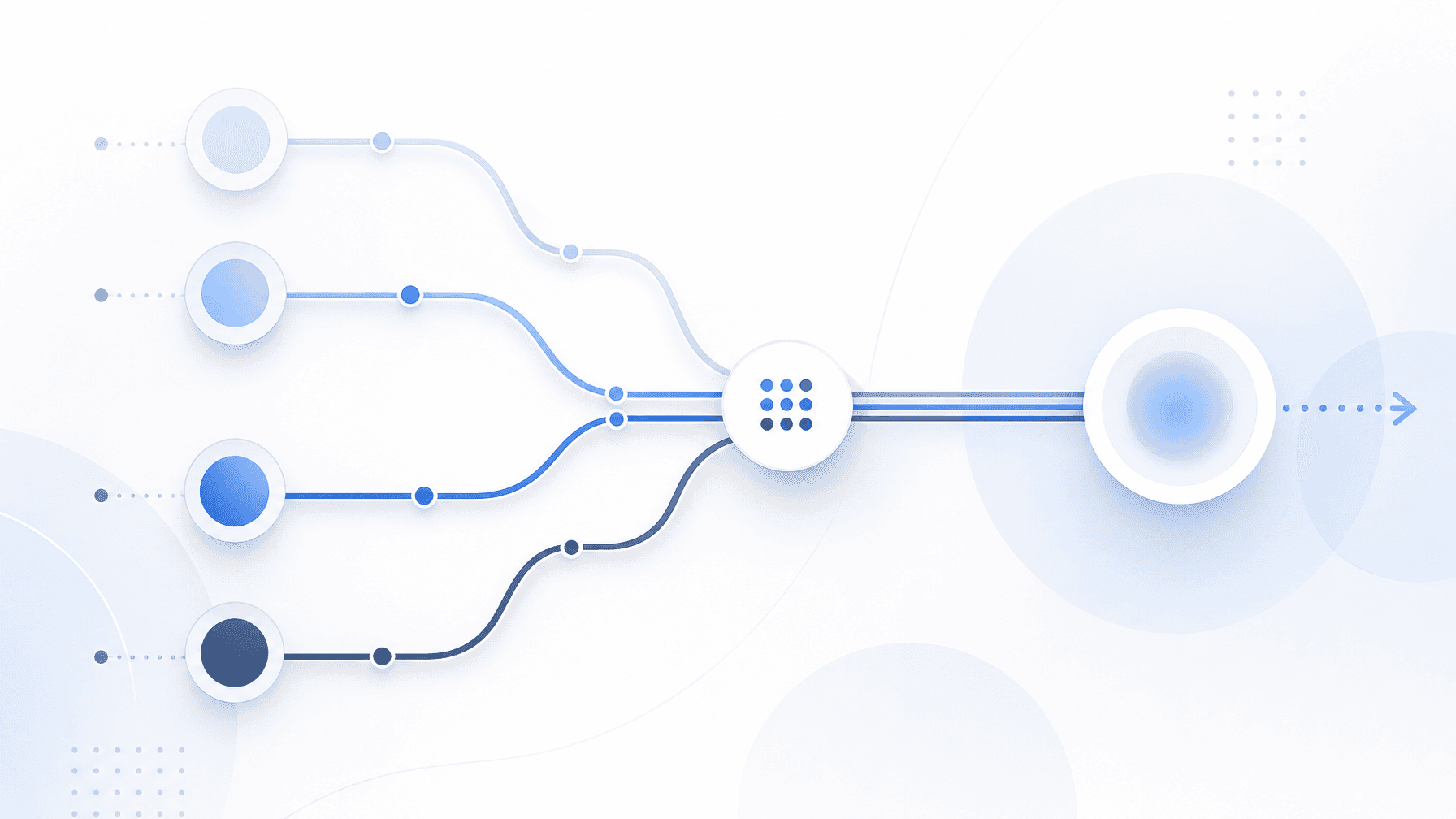
The MARS8 family is not a single model with a marketing deck. It is four distinct systems built for different production contexts. MARS8 Flash handles real-time conversational latency. MARS Pro optimizes for high-quality media and sports content. MARS Instruct accepts fine-grained directorial control over expression and delivery. MARS Nano runs on consumer device chipsets where cloud round-trips are not an option.
This architecture is a deliberate acknowledgment of a problem the AI voice industry has been dancing around for years: no single TTS model performs well across every production context. The same model that sounds incredible on a 90-second narration clip will hallucinate a pronunciation mid-call, stumble on a regional accent, or introduce latency that makes a real-time conversation feel broken.
CAMB.AI's answer is model specialization. Build the right model for each job, then route to it appropriately. That is the correct instinct. But it surfaces a second, harder problem: who does the routing?
The Gap Between Generation and Delivery
When a voice AI provider ships a family of specialized models, they hand the routing decision to the engineer integrating the API. That engineer now has to decide: which model for this use case? Which model handles this language pair? What happens when MARS8 Flash produces an output with a clipped word: do you retry on MARS Pro, or ship it?
These are not edge cases. In a contact center environment, tone preservation, nuance fidelity, and language accuracy are table stakes. A mistranslated phrase or a flat delivery on a sensitive support call does not just degrade the customer experience. It destroys the trust that the entire AI voice investment was supposed to build.
Vodafone's 12-month pilot validates this directly. The evaluation phase tested CAMB.AI's models for performance, accuracy, and reliability in real operational environments. That is not a vendor evaluation process. That is a manual orchestration and validation loop (run by humans, over a year, at significant cost) before a single production minute went live.
This Is What AI Voice Production Actually Looks Like
The broader industry pattern is clear. ElevenLabs runs separate models for different quality tiers. Cartesia differentiates Sonic variants by latency profile. Deepgram offers Aura-2 alongside its conversational stack. Every major voice AI provider now ships a model family, not a single model.
The result is that teams deploying AI voice at scale face a combinatorial routing problem. They need to match content type, language, latency requirement, and quality threshold to the right model, and then validate, catch failures, and retry when outputs miss the mark. For a company running hundreds of thousands of contact center calls per month, doing that manually is not sustainable. A 12-month pilot is not the answer for the next deployment.
The generation layer, the TTS model itself, is no longer the hard part. The hard part is the production infrastructure that sits around it: routing requests to the right model, catching outputs that fail quality thresholds, retrying with fallback options, and shipping audio that is consistently publish-ready.
What a Production Orchestration Layer Actually Does
A validation and orchestration layer handles what model families cannot do for themselves. It selects the appropriate model based on context. It evaluates the output against quality criteria: pronunciation accuracy, tone fidelity, timing, silence gaps. It retries failed outputs against a fallback model without manual intervention. It logs every decision so teams can audit why a specific output was selected.
That is the infrastructure that turns a 12-month pilot into a deployment that can go live in weeks. It is also the infrastructure that lets a team scale from 10 languages to 40 without doubling the number of engineers managing the pipeline.
Onepin is that layer. It sits on top of 100+ TTS models, including specialized families like MARS8, and handles routing, validation, retry logic, and delivery. The TTS model generates audio. Onepin makes sure what ships is correct.
The Signal in the CAMB.AI Announcement
The Vodafone partnership is a significant commercial win for CAMB.AI, and the MARS8 family represents genuine technical depth. But the 12-month validation timeline buried in the announcement is the more important signal for anyone building or deploying AI voice at enterprise scale.
It confirms that even with purpose-built, specialized models, the gap between a working demo and a production-ready deployment is substantial. Filling that gap requires more than better models. It requires orchestration, validation, and the infrastructure to manage both at scale.
If you are building AI voice into a product or workflow, the question is not which TTS model to pick. The question is what happens after generation. Start there.
Frequently asked questions
- What did CAMB.AI announce with Vodafone in June 2026?
- On June 11, 2026, CAMB.AI announced a strategic partnership with Vodafone's VOIS, the division running contact center operations across Europe. The deal centers on real-time multilingual speech-to-speech translation powered by the newly released MARS8 model family.
- What are the four MARS8 models and what is each for?
- MARS8 Flash handles real-time conversational latency, MARS Pro optimizes for high-quality media and sports content, MARS Instruct accepts fine-grained directorial control over expression and delivery, and MARS Nano runs on consumer device chipsets where cloud round-trips are not an option.
- Why did the Vodafone deployment take a 12-month pilot?
- Before going live in select European contact centers, Vodafone ran a 12-month technology evaluation and pilot under real operational conditions, testing performance, accuracy, and reliability. The post frames this as a manual orchestration and validation loop, run by humans over a year at significant cost, before a single production minute went live.
- Why does shipping a family of specialized models create a routing problem?
- When a provider ships specialized models, the routing decision falls to the engineer integrating the API, who must pick the model per use case and language pair and decide what to do when an output has a clipped word. For a company running hundreds of thousands of contact center calls per month, doing that manually is not sustainable.
- What does an orchestration layer like Onepin do here?
- It selects the appropriate model based on context, evaluates output against quality criteria such as pronunciation accuracy, tone fidelity, timing, and silence gaps, retries failed outputs against a fallback model without manual intervention, and logs every decision. The post says Onepin sits on 100-plus TTS models including MARS8 and handles routing, validation, retry logic, and delivery.