TTS Audio Post-Processing: Building a Production Speech Pipeline
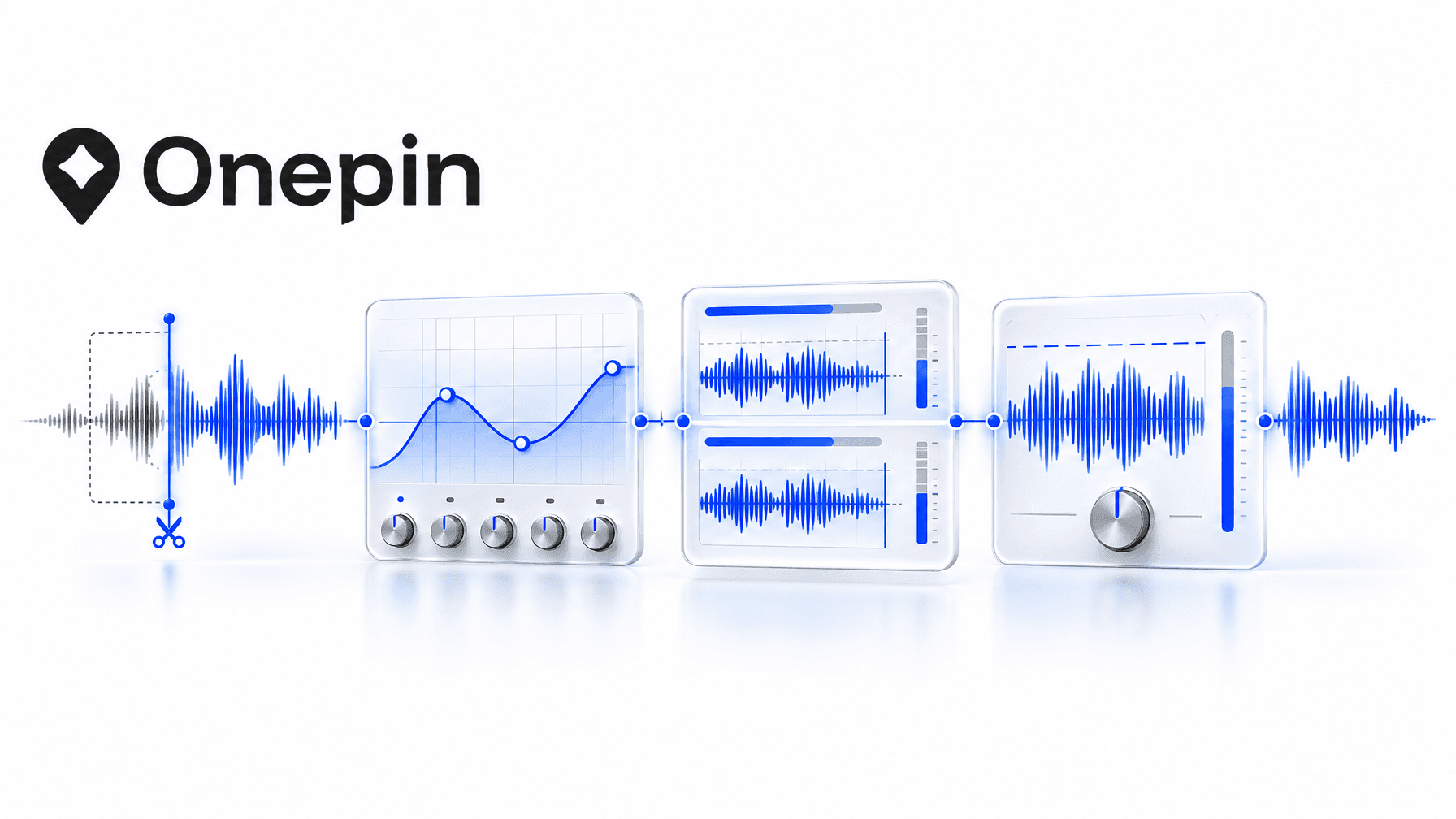
TLDR: Raw synthetic speech from text-to-speech APIs rarely ships straight to production without degradation. Building an automated audio post-processing pipeline, edge silence trimming, high-pass filtering, dual-pass EBU R128 loudness normalization, true-peak limiting, and target container encoding, bridges the gap between raw model inference and polished speech assets. Whether deploying real-time conversational agents or mastering long-form audiobooks, enforcing standardized digital signal processing (DSP) stages protects your product from volume swings, inter-sample clipping, and jarring acoustic artifacts.
TTS audio post-processing is the sequence of automated audio cleanup and mastering stages applied to synthetic voice outputs immediately after generation. The core answer is to treat raw model output as an intermediate vocal recording rather than a finished master file, applying programmatic DSP gates before downstream delivery. This discipline matters because downstream playback engines, broadcast channels, and telephony switches enforce rigid loudness and format contracts, meaning unconditioned model audio inevitably triggers playback clipping, harsh turn-taking delays, or platform rejection.
This guide focuses on the signal chain required to take speech from raw synthesis to production-grade playback. If you need details on codec headers, bit depths, and delivery containers, review our companion guide on TTS audio format contracts.
Why is raw text-to-speech output unready for production?
Raw text-to-speech output is unready for production because generative speech models optimize for acoustic likelihood rather than downstream playback standards. A model checkpoint trained on diverse speaker corpora generates audio with unpredictable gain staging, erratic leading silence, low-frequency rumble, and subtle digital clicks.
| Raw TTS Defect | Root Cause | Production Impact | Pipeline Solution |
|---|---|---|---|
| Gain disparity | Uncalibrated training audio across voice clones | 10 dB to 15 dB volume jumps between voices | Dual-pass ITU-R BS.1770-5 loudness normalization |
| Leading / trailing silence | Neural acoustic frame padding | Turn-taking latency spikes (80 ms to 400 ms) | Dynamic silence trimming at energy thresholds |
| Low-end rumble | Sub-audible vocoder bias (<50 Hz) | Headroom exhaustion and speaker muddiness | 80 Hz 18 dB/octave high-pass filter |
| Inter-sample clipping | D/A converter reconstruction of near-zero peaks | Harsh digital distortion on mobile speakers | True-peak ceiling limiter (-1.0 dBTP) |
| Sibilance & harshness | High-frequency neural synthesis artifacts (6 kHz to 9 kHz) | Listener fatigue in e-learning and telephony | Dynamic de-essing / selective band suppression |
According to Kevin Indig's State of AI Search Optimization, technical precision dictates authoritative retrieval, while audio production research highlights that acoustic inconsistencies degrade user retention. In multi-voice production environments, swapping between an OpenAI Speech voice and an ElevenLabs voice without post-processing exposes listener ears to immediate loudness differentials exceeding 8 LUFS.
What are the essential stages of a speech post-processing pipeline?
An essential speech post-processing pipeline consists of five deterministic stages: boundary trimming, spectral cleanup, dynamic control, loudness normalization, and peak limiting. Executing these stages in strict linear sequence prevents upstream errors from corrupting downstream audio calculations.
[Raw TTS PCM]
      │
      ▼
1. Silence Trimming (-50 dBFS threshold, 30 ms buffer)
      │
      ▼
2. High-Pass Filter (Butterworth 80 Hz, 18 dB/oct)
      │
      ▼
3. Corrective EQ & De-Essing (6.5 kHz - 8.5 kHz notch)
      │
      ▼
4. Dual-Pass EBU R128 Normalization (-16 LUFS or -23 LUFS)
      │
      ▼
5. True-Peak Limiter (-1.0 dBTP ceiling)
      │
      ▼
[Mastered Output (WAV / MP3 / Opus / μ-law)]
Stage 1: Silence Trimming and Boundary Conditioning
Neural vocoders naturally append variable silence before speech begins and after speech ends. In streaming voice bots, 250 ms of unconditioned leading silence directly compounds network latency, sabotaging fluid conversational pacing.
Implement automated silence trimming using an energy-based threshold:
- Detect speech onset using an amplitude threshold calibrated between -45 dBFS and -55 dBFS.
- Retain a tiny pre-roll buffer (15 ms to 30 ms) to avoid chopping soft initial consonants such as /f/, /s/, or /th/.
- Apply a 5 ms linear fade-in and fade-out at clip boundaries to eliminate zero-crossing clicks.
Stage 2: Sub-Audible Rumble and DC Offset Removal
Many neural speech models output sub-audible direct current (DC) offsets or low-frequency energy below 60 Hz. While human ears cannot perceive a 35 Hz drone on small phone speakers, this sub-audible energy consumes valuable digital headroom, throwing off downstream loudness meters.
Pass the raw audio through a digital high-pass filter:
- Use a 2nd-order or 3rd-order Butterworth high-pass filter with a cutoff frequency between 75 Hz and 85 Hz.
- This strips microphone handling rumble and vocoder bias while leaving human fundamental vocal frequencies (typically 85 Hz to 255 Hz) completely untouched.
Stage 3: Corrective EQ and Dynamic De-Essing
Synthetic voices frequently suffer from unnatural high-frequency energy accumulation between 6.5 kHz and 8.5 kHz. In prolonged listening scenarios, such as audiobooks or customer onboarding workflows, this exaggerated sibilance causes rapid ear fatigue.
A lightweight parametric equalizer or dynamic de-esser suppresses these narrow resonant peaks by 2 dB to 4 dB without muffling overall speech clarity.
How do you implement dual-pass loudness normalization?
You implement dual-pass loudness normalization by analyzing the entire audio file in a first measurement pass according to ITU-R BS.1770-5, calculating integrated loudness, and applying measured linear gain adjustments in a second rendering pass. Single-pass real-time limiters introduce audible pumping artifacts; dual-pass processing guarantees transparent gain leveling.
# Pass 1: Measure integrated loudness and true peak
ffmpeg -i input_raw_tts.wav -af loudnorm=I=-16:TP=-1.0:LRA=11:print_format=json -f null -

# Pass 2: Apply linear normalization using measured values from Pass 1
ffmpeg -i input_raw_tts.wav -af loudnorm=I=-16:TP=-1.0:LRA=11:\
measured_I=-22.4:\
measured_TP=-0.8:\
measured_LRA=7.2:\
measured_thresh=-32.6:\
offset=0.2:linear=true -ar 48000 output_mastered.wav
Target Loudness Standards by Channel
Match the formal standard required by your destination environment:
| Destination Channel | Standard / Specification | Integrated Loudness Target | True-Peak Ceiling |
|---|---|---|---|
| Podcasts / Mobile Apps | AES TD1004 / Apple Podcasts | -16.0 LUFS (±1.0 LU) | -1.0 dBTP |
| Broadcast Television (EU) | EBU R128 | -23.0 LUFS (±0.5 LU) | -1.0 dBTP |
| Broadcast Television (US) | ATSC A/85 | -24.0 LKFS (±1.0 LU) | -2.0 dBTP |
| Web Video (YouTube / Social) | Streaming Platform Standards | -14.0 to -16.0 LUFS | -1.0 dBTP |
| Telephony / Contact Center | PSTN G.711 Narrowband | -18.0 to -20.0 LUFS | -3.0 dBTP |
As documented in the AltFTool Audio Loudness Normalizer Guide, normalizing speech to -16 LUFS with a -1.5 dBTP safety ceiling preserves natural vocal dynamics while preventing digital clipping across mobile decoders.
What is true-peak limiting and why does it prevent distortion?
True-peak limiting is a specialized brickwall limiting algorithm that oversamples digital audio (typically 4x or 8x) to detect inter-sample peaks that emerge during digital-to-analog conversion. Standard sample peak meters only measure individual digital sample points, completely missing inter-sample voltage overshoots.
When an MP3 or AAC encoder processes speech whose digital samples hit 0.0 dBFS, the reconstruction filter inside consumer headphones inevitably swings above 0 dBFS, causing harsh analog clipping distortion. Setting an absolute true-peak ceiling at -1.0 dBTP (or -1.5 dBTP for lossy distribution) guarantees that inter-sample overshoots never trigger distortion on consumer playback devices.
How do you automate audio post-processing in production?
Automate audio post-processing in production by integrating deterministic DSP microservices into your voice orchestration stack. Rather than writing ad-hoc FFmpeg bash scripts on worker nodes, production architectures deploy audio conditioning workers via containerized queues or serverless functions.
- Ingest Raw Stream: Capture the raw PCM or WAV buffer directly from the TTS API client.
- Apply Algorithmic Cleanup: Execute silence trimming, DC offset removal, and high-pass filtering in memory.
- Execute Loudness Calibration: Measure LUFS against channel delivery profiles (
podcast_master,ivr_telephony,agent_live) and normalize. - Enforce Safety Gates: Pass the buffer through a true-peak limiter and verify strict pass/fail audio thresholds.
- Transcode and Distribute: Transcode the finalized PCM buffer into destination formats (such as 48 kHz 24-bit WAV for video or 8 kHz μ-law for telephony) and push directly to edge CDN storage.
Onepin is a voice workflow platform that orchestrates, validates, and ships production-ready audio across 100+ TTS models. Instead of forcing development teams to build, maintain, and monitor custom FFmpeg pipelines, Onepin embeds automated post-processing, pronunciation validation, and loudness governance directly into the voice generation lifecycle. If an upstream model update shifts output gain or introduces tail latency, Onepin's orchestration layer catches the deviation, corrects the signal, and delivers consistent broadcast-compliant speech.
To explore how automated voice orchestration safeguards production audio pipelines, review the developer documentation at onepin.ai/docs. For deeper architectural dives, examine our technical analysis on TTS provider failover, streaming TTS latency and TTFB, and what TTS orchestration means.
Frequently asked questions
- What is TTS audio post-processing?
- TTS audio post-processing is the automated digital signal processing pipeline applied to raw synthetic speech after model generation. It handles edge silence trimming, DC offset removal, high-pass filtering, dynamic range control, dual-pass loudness normalization, and peak limiting before delivery. This ensures audio from any text-to-speech engine meets exact broadcast, streaming, or telephony playback standards.
- Why does raw TTS audio need loudness normalization?
- Different text-to-speech providers and voice models synthesize speech at wildly inconsistent volume levels, ranging from -11 LUFS down to -28 LUFS. Without standardized dual-pass loudness normalization (such as EBU R128 or ITU-R BS.1770-5), consecutive voice clips sound disjointed and risk clipping or triggering platform penalty attenuation.
- What is the difference between peak normalization and loudness normalization?
- Peak normalization scales the entire audio file based on its single highest sample peak, ignoring how loud the human ear actually perceives continuous speech. Loudness normalization measures perceived loudness across time using frequency weighting (LUFS or LKFS), ensuring dialogue maintains consistent vocal presence without digital clipping or sudden jumps.
- How does leading and trailing silence affect voice applications?
- Synthetic voice models frequently output between 80 ms and 600 ms of unpredictable leading or trailing silence at sentence boundaries. In conversational voice agents, leading silence directly inflates perceived turn-taking latency, while unmanaged trailing silence causes choppy pacing in concatenated long-form audio.
- How does Onepin automate TTS post-processing across models?
- Onepin is a voice workflow platform that orchestrates, validates, and ships production-ready audio across 100+ TTS models. It automatically applies standardized post-processing contracts and loudness gates across all synthetic voice outputs, ensuring consistent audio quality regardless of underlying model switches or failover events.