Emotional Text to Speech: How to Add Real Emotion to AI Voice in 2026
TLDR
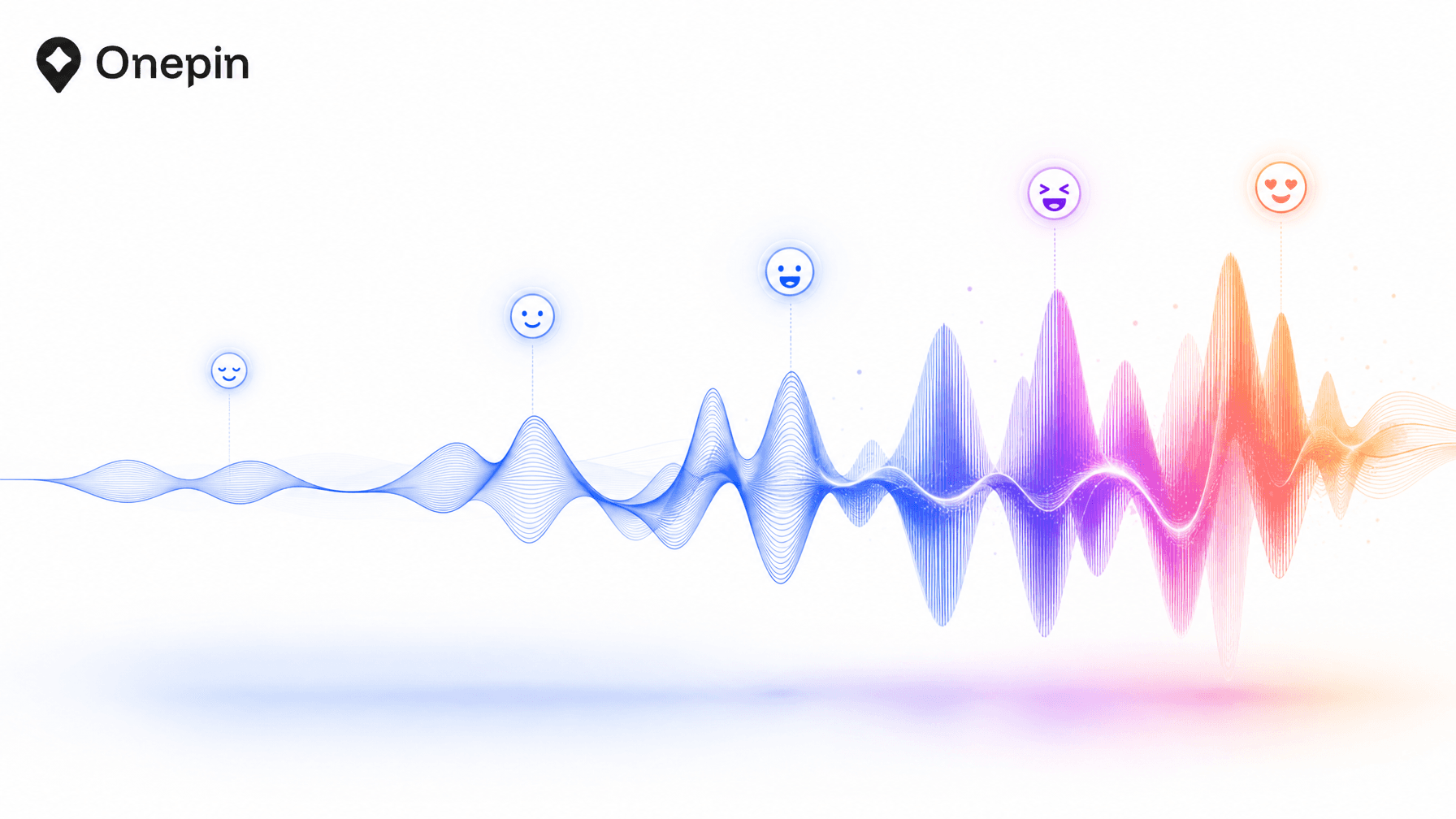
Emotional text to speech turns flat AI narration into speech that actually feels like something: excited, warm, hesitant, or urgent. In 2026 you control that emotion through audio tags, inline delivery instructions, or context-aware models that read tone from your script. The hard part is not generating one emotional clip. It is keeping that emotion consistent across a whole library, which is a production problem, not a model problem.
Emotional text to speech is AI-generated speech that conveys a specific feeling instead of a neutral, monotone read. You produce it by directing the model with tags or instructions, or by choosing a model that infers emotion from the text itself. It matters because a flat voice is the single fastest way to make an audiobook, ad, or video feel robotic, and emotion is what keeps a listener from tuning out in the first ten seconds.
Why does emotion matter in AI voice at all?
Emotion is what separates a voice a listener trusts from a voice they skip. A monotone read of a heartfelt story, a product launch, or a guided meditation actively works against the content. The words say one thing and the delivery says nothing, and the audience feels the gap immediately.
For Onepin's audience, the stakes are concrete. An audiobook narrator who sounds bored loses the reader. A video ad with a flat call to action loses the click. A language-learning app that teaches with no intonation teaches the wrong thing. Emotional delivery is not decoration. It is the part of the output that does the persuading.
How do I add emotion to AI text to speech?
You add emotion in three ways, and most modern models support at least one of them.
- Audio tags. You embed inline markers such as
[excited],[whispers], or[sighs]directly in the text. ElevenLabs v3 built its expressive model around this approach, letting you switch delivery mid-sentence. - Inline emotion control. Some models expose emotion as a parameter or inline instruction you attach to a segment. Fish Audio ships expressive multilingual speech with inline emotion control, and MiniMax supports sound and emotion tags for shifting tone.
- Context inference. The most natural models read the surrounding text and infer the right emotion without any tag, so a line of dialogue in a tense scene comes out tense on its own.
The method you pick shapes your workflow. Tags give you precise, line-by-line control but require you to annotate every script. Context inference is faster to write for but gives you less direct control when the model guesses wrong.
Which AI voice models support emotion control in 2026?
No single model wins emotion control across every use case, which is exactly why locking yourself to one is a trap. Each model exposes emotion differently and renders the same instruction with different intensity. Here is how the leading approaches compare.
| Model | Emotion method | Best for | Watch out for |
|---|---|---|---|
| ElevenLabs v3 | Audio tags ([excited], [whispers]) | Audiobooks, character dialogue, ads | Higher latency; not ideal for real-time agents |
| Fish Audio | Inline emotion control, multilingual | Voice agents, multilingual content | Emotion range varies by language |
| MiniMax | Sound and emotion tags | Expressive short-form and video | Tag behavior can shift between model versions |
| Cartesia | Fast expressive delivery | Low-latency real-time voice | Fewer explicit emotion controls |
Cartesia's Sonic line prioritizes speed for real-time agents, while ElevenLabs v3 prioritizes expressive range for produced content. A team building a live voice agent and a team producing an audiobook should not be using the same model, and often the same team needs both.
Why does emotional TTS sound inconsistent at scale?
Emotional TTS drifts at scale because it is probabilistic: the same tag can produce different intensity on two different generations. One clip lands the excitement, the next reads it as mildly upbeat, and a third overshoots into cartoonish. On a single sample you never notice. Across 2,000 clips in an audiobook or a course library, the narrator sounds like a different person from chapter to chapter.
This is the failure mode nobody plans for. You test emotion on ten hand-picked lines, they sound great, and you ship 10,000 lines on that assumption. The variance was always there; you just never measured the tail. Silent model updates make it worse, because a provider can retune emotion behavior overnight and your locked-in delivery quietly changes with no changelog.
How do I keep emotional voice consistent in production?
You keep emotion consistent by validating every output against a reference, not by re-listening to each file by hand. Consistency at scale is a production problem, and it has four parts:
- Lock a reference profile. Define the target voice and emotional baseline from an approved sample, so every clip has something to be measured against.
- Score every output. Compare each generation to the reference and flag clips that drift on tone, intensity, or consistency before they ship.
- Lock the model version. Pin the exact model so an upstream update cannot silently change your emotional delivery.
- Retry only what fails. Regenerate the clips that miss the bar instead of re-running an entire batch, which keeps emotional TTS economical at volume.
This is the layer above the model, and it is where consistency actually lives. For the mechanics, see our TTS quality validation checklist and how we handle voice drift in long-form audio.
Where does Onepin fit?
Onepin is a voice workflow platform that orchestrates, validates, and ships production-ready audio across 100+ TTS models. Instead of committing to one emotion engine, you route to the model that delivers the right feeling for each job, ElevenLabs v3 for an expressive audiobook, a low-latency model for a live agent, then validate every clip against a locked reference before it ships.
That means you get the emotional range of the best model for each use case without inheriting its blind spots. When a new expressive model launches, you point a routing rule at it and re-validate, rather than rebuilding your pipeline. And because the model version travels with every clip, you can always prove what produced a given output.
Emotion is what makes AI voice worth listening to. Consistency is what makes it shippable. Get both by directing the right model and validating every output before it goes out the door. See how orchestration and validation work at onepin.ai.
Frequently asked questions
- What is emotional text to speech?
- Emotional text to speech is AI-generated speech that conveys a specific feeling, such as excitement, warmth, sadness, or urgency, instead of a flat neutral read. Modern models produce emotion through audio tags, inline instructions, or by inferring tone from the surrounding text. It matters because flat narration is the fastest way to make content feel robotic and lose an audience.
- How do I add emotion to AI text to speech?
- You add emotion in three main ways: inline audio tags like [excited] or [whispers], natural-language delivery instructions, and context-aware models that infer tone from the script itself. The exact method depends on the provider you use. The harder part is keeping that emotion consistent across hundreds or thousands of clips, which requires validation, not just generation.
- Which AI voice models support emotion control?
- ElevenLabs v3 uses audio tags, Fish Audio offers inline emotion control, and MiniMax supports sound and emotion tags. Each model exposes emotion differently and handles the same tag with different results. Because no single model wins for every use case, many production teams route across several models rather than committing to one.
- Why does emotional TTS sound inconsistent at scale?
- Emotional TTS is probabilistic, so the same emotional instruction can produce different intensity from one generation to the next. Across a large library, that variance shows up as a narrator who sounds cheerful in one clip and flat in the next. The fix is a validation layer that scores every output against a reference before it ships, not re-listening to each file by hand.
- Can I use emotional AI voice for commercial content?
- Yes, most paid TTS tiers grant commercial usage rights, but the terms vary by provider and by whether you cloned a voice. Always confirm the specific license for your plan and voice before publishing monetized content. For production use, also confirm you can lock the model version so your emotional output does not change silently after a model update.