TTS Quality Validation: The Production Checklist for Voice AI Teams in 2026
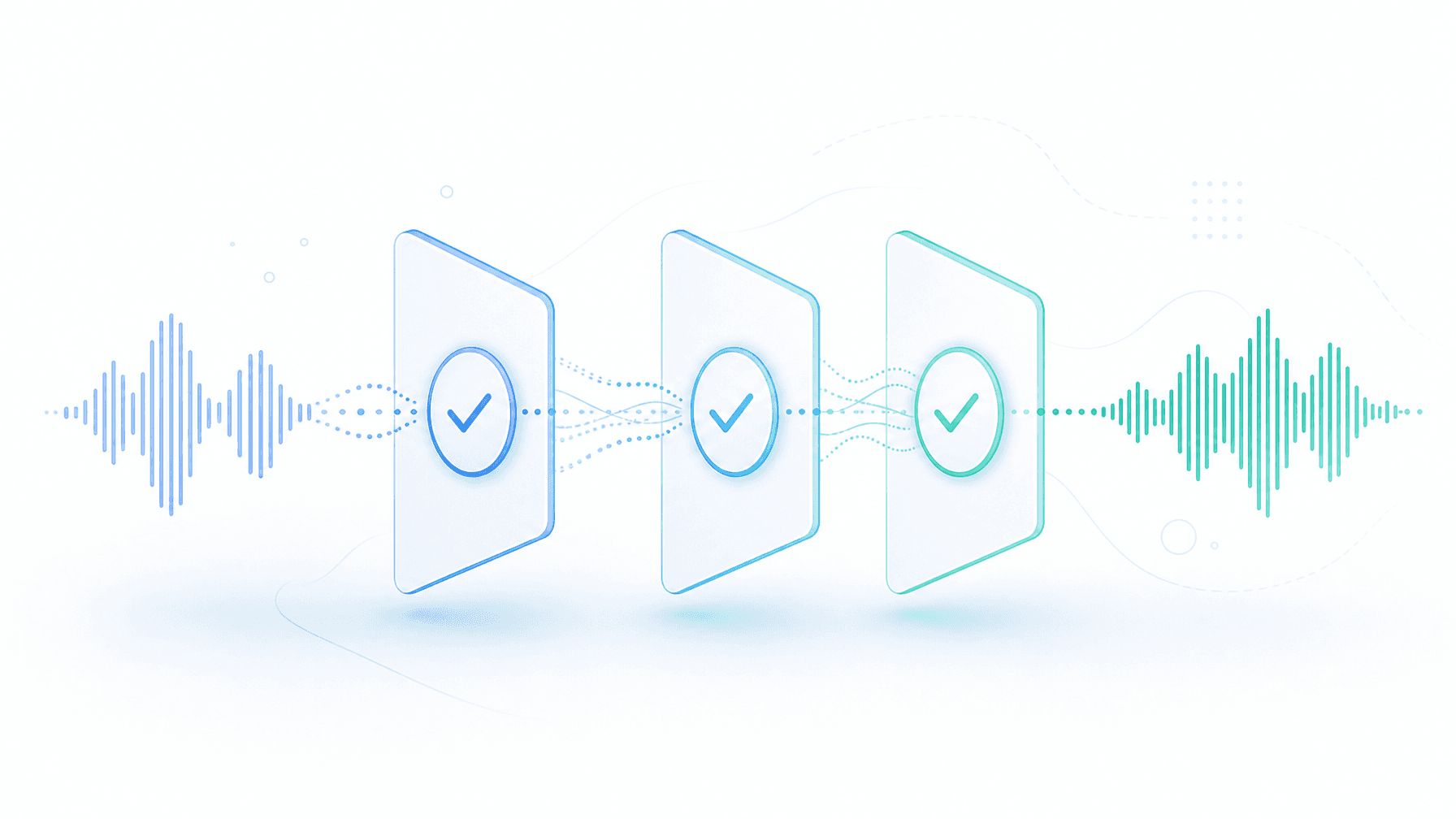
TLDR: Most teams validate 20 clips and ship 20,000. TTS quality validation is the systematic process of checking every audio output against defined standards (pronunciation accuracy, acoustic consistency, format compliance, version lock, and retake economics) before delivery. This guide covers each dimension and the production checklist that prevents the failures that matter most.
When a TTS pipeline generates an audio file, the job isn't done. The file exists. That's not the same as the file being correct, consistent, and ready to ship. Most voice AI teams discover this gap in production, usually after a batch of mismatched pronunciations, inconsistent energy levels, or a silent model update that breaks 400 previously validated characters. TTS quality validation is the verification layer between synthesis and delivery.
The 5 Dimensions
1. Pronunciation Accuracy: Does the model correctly pronounce brand names, technical terms, acronyms, and proper nouns? A 1% error rate on 10,000 clips is 100 retakes. Validation: maintain a pronunciation reference list, run a batch regression test before every production run. 2. Acoustic Consistency: Does energy level, speaking rate, and emotional tone stay stable across clips? Measure RMS energy and speaking rate across all clips, flag outliers beyond a defined threshold. 3. Format Compliance: Is the output file in the correct format, sample rate, bit depth, duration? Automated format inspection on every output file before it reaches the delivery folder. 4. Model Version Lock: Which model version produced this audio? Log the model version for every synthesis request. Alert on any version change mid-project. 5. Retake Economics: A 3% retake rate on 10,000 clips is 300 re-runs. Track retake rate over time to detect whether a model change is silently degrading output quality.
The Production Checklist
- Quality baseline check before the main batch
- Model version confirmation
- Format compliance scan on every output file
- Acoustic consistency check across the batch
- Retake triage and re-run
Onepin runs this checklist automatically across every synthesis batch (quality baseline, version lock, format compliance, acoustic consistency, and retake triage) for any TTS provider in the stack: ElevenLabs, Cartesia, Rime AI, Deepgram, or any other. Teams don't build the validation pipeline. They don't maintain it when models update. See how the production pipeline works at onepin.ai/docs. Read the Python SDK tutorial to integrate validation into your workflow.
Frequently asked questions
- What is TTS quality validation?
- It is the systematic process of checking every audio output against defined standards before delivery, covering pronunciation accuracy, acoustic consistency, format compliance, model version lock, and retake economics. The post describes it as the verification layer between synthesis and delivery, since a file existing is not the same as it being correct and ready to ship.
- What are the five dimensions of TTS quality validation?
- Pronunciation accuracy on brand names, terms, acronyms, and proper nouns; acoustic consistency of energy, speaking rate, and tone across clips; format compliance for format, sample rate, bit depth, and duration; model version lock so silent updates are caught; and retake economics, tracking retake rate over time to detect silent quality degradation.
- Why does validating a small sample fail at production scale?
- The post opens by noting that most teams validate 20 clips and ship 20,000. Small error rates compound: a 1% pronunciation error on 10,000 clips is 100 retakes, and a 3% retake rate on 10,000 clips is 300 re-runs, so gaps that are invisible in a sample become expensive in production.
- How does Onepin apply the validation checklist?
- Onepin runs the checklist automatically across every synthesis batch, covering quality baseline, version lock, format compliance, acoustic consistency, and retake triage, for any provider in the stack such as ElevenLabs, Cartesia, Rime AI, or Deepgram. Teams do not build the validation pipeline or maintain it when models update.