How to Choose a Voice AI Platform in 2026
What Is a Voice AI Platform?
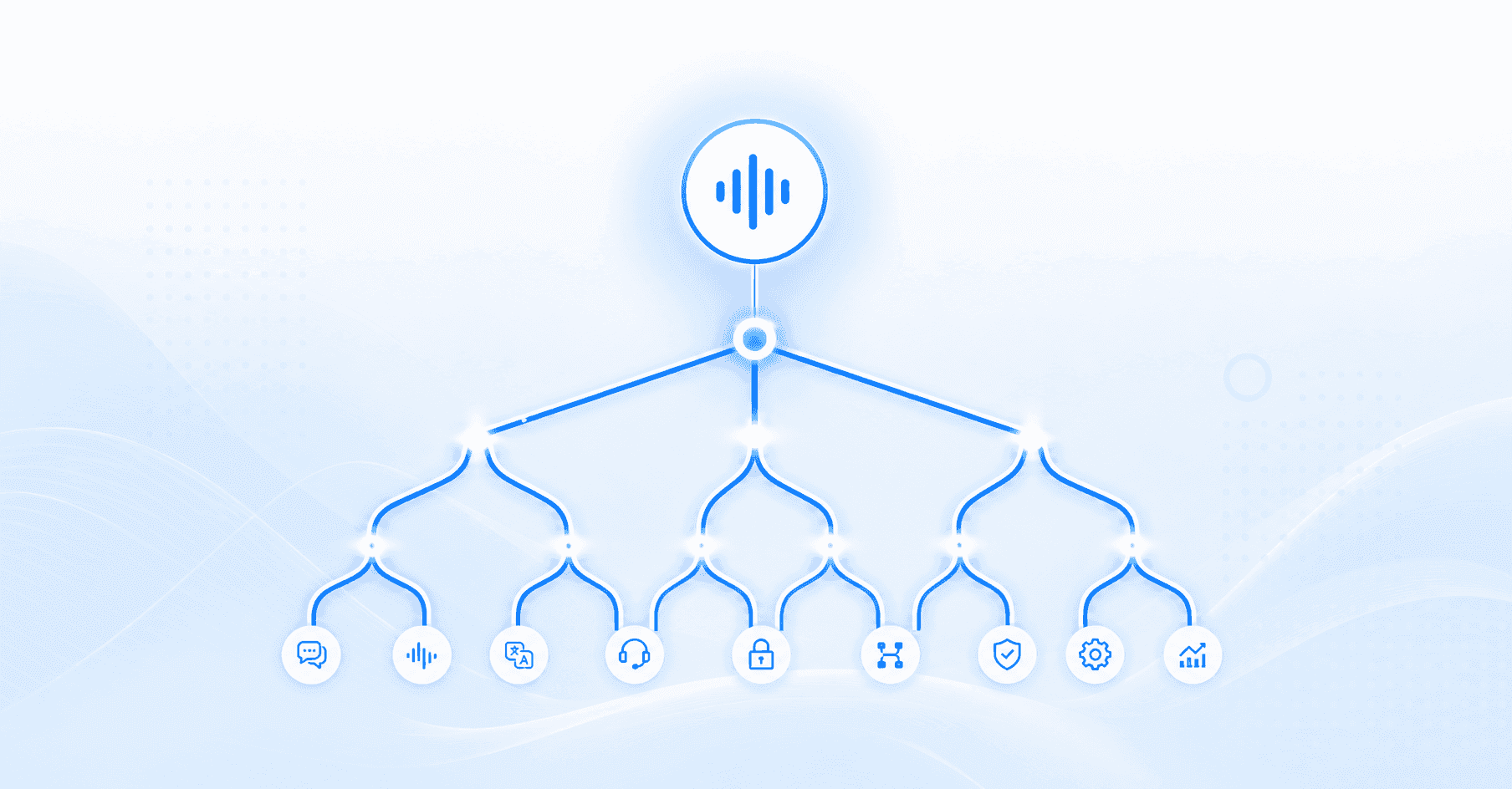
A voice AI platform is software infrastructure that lets you generate, evaluate, and manage AI-synthesized speech across your products. Most teams start with a single TTS provider and quickly discover that no single model handles every language, character type, or domain vocabulary well. A voice AI platform solves this by sitting above those providers, routing requests intelligently, and giving your team a single control plane.
Why Model Selection Is Only Half the Problem
The voice AI market moved faster in the first half of 2026 than in the two years before it. Google launched Gemini 3.1 Flash TTS with support for 70+ languages. Microsoft released MAI-Voice-1. OpenAI dropped updated voice models. Leaderboard rankings change every few weeks.
The question is not which model ranks highest today. The question is which model delivers the best output on your specific content, and how you know when that changes.
What to Look for in a Voice AI Platform
Multi-provider orchestration. Route different content types to different models without rewriting your integration.
Pronunciation management. Domain-specific vocabulary breaks most off-the-shelf TTS models. A production-ready platform includes a pronunciation dictionary.
Automated output validation. You need automated checks that flag pronunciation errors, unexpected silences, and prosody failures before audio reaches users.
Human-in-the-loop evaluation. A platform that integrates both: automated triage plus human review for flagged clips.
Language parity. If your product ships in Japanese, Spanish, and German alongside English, you need a platform that validates output quality consistently across every language.
How Onepin by Podonos Addresses This
Onepin is the product layer of Podonos built for this problem: orchestrating 100+ TTS APIs, managing pronunciation dictionaries across all connected models, and validating output quality through both automated pipelines and human review. Podonos calls it the trust layer for voice AI.
Onepin by Podonos is the trust layer for voice AI, orchestrating 100+ TTS APIs, managing pronunciation at scale, and validating every output before it ships. Learn more at onepin.ai.
Frequently asked questions
- What is a voice AI platform?
- A voice AI platform is software infrastructure that lets your team generate, evaluate, and manage AI-synthesized speech across your products. It sits above individual TTS providers, routes requests intelligently, and gives your team a single control plane across languages.
- How is a voice AI platform different from a TTS API?
- A TTS API generates audio from text. A voice AI platform orchestrates multiple TTS APIs, manages quality across all of them, and gives you tools to validate and correct output at scale. The API is one model; the platform is the layer that makes many models production-ready.
- Why is choosing the best model only half the problem?
- The voice AI market moves fast, with new models from Google, Microsoft, and OpenAI shifting leaderboard rankings every few weeks. The real question is not which model ranks highest today but which delivers the best output on your specific content and how you know when that changes. That requires ongoing validation, not a one-time model choice.
- What should I look for in a voice AI platform?
- Look for multi-provider orchestration so you can route content types to different models without rewriting your integration, pronunciation management for domain-specific vocabulary, automated output validation that flags pronunciation errors and prosody failures, human-in-the-loop review for flagged clips, and language parity so quality holds across every language you ship in.
- What is Onepin by Podonos?
- Onepin is the product layer of Podonos built to orchestrate 100+ TTS APIs, manage pronunciation dictionaries across all connected models, and validate output quality through both automated pipelines and human review. Podonos calls it the trust layer for voice AI.