Microsoft Launches MAI-Voice-2. Now You Have 101 TTS Models to Evaluate.
Microsoft launched MAI-Voice-2 on June 2, 2026. The announcement describes it as the most expressive, natural-sounding TTS model they have built to date: 15 languages, granular emotion control, zero-shot voice cloning, and code-switching capabilities for Hindi-English and Spanish-English. It is available now in Azure Foundry and rolling out into VSCode and Dynamics 365 Contact Center.
By any measure, it is a serious release. Preference tests show MAI-Voice-2 beats its predecessor 72% of the time. Speaker similarity evaluations are compelling, and the emotion tagging system adds a layer of control that most TTS APIs have historically lacked. If you need voice in your product, MAI-Voice-2 belongs on your evaluation list.
Here is the problem: so does ElevenLabs, Deepgram Aura-2, Cartesia, MiniMax, Rime AI, Fish Audio, WellSaid, and fifty others. Every model launch is a genuine improvement. And each one makes your decision harder.
The Real Cost of Model Proliferation
The TTS market in 2026 is not a landscape of one clear winner. It is a rapidly expanding field where every major tech company and dozens of well-funded startups push new releases every few months. MAI-Voice-2 joins ElevenLabs' multilingual expansions, Deepgram Aura-2, Cartesia's ultra-low-latency model, and MiniMax's large-scale voice production API, all released in recent months.
Each model claims superiority on some dimension: fidelity, latency, language coverage, emotion range, or cost. Most are actually right about their claimed advantage in a specific context. That is what makes the choice so difficult.
The standard response is to pick one model and commit. Run some test sentences, do a brief side-by-side comparison, and ship. Most teams do exactly this. The result is a production voice system locked to a single model, with no fallback when it fails, no quality validation on outputs, and no ability to route to a better option when the use case changes.
The Failure Mode Nobody Talks About
Every TTS model fails in specific, predictable patterns. Pronunciation breaks on proper nouns, technical terms, and non-native names. Prosody degrades on long-form content. Latency spikes under load. Specific voices perform inconsistently across languages. Emotion tags and custom pronunciation dictionaries require model-specific integration work.
When you run voice at scale, these failures happen constantly. A single model has no mechanism to catch them. You don't know an output was wrong until a human listener hears it, or until a customer complains, or until you run a quality audit weeks after the fact.
MAI-Voice-2's emotion control system is sophisticated, but it produces unexpected results on edge-case inputs. Zero-shot voice cloning with short reference clips is genuinely impressive, but consistency across long-form audio requires active validation. These are hard problems that Microsoft has partially solved. The same is true of every model on the market. The underlying issue is that no model ships with a validation layer built in.
Orchestration Is the Missing Layer
The correct response to a new TTS model release is not “should we switch?” or “should we add this to our stack?” It is: how do we run this model, validate its outputs, compare it against alternatives on our actual content, and route intelligently?
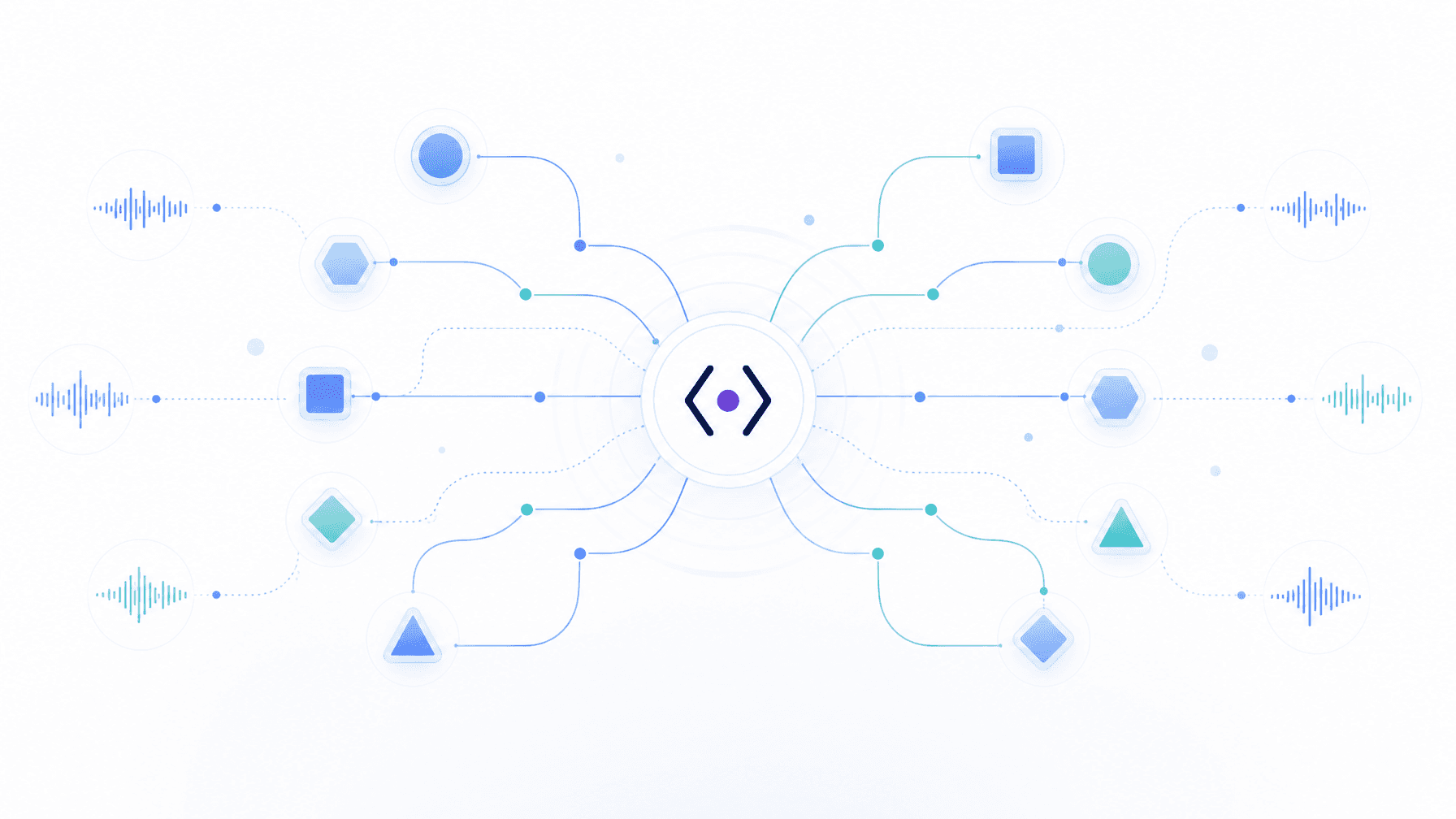
That is what Onepin does. Onepin is an AI voice production agent that sits above individual TTS models. It does not replace any model. It runs production jobs across 100+ models including Deepgram Aura-2, ElevenLabs, Cartesia, MiniMax, and now MAI-Voice-2, validates every output against configurable quality standards, retries on failure, and routes to the best model for each content type.
When Microsoft ships a better model for a specific language pair or emotional context, Onepin routes to it automatically. When a model fails on a specific input, Onepin catches the failure, retries with an alternative, and logs the issue for review. The result is publish-ready audio without manual review cycles or single-model lock-in.
Why This Matters More as the Market Grows
Model proliferation accelerates from here. Every two to three months, a new release claims to push the state of the art. MAI-Voice-2 is excellent, but it will not be the last announcement this quarter. Teams that build evaluation and orchestration into their voice infrastructure now do not need to rebuild their stack every time a new model ships.
Single-model TTS pipelines were always a temporary solution. They were acceptable when the market had a handful of real options. In 2026, with 100+ production-ready TTS models and a new major release every few weeks, a raw API call to a single provider is technical debt that compounds every month.
The winning workflow does not pick a model. It evaluates continuously, validates every output, and ships the best result regardless of which model produced it.
Onepin orchestrates across 100+ TTS models, validates every output, and ships production-ready audio. Start here.
Frequently asked questions
- What did Microsoft launch with MAI-Voice-2?
- Microsoft launched MAI-Voice-2 on June 2, 2026, describing it as its most expressive, natural-sounding TTS model to date. It covers 15 languages, adds granular emotion control, zero-shot voice cloning, and code-switching for Hindi-English and Spanish-English, and is available in Azure Foundry while rolling into VSCode and Dynamics 365 Contact Center.
- Why does each new TTS model make the decision harder?
- The 2026 TTS market has no single winner. Every major company and dozens of startups ship new releases every few months, and most are right about their claimed advantage in a specific context, so each launch adds another credible option rather than settling the choice.
- What failure modes do single-model TTS pipelines hit?
- Pronunciation breaks on proper nouns, technical terms, and non-native names, prosody degrades on long-form content, latency spikes under load, and specific voices perform inconsistently across languages. A single model has no built-in mechanism to catch these, so errors surface only when a listener or customer notices.
- What is TTS orchestration?
- Orchestration is a layer that sits above individual TTS models to run production jobs across many of them, validate every output against configurable quality standards, retry on failure, and route to the best model for each content type. It treats model selection as a runtime decision rather than a fixed architectural commitment.
- How does Onepin approach model proliferation?
- Onepin runs production jobs across 100+ models including Deepgram Aura-2, ElevenLabs, Cartesia, MiniMax, and MAI-Voice-2, validates every output, retries on failure, and routes to the best model per content type. When a better model ships for a given case, Onepin routes to it automatically without a stack rebuild.