Microsoft Launches MAI-Voice-2. The TTS Race Is Accelerating, and Your Pipeline Can't Keep Up.
On June 2, 2026, Microsoft's Superintelligence team launched MAI-Voice-2, their most expressive text-to-speech model to date. It supports 15 languages, granular emotion control, zero-shot voice cloning from as little as five seconds of reference audio, and stable speaker identity across long-form content like audiobooks and lectures. In preference tests, it beats its predecessor 72% of the time. The team calls it "indistinguishable from recordings of the same voice."
There is a catch. Microsoft's own Azure documentation classifies MAI-Voice as "currently in public preview" and explicitly states it "isn't recommended for production workloads."
Microsoft just launched a model they tell you not to use in production. That sentence captures most of what is wrong with how the voice AI industry ships.
What the Launch Actually Reveals
MAI-Voice-2 is a genuinely impressive piece of engineering. The code-switching between Hindi and English, the emotional expressiveness tags (embarrassed, excited, whispered), the zero-shot voice prompting: these are real technical achievements. But impressive demos and production-ready audio are two different things.
The Azure documentation lists multiple MAI-Voice model variants, each with different regional coverage, capability constraints, and preview limitations. Teams that try to ship MAI-Voice-2 directly into production face undocumented edge cases, inconsistent behavior on accent-heavy inputs, and no built-in retry logic when the model returns degraded output. The preview caveat is not boilerplate. It is a real signal about the gap between a model that sounds great in a controlled setting and one that holds up under real production traffic.
This is not a knock on Microsoft. It is a description of every major TTS model launch in 2026.
The TTS Model Explosion Has a Hidden Cost
The voice AI landscape now contains more serious options than any single team can realistically evaluate. ElevenLabs leads on voice quality for English narration. Cartesia wins on latency for real-time applications. Deepgram Aura-2 integrates cleanly into conversational AI pipelines. MiniMax attacks multilingual use cases aggressively. Google's Gemini TTS now sits at the top of the Artificial Analysis Speech Arena leaderboard. And now Microsoft adds MAI-Voice-2 to the stack.
Every model has a lane. Every model has failure modes. And most production teams are still making a single selection decision: picking one API, plugging it in, and assuming it holds. It does not hold. Not at scale, not across languages, not under the full range of inputs real users generate.
The deeper problem is measurement. Vendor benchmarks measure performance under conditions that flatter the system being tested. Production traffic looks nothing like those conditions. Real inputs include technical jargon, code-mixed language, names with unusual pronunciations, audio generated from long-form text that must maintain speaker consistency for hours. Models that score well in blind preference tests against clean, short, English sentences regularly fall apart on the inputs that actually matter to production teams.
More Models Means More Overhead Without a Pipeline
MAI-Voice-2's launch signals something important: the TTS model race is accelerating. Every major technology company and every specialist provider is now pushing into the same market simultaneously. More models means more capability in theory. In practice, it means more integration complexity, more surface area for production failures, and more decisions that need to be made at request time: which model handles this language, this speaker, this content type, this latency requirement?
A team that builds its pipeline around a single model has to rebuild when that model changes, when a better option arrives, or when their use case outgrows what a single provider can do. That is the cost of betting on the model layer instead of the orchestration layer.
The Infrastructure That Absorbs the Change
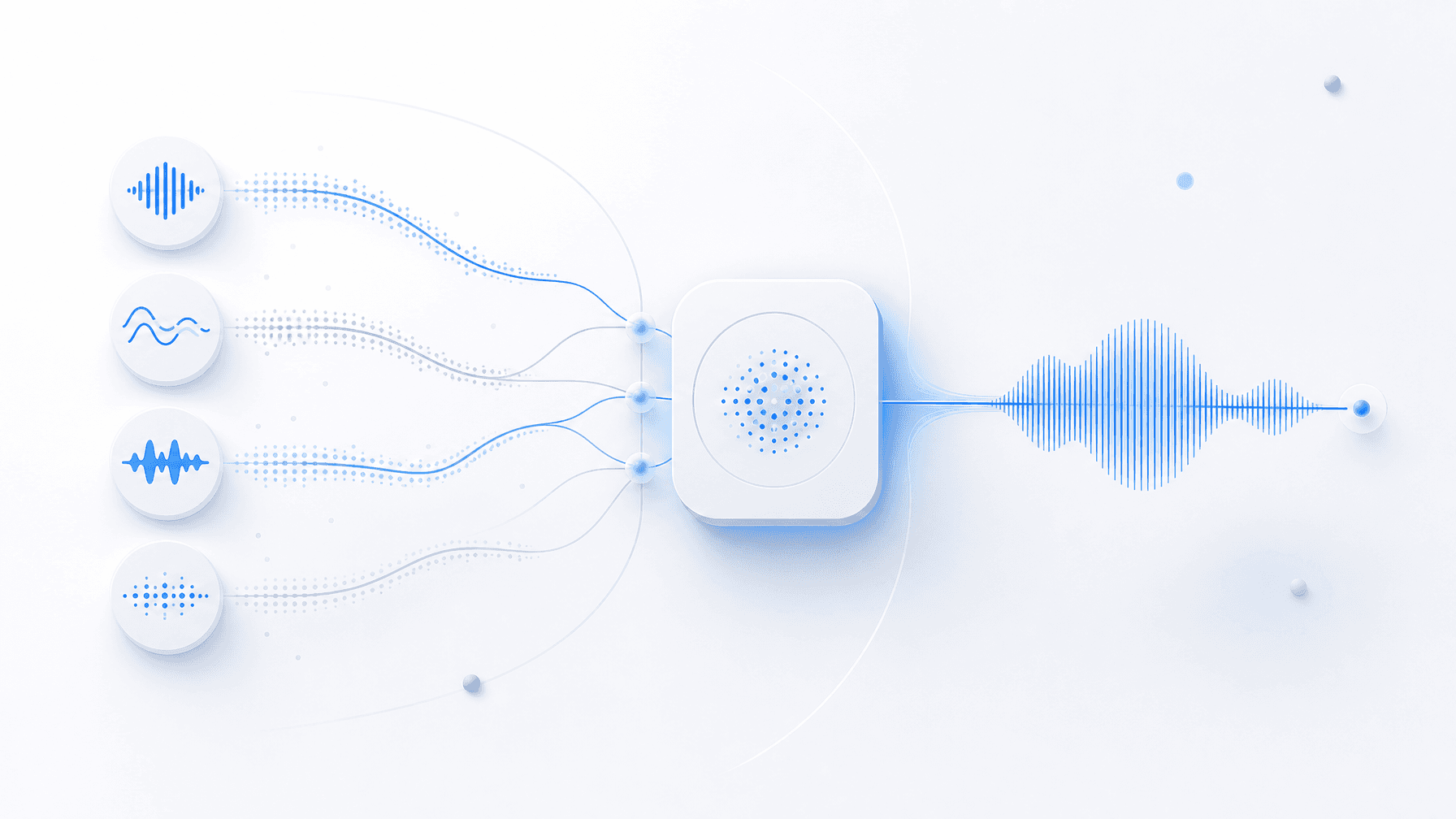
The teams shipping reliable audio at scale in 2026 are not the ones who found the single best TTS model. They are the ones who built a pipeline that routes between models based on task requirements, validates every output before it ships, retries with a fallback model when quality falls below threshold, and logs real production results so benchmarks reflect actual performance rather than vendor test conditions.
That infrastructure is what Onepin provides. Onepin sits above the model layer, routing requests to the right model for each job, running quality validation on every output, and retrying automatically when a model fails or produces audio that does not meet spec. When Microsoft ships a new model version, Onepin can route to it for the cases where it excels and away from it for the cases where it does not. Teams do not need to rebuild their integration every time a new model drops. The orchestration layer absorbs the change.
What to Do With MAI-Voice-2
MAI-Voice-2 is a meaningful addition to the TTS landscape. For multilingual content, its code-switching and 15-language coverage will matter. For brand voice applications, its zero-shot voice cloning with consent guardrails addresses a real compliance requirement. These are capabilities worth using.
The question is not whether to use MAI-Voice-2. The question is how to use it safely: alongside other models, with validation on every output, and with the ability to route away from it when it is not the right tool for the job. That is the production-ready approach. It is not model selection. It is model orchestration.
The voice AI model landscape keeps expanding. Every new model is either a new capability you can access through an orchestration layer, or a new dependency you manage manually. See how Onepin handles the full model layer at onepin.ai.
Frequently asked questions
- What capabilities does MAI-Voice-2 ship with?
- Launched June 2, 2026 by Microsoft's Superintelligence team, MAI-Voice-2 supports 15 languages, granular emotion control, zero-shot voice cloning from as little as five seconds of reference audio, and stable speaker identity across long-form content. In preference tests it beats its predecessor 72% of the time.
- Why does Microsoft label MAI-Voice-2 as not for production?
- Microsoft's Azure documentation classifies MAI-Voice as currently in public preview and states it isn't recommended for production workloads. The preview caveat signals the gap between a model that sounds great in a controlled setting and one that holds up under real production traffic.
- Why do vendor benchmarks mislead production teams?
- Benchmarks measure performance under conditions that flatter the system being tested, while production traffic includes technical jargon, code-mixed language, unusual names, and long-form text that must hold speaker consistency for hours. Models that score well on clean short English sentences regularly fall apart on the inputs that matter in production.
- What is the cost of building around a single TTS model?
- A pipeline built on one model has to be rebuilt when that model changes, when a better option arrives, or when the use case outgrows what one provider offers. That is the cost of betting on the model layer instead of the orchestration layer.
- How does Onepin absorb model change?
- Onepin sits above the model layer, routing requests to the right model for each job, validating every output, and retrying automatically when a model fails or produces off-spec audio. When Microsoft ships a new version, Onepin routes to it where it excels and away from it where it does not, so teams do not rebuild their integration.