RubricHQ Tests What Your Voice Agent Says. Who Validates How It Sounds?
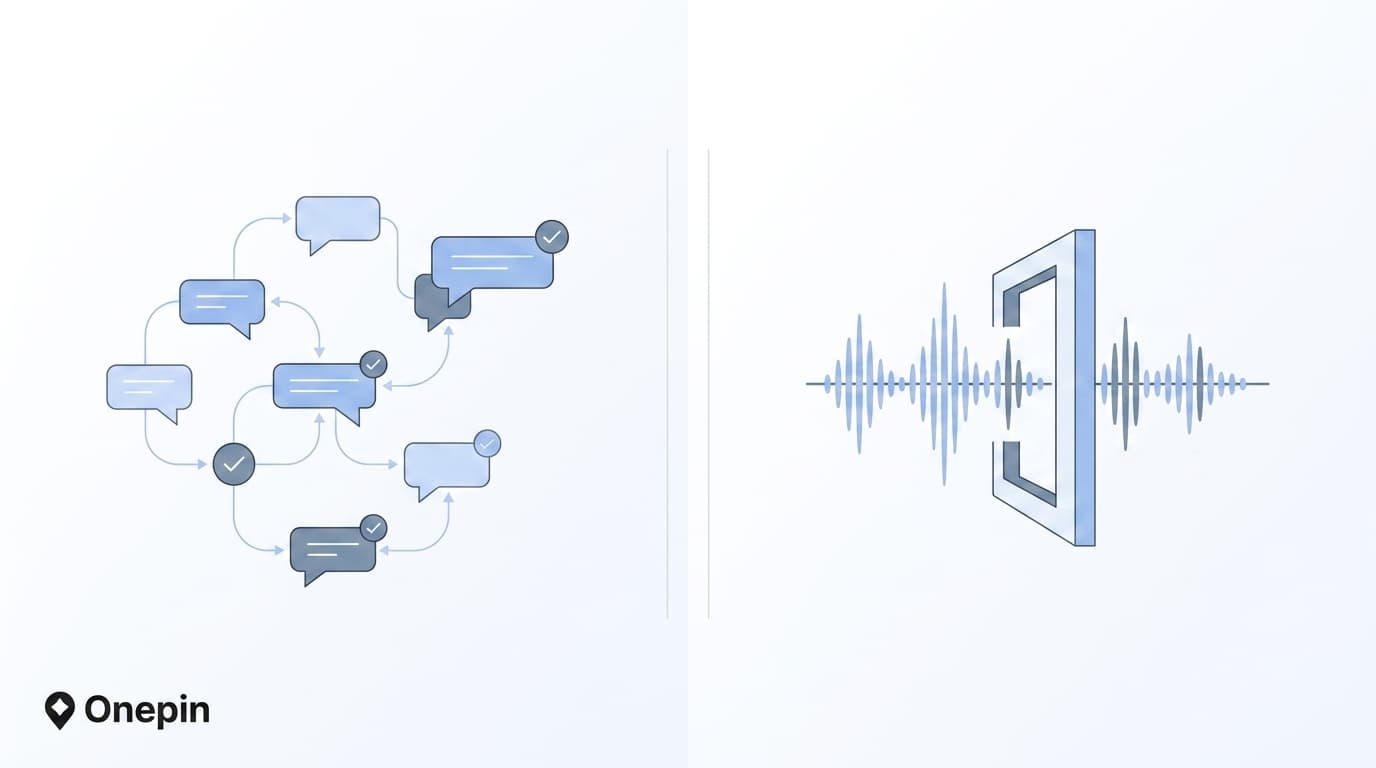
Voice AI testing got a new entrant this week. RubricHQ launched in public beta with a sharp promise: simulate thousands of real voice calls, score every one on hundreds of metrics, and catch hallucinations, compliance gaps, latency spikes, broken handoffs, and dead air before your customers do. It connects to Vapi, Retell, LiveKit, and Pipecat in one click, generates test scenarios from your agent prompt, and runs them against a persona library of angry, confused, elderly, and adversarial callers. It is a genuinely useful product, and the launch is worth paying attention to.
Here is the direct answer this launch points to: a voice AI testing platform validates what your agent says and decides, but not how the final audio sounds. Those are two separate failure surfaces. RubricHQ closes the first one at scale. The second one, the audio output layer, is where most production voice failures actually reach a listener, and it usually has no owner.
What does a voice AI testing platform actually test?
A voice AI testing platform tests agent behavior: the words, the logic, and the timing. RubricHQ's own framing makes this clear. It scores hallucinations, compliance errors, latency, handoffs, and silent dead air. Those are conversation-level and system-level metrics. Did the agent answer correctly? Did it stay inside policy? Did it respond fast enough? Did it hand off cleanly? These are the right questions, and simulating a thousand calls to answer them beats the old standard of twenty manual test calls and a shrug of "sounded fine to me."
This is real progress. Manual QA cannot cover the space of callers and edge cases a production agent meets. Automated simulation can. If you ship voice agents, this class of tool belongs in your pipeline.
What is the difference between testing what an agent says and how it sounds?
The difference is that testing verifies the decision, and validation verifies the delivery. An agent can pass every behavioral test and still ship audio that fails the listener.
Consider a debt-collection agent that RubricHQ would test for compliance and tone. It gives the legally correct disclosure, stays polite under an interruptive persona, and resolves the call inside the latency budget. Every behavioral metric is green. Then the text-to-speech layer mispronounces the customer's last name, renders the account balance as a garbled string of digits, and drifts to a slightly different voice halfway through because the provider pushed a silent model update overnight. The transcript is perfect. The audio is broken. A test that scores the words never sees it.
That is the audio output surface, and it is invisible to any platform that evaluates the conversation rather than the sound wave.
Why does audio quality fail even when the agent logic passes?
Audio quality fails independently because TTS output is probabilistic and the models underneath keep changing. The same input text does not guarantee the same output audio. Run it twice and you can get two different renderings, one clean and one with a mangled proper noun. Providers also update models without a changelog, which means the voice you validated in your pre-launch batch is not necessarily the voice that ships next Tuesday.
Three failure modes live entirely below the transcript. Pronunciation breaks on names, numbers, and domain terms with no visual fallback on an audio-only channel. Voice consistency drifts across a call or across a library of prompts. Format compliance fails when the audio does not match the codec, sample rate, or loudness the channel requires. None of these change what the agent decided. All of them change what the customer hears.
What closes the audio output gap?
A production validation layer closes it by scoring every shipped audio output, not just the pre-launch batch of conversations. This is a different job from agent testing, and it runs continuously rather than once before launch.
Onepin is a voice workflow platform that orchestrates, validates, and ships production-ready audio across 100+ TTS models. It locks the model version so a silent provider update never reaches production unchecked. It validates pronunciation against a reference profile of your real names, numbers, and terms. It scores voice consistency across outputs and confirms format compliance for the target channel. When an output fails, it retries or routes to a different model instead of shipping the defect. And it attaches the model version and quality score to every clip, so weeks later you can prove exactly what produced any given piece of audio. See our TTS quality validation checklist for the mechanics.
Run both, because they cover different risks
The takeaway is not that agent testing is wrong. It is that agent testing and audio validation cover different risks, and you need both. Use a platform like RubricHQ to prove your agent behaves correctly across thousands of simulated calls before launch. Use a production validation layer to prove every real output sounds correct after launch, on every call, as models change underneath you.
Test what your agent says. Validate how it sounds. The teams that only do the first will keep discovering the second surface the same way they always have, from the customer instead of the pipeline.
See how orchestration and validation work at onepin.ai.