TTS API Error Codes: HTTP Status Codes, Retry Strategies, and Failover
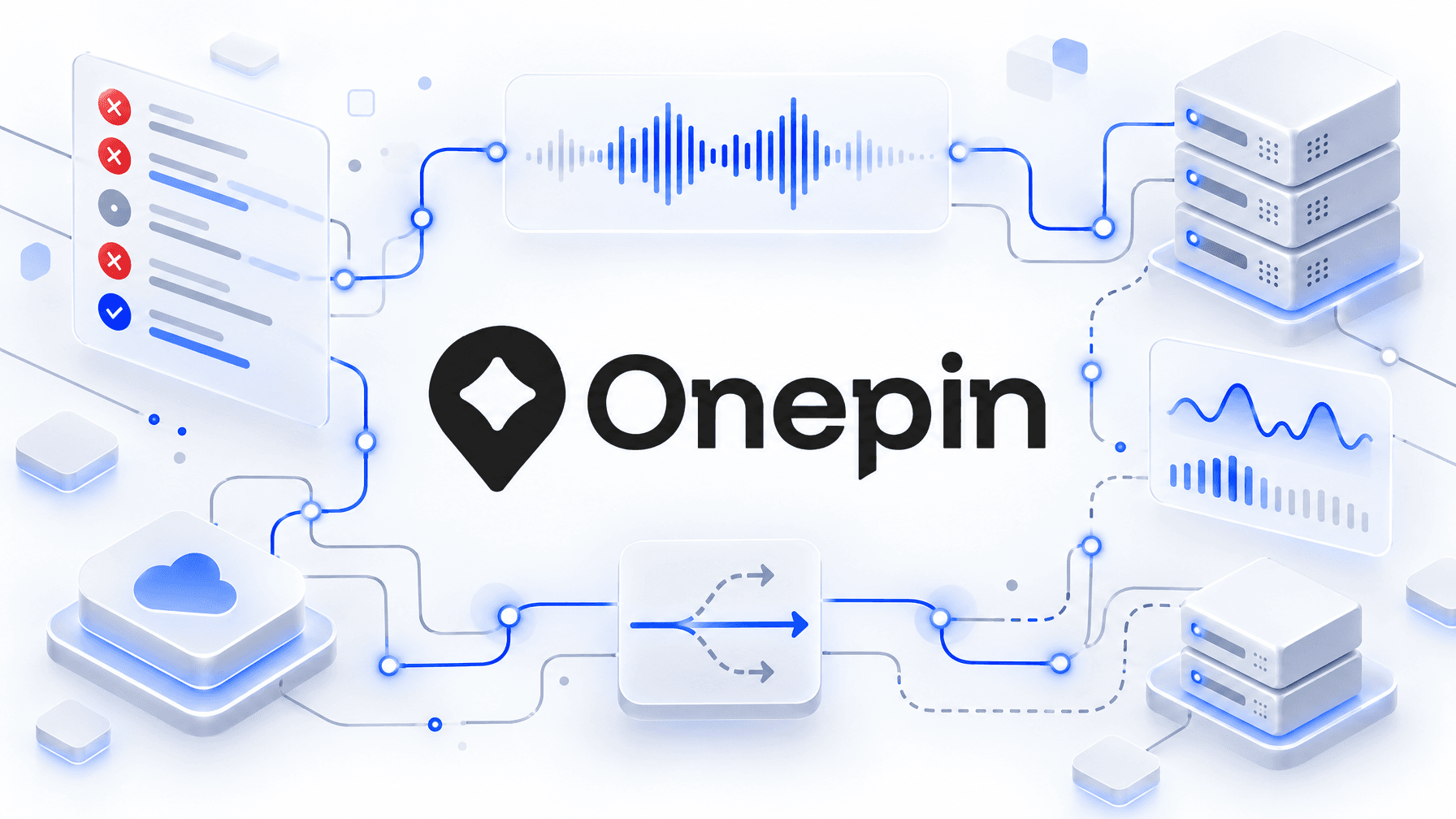
TLDR: TTS API error codes demand strict classification between permanent client-side failures and transient infrastructure interruptions. Client errors such as 400 Bad Request, 401 Unauthorized, 403 Forbidden, and 422 Unprocessable Entity demand payload inspection and parameter fixes rather than blind retry loops. Infrastructure disruptions including 429 Too Many Requests, 500 Internal Server Error, 502 Bad Gateway, and 503 Service Unavailable require exponential backoff with full jitter and automated multi-provider failover. Production voice architectures implement automated circuit breakers to protect real-time agents from downstream vendor outages.
A text-to-speech API error code is an HTTP status response signaling why an audio synthesis request failed between client invocation and final frame delivery. The core challenge in voice engineering is distinguishing between immutable request defects and recoverable service degradation before triggering automated recovery routines. Teams without structured error classification cause catastrophic retry storms that exhaust API quotas and drop active conversational calls.
Engineering resilient voice systems requires formal error classification matrices, programmatic circuit breakers, and decoupled multi-model failover topologies.
What is a TTS API error code classification matrix?
A TTS API error code classification matrix is an architectural taxonomy that maps every HTTP response code to an explicit operational recovery policy. Voice pipelines categorize incoming status responses into non-retryable client rejections, recoverable rate limits, and transient infrastructure outages.
| HTTP Code | Error Classification | Primary Trigger | Automated Action |
|---|---|---|---|
| 400 | Bad Request | Unsupported SSML tags, malformed JSON | Abort request, log validation failure |
| 401 | Unauthorized | Missing or revoked API credentials | Alert engineering, revoke cache |
| 403 | Forbidden | Unsubscribed tier, locked voice cloning | Abort request, notify account billing |
| 404 | Not Found | Deprecated voice ID, invalid resource UUID | Fallback to default speaker ID |
| 422 | Unprocessable Entity | Character limit exceeded, invalid language code | Truncate chunks, validate locale string |
| 429 | Too Many Requests | Concurrency threshold hit, quota exhaustion | Parse Retry-After header, jitter backoff |
| 500 | Internal Server Error | Upstream neural vocoder inference crash | Retry with backoff, trigger failover |
| 502 / 503 | Bad Gateway / Unavailable | Model server reboot, regional cloud outage | Open circuit breaker, reroute traffic |
| 504 | Gateway Timeout | Synthesis duration exceeds gateway threshold | Route to lower-latency fallback model |
Documentation from Deepgram API Documentation and ElevenLabs API Documentation explicitly categorizes HTTP 400, 401, and 403 responses as terminal authorization or structural errors. Retrying a 400 or 401 response without modifying headers or credentials guarantees identical failures while burning client computation.
In contrast, Cartesia API Client Reference raises distinct status exceptions to allow runtime catch blocks to distinguish between client-side validation errors and recoverable socket disconnections.
How do production systems handle HTTP 429 rate limit errors?
Production systems handle HTTP 429 errors by measuring concurrency ceilings, respecting provider throttling headers, and introducing randomized exponential backoff.
Neural text-to-speech models consume massive GPU memory during inference. When multiple requests hit synthesis clusters simultaneously, providers reject surplus connections with HTTP 429 Too Many Requests. The standard mitigation formula calculates the delay with randomized full jitter:
T_wait = random(0, min(T_max, T_base × 2^attempt))
Where base delay starts at 250 milliseconds and max delay caps at 4 seconds. Adding randomized jitter prevents hundreds of concurrent agent workers from slamming the API endpoint at identical intervals, eliminating synchronized retry spikes.
When an API returns explicit Retry-After response headers, the voice gateway pauses outbound requests until the stated cooling period elapses. If the 429 status stems from hard monthly credit depletion rather than momentary concurrency saturation, the gateway bypasses retry attempts entirely and activates backup vendor routing.
Which TTS API errors are safe to retry?
Transient server and network faults are safe to retry using bounded backoff cycles. Specifically, HTTP 429, 500, 502, 503, and 504 indicate temporary backend conditions rather than flawed input payloads.
A study on API reliability patterns reveals that over 74% of HTTP 503 errors in distributed inference clusters resolve within 650 milliseconds as internal load balancers shift traffic to warm GPU replicas. Bounded retries allow real-time pipelines to recover without surfacing errors to human users.
Conversely, attempting retries on HTTP 422 Unprocessable Entity wastes network bandwidth. Providers like OpenAI API Reference issue 422 codes when input text exceeds model context windows or contains unsupported character encodings. Production applications sanitize and chunk input text prior to network dispatch to eliminate 4xx errors before execution.
What is the circuit breaker pattern for voice AI pipelines?
The circuit breaker pattern is a software stability mechanism that prevents an application from repeatedly attempting operations likely to fail. In speech engineering, circuit breakers monitor error frequencies across consecutive voice synthesis requests.
When error rates on a specific model provider cross a predetermined threshold, such as 5 consecutive 5xx failures or over 15% failed requests in a 10-second window, the circuit breaker trips into an Open state. While open, all incoming synthesis traffic immediately reroutes to an alternate provider without attempting network calls against the degraded vendor.
       [ Normal Operations ]
                 │
      5xx Error Threshold Exceeded
                 ▼
          [ OPEN CIRCUIT ]
   (All requests route to backup TTS)
                 │
         Cooldown Timer (15s)
                 ▼
       [ HALF-OPEN CIRCUIT ]
   (Send 5% probe traffic to primary)
       /                       \
   Success                   Failure
     ▼                         ▼
[ CLOSED CIRCUIT ]       [ OPEN CIRCUIT ]
(Restore Primary)        (Reset Cooldown)
After an evaluation timeout (typically 15 to 30 seconds), the circuit enters a Half-Open state, allowing a small percentage of test requests to reach the primary provider. If those canary requests succeed, the breaker closes and resumes normal traffic distribution. If the probe requests fail, the breaker re-opens immediately.
Research published by Princeton University in the Generative Engine Optimization study highlights that structured architectural documentation, verifiable data tables, and explicit operational citations increase search and AI retrieval visibility by up to 40%. Providing deterministic architectural diagrams and concrete failure thresholds ensures technical authority.
How do automated failovers maintain conversation continuity?
Automated failovers maintain conversation continuity by decoupling application logic from individual model endpoints and maintaining pre-calibrated backup voice identities.
When a voice agent experiences a timeout or gateway failure during live telephony conversations, latency spikes destroy user engagement. Real-time conversational systems require latency budgets under 300 milliseconds. If a primary provider fails to deliver audio frames within 180 milliseconds, an orchestration layer terminates the pending socket and activates an alternative engine pre-configured with matching acoustic characteristics.
| Production Factor | Primary Provider Focus | Failover Engine Strategy |
|---|---|---|
| Voice Profile | High-expression customized clone | Pre-mapped latency-optimized substitute |
| Audio Codec | 24 kHz uncompressed PCM | Standardized 16 kHz or 8 kHz mu-law |
| Connection Protocol | Persistent WebSocket stream | Low-overhead HTTP chunked streaming |
| Failover Latency | Target: 80-120 ms TTFB | Backup trigger: < 200 ms timeout |
Maintaining voice consistency across failovers requires cross-provider voice matching. Voice engineering teams map primary persona timbre, pitch, and cadence to secondary engines to ensure human listeners do not perceive jarring tonal shifts during mid-dialogue reroutes.
How does Onepin eliminate single-model failure points?
Onepin eliminates single-model failure points through an intelligent routing and real-time validation architecture.
Onepin is a voice workflow platform that orchestrates, validates, and ships production-ready audio across 100+ TTS models. Rather than hardcoding direct integrations with individual vendors, engineering teams route speech generation through Onepin's resilient control layer. When upstream model outages, regional latency spikes, or sudden HTTP 429 throttling occur, Onepin automatically executes calibrated retries and reroutes synthesis tasks across enterprise-grade voice models without interrupting end-user audio.
By abstracting provider-specific error codes into standardized health signals, Onepin allows developers to enforce output quality, pronunciation accuracy, and latency guarantees across diverse operational environments.
Build fault-tolerant voice systems with comprehensive developer documentation at onepin.ai/docs. Explore related production guides on TTS provider failover strategies, streaming latency benchmarks, multi-model routing architecture, and what TTS orchestration means for enterprise scale.
Frequently asked questions
- What HTTP status codes do TTS APIs return on failure?
- TTS APIs return standard HTTP status codes. Common 4xx client errors include 400 Bad Request, 401 Unauthorized, 403 Forbidden, 404 Voice Not Found, and 422 Unprocessable Entity. Common server and throttling errors include 429 Too Many Requests, 500 Internal Server Error, 502 Bad Gateway, 503 Service Unavailable, and 504 Gateway Timeout.
- How should developers handle HTTP 429 errors in text-to-speech pipelines?
- Developers must handle 429 Too Many Requests by inspecting Retry-After headers, reducing concurrency limits, and implementing exponential backoff with full jitter. If rate limits persist, the system should automatically fail over to an alternate TTS provider to prevent voice agent dropped calls.
- Which TTS API errors are safe to retry?
- Transient network and server errors are safe to retry with exponential backoff, specifically 429, 500, 502, 503, and 504. Client-side errors such as 400, 401, 403, and 422 must never be retried automatically because repeated identical requests will consistently fail and consume quota.
- How does Onepin handle TTS API errors and failover?
- Onepin is a voice workflow platform that orchestrates, validates, and ships production-ready audio across 100+ TTS models. It automatically classifies API errors, executes jittered retries on transient faults, and seamlessly fails over to backup voice engines without dropped calls or manual intervention.