The TTS Arms Race Has a Production Problem
Three Major Launches, One Week, Zero Guarantees About What Ships
This week: Google topped the Artificial Analysis TTS leaderboard with Gemini 3.1 Flash TTS (200+ audio tags, 70+ languages, SynthID watermarking). Microsoft followed with MAI-Voice-1. ElevenLabs, now valued at $11 billion after a $500M Series D, announced expansion toward IPO. Three major voice AI stories in one week. All focused on which model is best. None addressing whether any of these models ship reliably in production.
Why the Model Race Misses the Point
Production voice pipelines break in ways unrelated to model quality scores: clipped audio endings, mispronounced proper nouns, retakes at a slightly different speed that break the edit, format conversions that silently downgrade quality. Teams pick a model, call the API, and move on. There is no validation step, no fallback logic, no quality gate before audio reaches a listener. The same failure class reappears with each new model launch. The leaderboard score goes up. The production failure rate stays stubbornly nonzero.
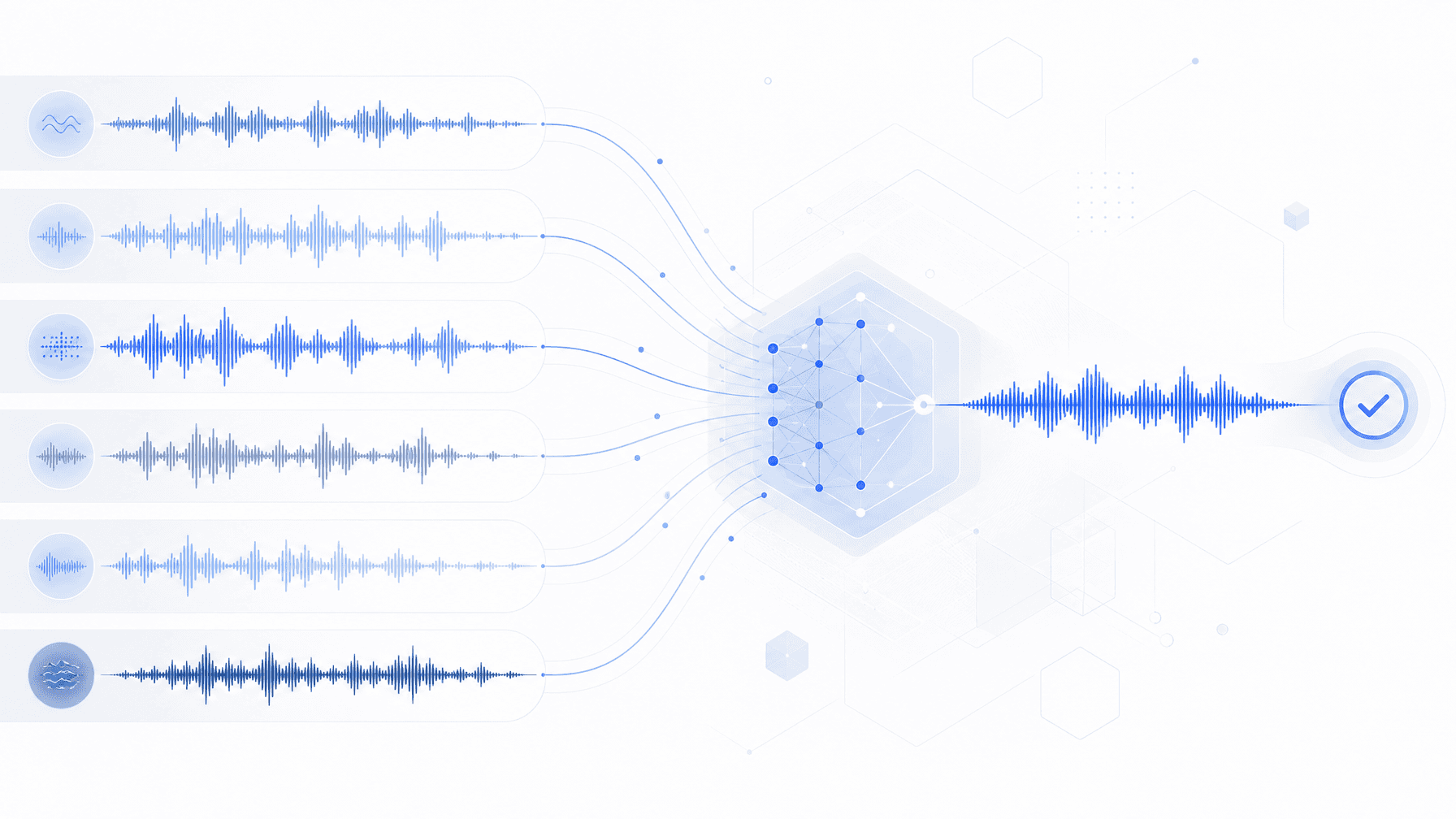
Onepin is an orchestration and validation layer that sits above all 100+ TTS models, including ElevenLabs, Cartesia, Deepgram. It plans audio jobs, selects the right model per segment, validates output before it moves downstream, and retries or reroutes when something goes wrong. See how Onepin turns 100+ TTS models into a reliable production pipeline.
Frequently asked questions
- What major voice AI launches happened this week according to the post?
- Google topped the Artificial Analysis TTS leaderboard with Gemini 3.1 Flash TTS, which supports 200+ audio tags, 70+ languages, and SynthID watermarking. Microsoft followed with MAI-Voice-1, and ElevenLabs, valued at $11 billion after a $500M Series D, announced expansion toward an IPO.
- Why does the post argue the TTS model race misses the point?
- All three stories focus on which model is best, but none address whether the models ship reliably in production. Production pipelines break in ways unrelated to quality scores, so a higher leaderboard score does not lower the production failure rate.
- How do production voice pipelines break regardless of model quality?
- The post lists clipped audio endings, mispronounced proper nouns, retakes at a slightly different speed that break the edit, and format conversions that silently downgrade quality. Teams often call the API with no validation step, no fallback logic, and no quality gate before audio reaches a listener.
- What does Onepin do about these production failures?
- Onepin is an orchestration and validation layer that sits above all 100+ TTS models, including ElevenLabs, Cartesia, and Deepgram. It plans audio jobs, selects the right model per segment, validates output before it moves downstream, and retries or reroutes when something goes wrong.