Why Voice AI Pilots Work But Production Deployments Fail
The Pilot Worked. The Deployment Did Not.

A pattern is becoming impossible to ignore in enterprise voice AI. A VP of Product at AudioCodes put it plainly in a June 11, 2026 interview with CX Today: "Most voice AI pilots succeed. Most production deployments do not. The gap is almost always infrastructure."

That observation matches what teams building at scale consistently report. The proof of concept sounds great. The demo impresses the stakeholders. Then the real deployment begins, and everything that worked cleanly in a controlled environment starts to break. Latency climbs under load. Speech-to-text engines return intermittent failures. TTS outputs that validated perfectly in testing start drifting at volume. The voice layer, which nobody treated as an engineering priority, becomes the thing that kills the project.

The model is not the problem. The model was never the problem.

What the Pilot Hides

Building a convincing voice AI proof of concept has never been easier. ElevenLabs, Cartesia, Inworld, and dozens of other providers now offer APIs that return high-quality audio in under a second. You pick a voice, test a few scripts, the output sounds natural, and you move forward. That part works.

What the pilot does not reveal is the behavior of those providers under real conditions: concurrent requests in the hundreds, production scripts that include edge-case punctuation, proper nouns, acronyms, or multilingual terms. It does not reveal what happens when a provider returns a 503. It does not reveal how your pipeline handles a mispronounced proper noun that passed text review but was never validated as audio. It does not reveal the latency ceiling of your chosen model when you scale from five concurrent sessions to five hundred.

These are not edge cases. They are the normal operating conditions of any production voice deployment. The pilot never sees them because pilots do not run at production volume.

The Industry Gets the Diagnosis Wrong

When a production voice deployment fails, the blame consistently lands on the AI. The model is labeled not ready for prime time, the team switches providers, and the cycle repeats. But the underlying cause is almost never the model quality in isolation. It is the absence of any layer between the model and the shipped output.

Most teams wire directly from a text input to a TTS API call to an audio file. There is no validation step that checks whether the output matches the expected prosody, correctly renders the branded terms, or flags a pronunciation error before it ships. There is no fallback routing when that provider degrades. There is no retry logic that can tell the difference between a transient failure and a permanent one. There is no version tracking to detect when a provider quietly updates their model and your outputs start sounding different.

The CX Today analysis identifies five areas that enterprise deployments consistently fail to test before going live: concurrency limits, latency under load, redundancy and failover, provider flexibility, and telephony integration depth. Four of those five are orchestration and validation problems, not model quality problems. The same holds for any voice production workflow, whether it runs over telephony or produces audio files for video, e-learning, or content at scale.

The Production Gap Is an Orchestration Gap

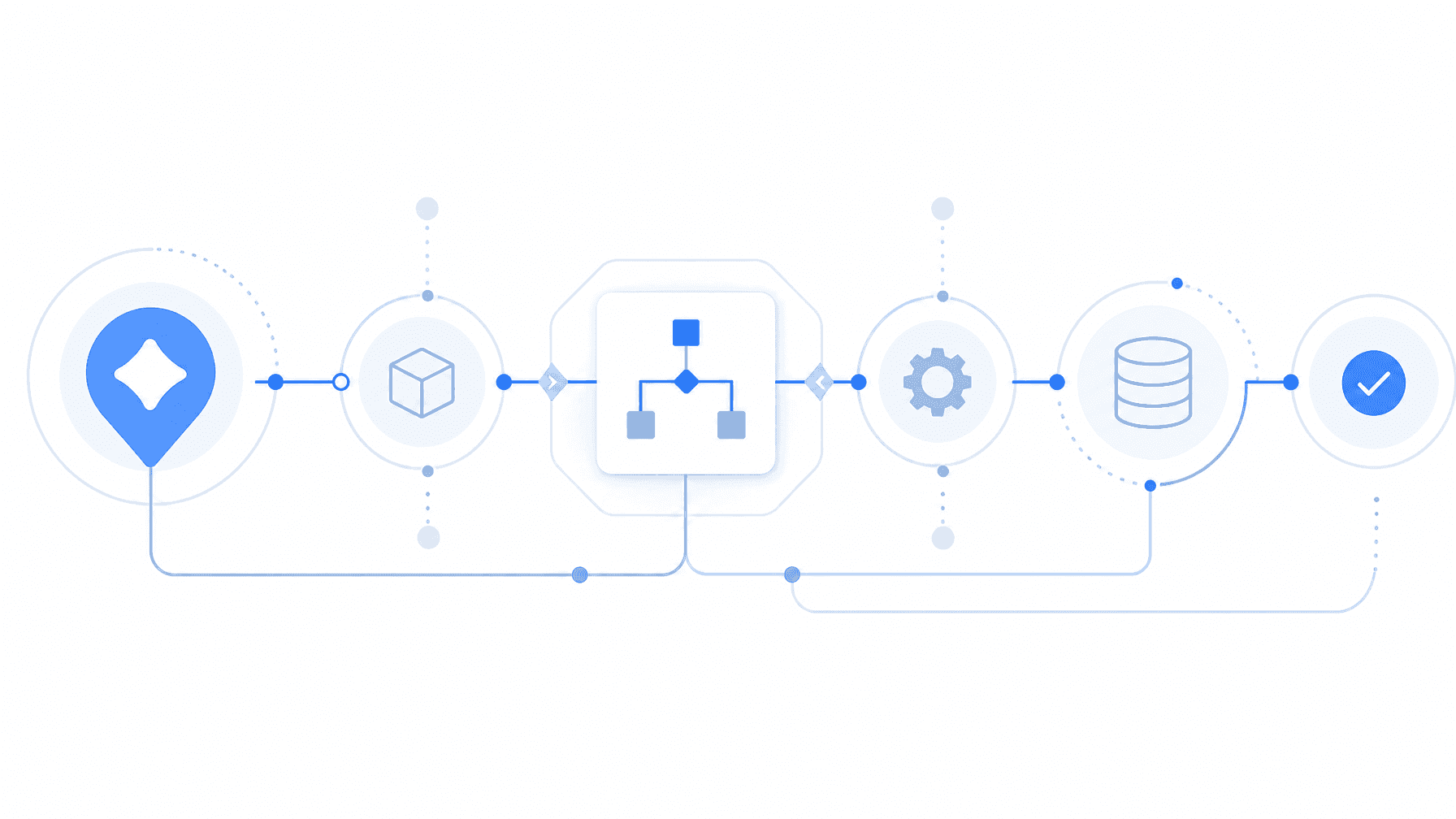
A single API call to Cartesia or ElevenLabs is not a production pipeline. A production pipeline for voice audio requires planning: which model fits this script, this language, this voice profile, this latency budget? It requires execution: routing the job to the right provider, managing concurrency, handling failures. It requires validation: did the output actually match what was specified? Did the pronunciation hold? Did the pacing stay within tolerance? And it requires delivery: retry on failure, flag anomalies, ship only what passes.

None of that is built into any TTS provider. None of it ever will be, because it is not their job. Their job is to generate audio. The orchestration layer that makes that audio reliable, consistent, and production-grade has to be built above the model. Most teams discover this after the first production failure. Some discover it after the third or fourth.

What a Real Voice Production Stack Looks Like

Onepin is built for exactly this layer. It is a voice production agent that sits above 100+ TTS models worldwide, handling the planning, execution, validation, and delivery that raw model APIs cannot. It routes each job to the right provider based on language support, voice quality, latency, and cost. It validates every output before it ships. It retries on failure with fallback routing so a provider outage does not become a missed deadline. It tracks model versions so output drift gets caught before it reaches an audience.

The result is publish-ready audio that holds at scale: clip 200 sounds like clip 1, the branded terms are pronounced correctly, and the pipeline does not break when a provider updates silently or goes down at 2am.

The model is a commodity. The infrastructure that makes it reliable is not. That is the gap the industry is learning to account for, and it is the gap Onepin was built to close.

Start shipping reliable AI voice at scale at onepin.ai.